Desiccant Packets in the Electronic Instrumentation Industry
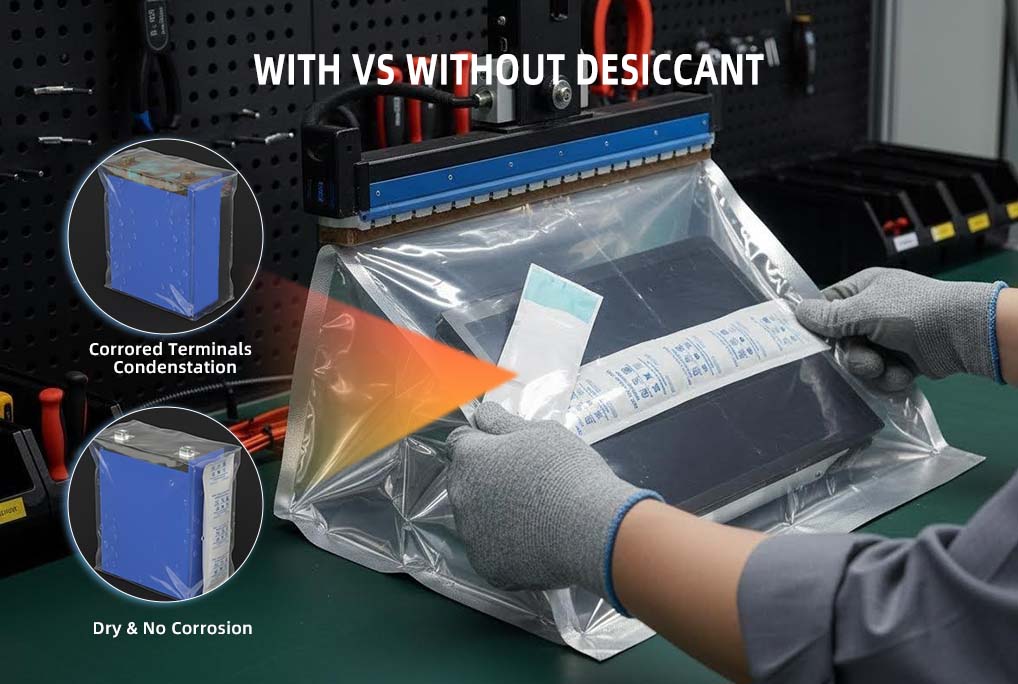
Electronic Instrumentation Industry
In the electronic instrumentation industry, products often include humidity-sensitive components such as printed circuit boards (PCBs), sensors, display modules, metal connectors, precision optical parts, and battery assemblies.
During manufacturing, storage, transportation, export shipment, and pre-installation storage, excessive humidity can negatively affect product quality and long-term reliability.
Typical humidity-related risks include:
• Oxidation or corrosion of terminals, connectors, and metal parts
• Reduced insulation performance of PCB assemblies after moisture absorption
• Moisture-induced delamination or “popcorning” of SMT devices during reflow soldering
• Fogging or condensation inside optical modules and display assemblies
• Sensor drift and reduced measurement accuracy
• Contact instability in battery terminals or electrical interfaces
• Condensation inside packaging, affecting both appearance and functionality
Therefore, the use of desiccant packets in sealed packaging is a common and effective moisture-control practice for improving product reliability and reducing after-sales risk.
Main Functions
1. Humidity Control Inside the Package Desiccant packets continuously adsorb moisture in enclosed packaging spaces, helping maintain a lower relative
humidity level and reducing the risk of moisture damage to sensitive electronic components.
2. Corrosion Prevention for Metal Parts Low-humidity packaging helps reduce oxidation and corrosion on terminals, pins, contacts, shielding parts, screws,
and other exposed metal components.
3. Protection for Optical and Display Components Cameras, lenses, industrial displays, LCD modules, and similar products are vulnerable to fogging, internal
moisture marks, and condensation under high humidity. Desiccants help mitigate these risks.
4. Improved Stability in Export Logistics During sea freight or cross-regional transportation, temperature fluctuations and container condensation can
significantly increase humidity exposure. Desiccant packets are an essential part of baseline moisture protection.
5. Integration into a Complete Moisture-Barrier Packaging System In practice, desiccant packets are typically used together with moisture barrier bags (MBB), anti-static shielding bags, humidity indicator cards (HIC), vacuum packaging, and corrosion-prevention materials to form a complete packaging solution.
Moisture Protection for PCB Assemblies and SMT Components
A manufacturer shipping finished SMT control boards to OEM customers needs to prevent moisture uptake during warehousing and transportation. If PCB assemblies or moisture-sensitive devices absorb moisture, insulation resistance may decline and components such as BGA or QFN packages may fail during secondary reflow,
including cracking, delamination, or the so-called “popcorn effect.”
Recommended packaging solution:
• Anti-static aluminum foil bag or moisture barrier bag (MBB)
• Appropriately sized silica gel or mineral desiccant packet inside each bag
• Humidity indicator card (HIC) for humidity status verification
• Heat sealing to ensure package integrity
This solution helps reduce internal humidity, improve soldering reliability at the customer site, and lower the risk of moisture-related returns or rework.
Export Moisture Protection for Industrial Instruments and Controllers
Industrial temperature controllers, PLCs, transmitters, and data acquisition modules exported to Southeast Asia, South America, or coastal high-humidity regions often face long sea freight cycles and harsh temperature/humidity
fluctuations. These conditions can cause oxidation of terminals, relay contacts, and structural metal parts, and may lead to condensation inside packaging.
Recommended packaging solution:
• Inner packaging using PE bags or anti-static bags
• 1–5 g desiccant packet per unit depending on package volume
• Carton box with cushioning materials for outer packaging
• Additional larger desiccant packs for master cartons when necessary
• Container-level desiccant bars or hanging desiccants for high-value export shipments
This approach reduces oxidation, minimizes moisture-related defects upon unpacking, and improves perceived quality at the destination.
Anti-Fog Protection for Optical Inspection Instruments and Camera Modules
Machine vision systems, industrial cameras, infrared modules, and lens assemblies require stable low-humidity conditions to avoid fogging and condensation on optical surfaces. Residual moisture in packaging combined with temperature variation can result in blurred imaging, moisture spots, or increased rework after delivery.
Recommended packaging solution:
• Low-dust desiccant packets to avoid particle contamination
• Independent sealed bags or sealed boxes for each optical module or lens
• High-strength nonwoven or Tyvek-style packet materials to reduce breakage risk
• Secondary sealing for premium or highly sensitive products
The result is lower fogging risk, better out-of-box performance, and reduced need for cleaning or re-drying.
Moisture Protection for Display Modules, LCDs, and Touch Panels
LCD modules, touch panels, HMI displays, and automotive display assemblies are sensitive to moisture accumulation around edges, FPC contacts, and bonding layers. High humidity can affect connector integrity, appearance, and long-term storage stability.
Recommended packaging solution:
• Anti-static bag with desiccant packet for single modules
• Tray-based bulk packaging with a larger moisture barrier bag and multiple desiccant packets
• Humidity indicator cards for monitoring package condition
This helps reduce oxidation of contact areas, improve storage stability, and enhance customer acceptance upon delivery.
Long-Term Storage for Sensors, Test Equipment & Laboratory Electronics Precision sensors
Data loggers, analytical instruments, and calibration devices may remain in inventory for several months before shipment. Over time, accumulated moisture can contribute to drift, interface oxidation, packaging odor, label degradation, or mold risk in paper and foam accessories.
Recommended packaging solution:
• Desiccant packet inside each unit package
• Humidity indicator card checks during storage
• Periodic replacement of desiccants for long-term inventory
• Temperature- and humidity-controlled warehousing for high-precision products
This supports stable performance after storage, improves outgoing inspection pass rates, and reduces reconditioning costs before shipment.
Conclusion
The core value of desiccant packets in the electronic instrumentation industry lies in moisture control, corrosion prevention, condensation mitigation, performance stability, and reduced after-sales risk. Best practice is to treat desiccant packets not as a standalone accessory, but as part of a complete packaging reliability strategy that includes sealed barrier packaging, humidity monitoring, and standardized warehousing and logistics management.