Desiccants in Container Shipping
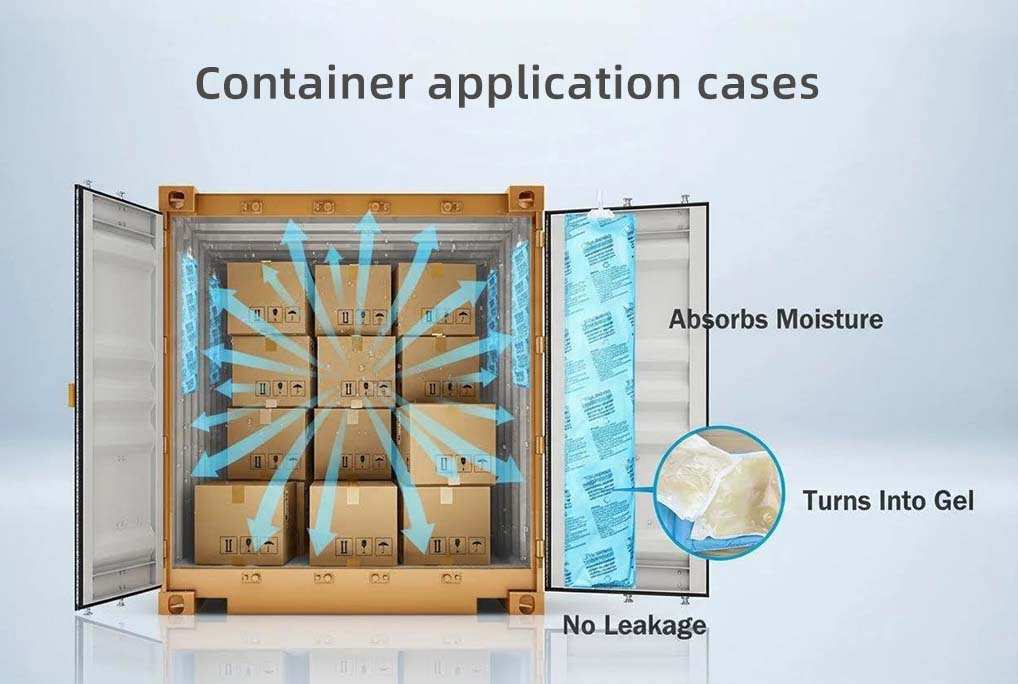
Moisture Sourcing
During ocean transport, containers are exposed to high humidity, large day-night temperature differences, and climate-zone transitions. These conditions often cause condensation inside the container, commonly known as container rain or cargo sweat. Typical consequences include mold growth, carton collapse, corrosion of metal parts, caking of powders, and deformation of paper or wooden products.
Main moisture sources inside a container:
• Moisture released by the cargo itself
• Moisture released from wooden pallets and container flooring
• Moisture retained in packaging materials
• External humid air entering through imperfect sealing
• Condensation caused by temperature fluctuations and dew point changes
Furniture Exports (Wooden / Panel Furniture)
Wooden furniture, cabinets, tables, and panel products shipped from Asia to Europe or North America on 25–45 day routes.
Risks: Swelling, mold, edge damage, rust on metal fittings, and softened outer cartons.
Recommended Solution: Use hanging calcium chloride container desiccants. Typical loading: 6–8 strips for 20GP and 10–16 strips for 40HQ, depending on season, route, and cargo moisture level. Keep airflow channels between cargo and container walls; use pallet moisture barriers where possible. Expected Results: Reduced condensation, lower mold and rust claims, improved arrival quality and lower after-sales costs.
Garments, Footwear, and Home Textiles
Apparel, knitwear, shoes, bedding, towels, and hanging garments.
Risks: Damp cartons, mildew on leather or fabric surfaces, odor issues, and packaging damage that affects retail presentation.
Recommended Solution: Use hanging desiccant strips inside the container, especially near the doors and side walls. For footwear and leather goods, combine carton-level desiccant sachets with container-level desiccants.
Expected Results: Better packaging integrity, fewer mold complaints, and improved shelf-readiness for branded goods.
Agricultural Commodities and Food Ingredients
Coffee beans, cocoa beans, legumes, nuts, dried goods, and other moisture-sensitive agricultural products.
Risks: Bag wetting, mold, odor contamination, quality downgrade, and destination rejection after inspection.
Recommended Solution: Use high-absorption, long-duration container desiccants suitable for food logistics. Combine with inner liners, pallet separation, and pre-loading moisture checks. Expected Results: Reduced spoilage risk, improved compliance, and lower batch-level claims.
Metal Products, Hardware, and Auto Parts
Bearings, fasteners, machined components, coated metal parts, and automotive accessories.
Risks: Surface oxidation, flash rust, corrosion, coating failure, and customer rejection.
Recommended Solution: Combine container desiccants with VCI (volatile corrosion inhibitor) packaging, anti-rust paper, and sealed inner bags.
Expected Results: Lower corrosion rate, improved appearance acceptance, and strong ROI for high-value components.
Paper Products and Printed Materials
Corrugated cartons, printed packaging, labels, manuals, books, and paperboard materials.
Risks: Moisture absorption, curling, wrinkling, sticking, carton collapse, and unstable pallet stacking.
Recommended Solution: Use container desiccants together with moisture barrier film, pallet pads, and proper spacing away from container walls.
Expected Results: Better dimensional stability, less packaging waste, and fewer quality complaints.
Powders, Granules & Chemical Materials
Starch, seasoning powders, dairy ingredients, plastic resins, chemical powders, and pellets.
Risks: Caking, bridging, poor flowability, wet inner bag surfaces, and difficult downstream processing.
Recommended Solution: Use container desiccants with high-barrier inner liners or FIBC liners. Ensure cargo moisture content and package sealing are verified before loading.
Expected Results: Lower caking rates and better product usability at destination.
Tropical / High-Humidity Routes
Routes to Southeast Asia, the Middle East, Africa, or other hot and humid regions often require increased desiccant dosage. For 40HQ containers, 12–18 strips may be considered depending on risk level. High-absorption gel-forming products are preferred.
Rainy Season / Monsoon Season Loading Cargo, pallets, and cartons may already contain elevated moisture before loading. A 20%–50% higher desiccant
dosage may be justified during rainy seasons, combined with faster sealing after loading.
Even if the cargo itself is not damaged, wet packaging can trigger retail rejection, returns, or brand image loss. In such cases, desiccants should be treated as part of the quality control system, ideally supported by humidity indicator cards or data loggers.
Container Logistics
• Calcium Chloride Type: Most common for ocean containers; high absorption capacity and long service life. Often preferred for long-haul shipments.
• Silica Gel Type: More suitable for small packages, electronics, or enclosed unit packaging rather than full-container humidity control.
• Clay / Mineral Type: Often used in cost-sensitive or short-duration storage, but generally less effective for long ocean transit.
Loading Recommendations
• Inspect the container for holes, leaks, poor seals, and floor moisture before loading.
• Keep the container interior clean and dry.
• Do not place cargo directly against container walls whenever possible.
• Hang desiccants in airflow-accessible positions rather than burying them behind tightly packed cargo.
• Increase dosage for long voyages, high-humidity seasons, or moisture-rich cargo.
• Use desiccants together with packaging controls such as liners, pallet barriers, and shrink wrapping.
Conclusion
In container shipping, desiccants should not be viewed as optional consumables. They are a low-cost, high-impact risk control measure for preventing condensation, mold, corrosion, carton failure, and product quality claims. They are particularly valuable for furniture, garments, agricultural commodities, metal parts, paper products, and powders shipped on long or high-humidity routes