Key Takeaways
- Calcium chloride desiccant works through deliquescence — it absorbs moisture until it dissolves into a liquid solution, which is exactly why leak-proofing is a real formulation challenge, not an afterthought.
- The practical solution documented in desiccant-formulation patents is a thickening agent, typically a modified starch, mixed directly into the calcium chloride that gels the liquid as it forms rather than letting it run free.
- This is a genuine engineering detail that separates a well-formulated calcium chloride product from a poorly made one — two packets can use the same core chemical and still behave very differently once they start absorbing moisture.
We've covered why calcium chloride deliquesces while silica gel doesn't — calcium chloride absorbs moisture until it dissolves into its own liquid. That mechanism is exactly what makes it such an aggressive, high-capacity desiccant. It's also exactly what creates an obvious practical problem: once the material turns to liquid, what stops it from leaking out of the packet?
The Formulation Detail That Solves It
Desiccant-formulation patents describe the practical answer: calcium chloride desiccant isn't sold as the pure salt alone. It's formulated as a dry mixture with a thickening agent — typically a modified starch — blended directly into the calcium chloride before packaging. As the calcium chloride absorbs moisture and starts to form liquid, the starch absorbs that liquid in turn and thickens or gels it, rather than letting it remain a free-flowing solution.
One formulation documented in patent literature uses roughly 50 to 80 percent calcium chloride combined with 20 to 50 percent modified corn starch by weight, with the starch required to reach a minimum viscosity once wetted (at least about 1.0 cp, Brookfield) to perform this gelling function effectively. Testing described in the same patent held a calcium chloride/starch mixture at 80% relative humidity and 25°C for roughly two months, with no water leaking from the container over that period.
Why This Matters for Product Quality
This is a genuine point of difference between desiccant products that use the same base chemical. Pure calcium chloride, with no thickening agent, will absorb moisture and eventually produce a free liquid that can leak through packaging seams or saturate surrounding packaging material — a real failure mode for a desiccant that's supposed to be protecting a product, not adding moisture risk of its own. A properly formulated product with an effective thickening component keeps that liquid contained as a gel inside the packet, even as it continues absorbing moisture toward its full capacity.
It also means "calcium chloride desiccant" isn't a single uniform product — the formulation behind the active ingredient matters as much as the ingredient itself. The housing material (the permeable packaging the desiccant sits inside) and the internal formulation work together, and a leak-prevention failure can come from either side.
What This Means for Choosing Calcium Chloride Desiccant
- Calcium chloride desiccant is worth choosing specifically when high capacity in high-humidity conditions matters more than anything else, since deliquescence is what gives it that capacity advantage in the first place
- The leak-prevention formulation isn't optional engineering — it's the difference between a desiccant that stays contained through its full absorption cycle and one that creates a secondary moisture problem
- For applications where any liquid leakage risk is unacceptable regardless of formulation quality (electronics, documents, anything moisture-sensitive touching the packet directly), a non-deliquescent desiccant like silica gel avoids the question altogether
Key Differences at a Glance
- Pure calcium chloride (no thickening agent): deliquesces into a free liquid as it absorbs moisture — real leak risk without a containment mechanism
- Formulated calcium chloride (with starch or similar thickener): liquid is gelled in place as it forms, reducing leak risk while retaining calcium chloride's high absorption capacity
- Silica gel: physical adsorption only, never forms a liquid phase, no leak-prevention formulation needed by design
Recommended Products from Onefine
- Calcium Chloride Desiccant Packets — formulated calcium chloride desiccant, available across our standard pack-size range (already linked above)
Questions About Calcium Chloride Desiccant Quality?
Onefine supplies calcium chloride desiccant formulated for both high absorption capacity and leak containment. Tell us your application, and we'll help you choose the right desiccant.
We provide:
- ✅ Calcium chloride desiccant across a full range of pack sizes
- ✅ Technical support for matching desiccant type to your moisture-sensitivity requirements
- ✅ Custom packaging and private label options
- ✅ Worldwide shipping
- ✅ Multiple desiccant materials if calcium chloride isn't the right fit
Related Products
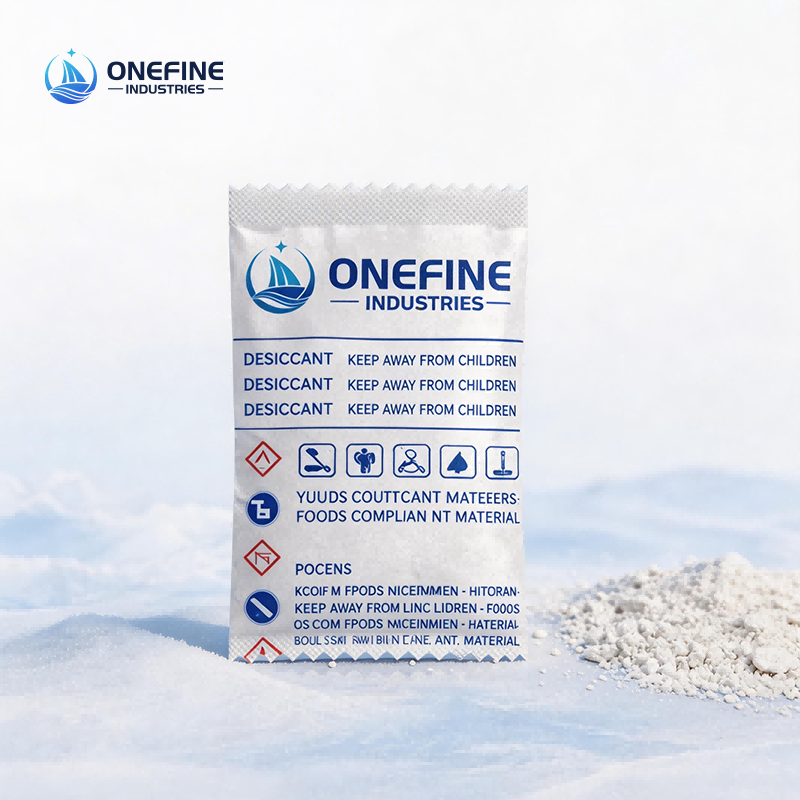
Calcium Chloride Desiccant Packets
Calcium chloride desiccant packets are a highly effective moisture-absorbing solution designed to prevent "container rain" and condensation damage during shipping and storage.
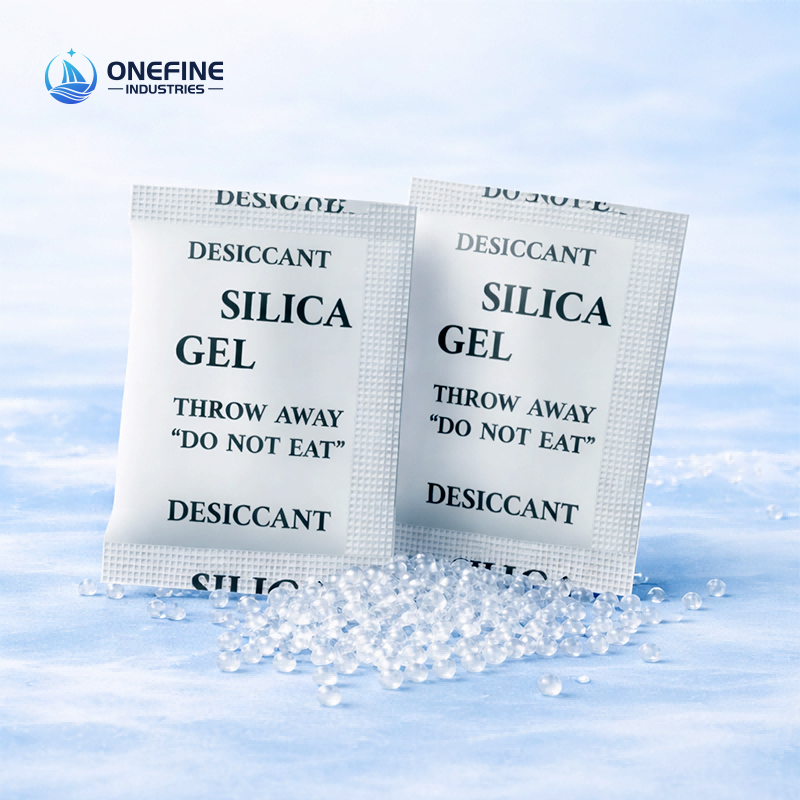
Silica Gel Desiccant Sachet
Silica gel desiccant is a high-performance, non-toxic adsorption material widely used to protect moisture-sensitive products from damage.
Related Reading
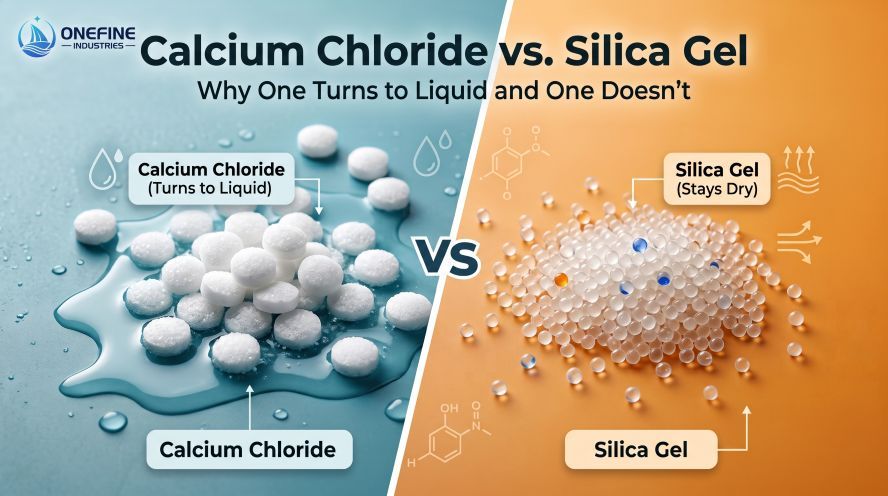
Calcium Chloride vs. Silica Gel: Why One Turns to Liquid and One Doesn't
Calcium chloride and silica gel are often treated as interchangeable desiccants, but one is deliquescent and one is not. Here is the humidity threshold that explains the difference, and what it means for your packaging.
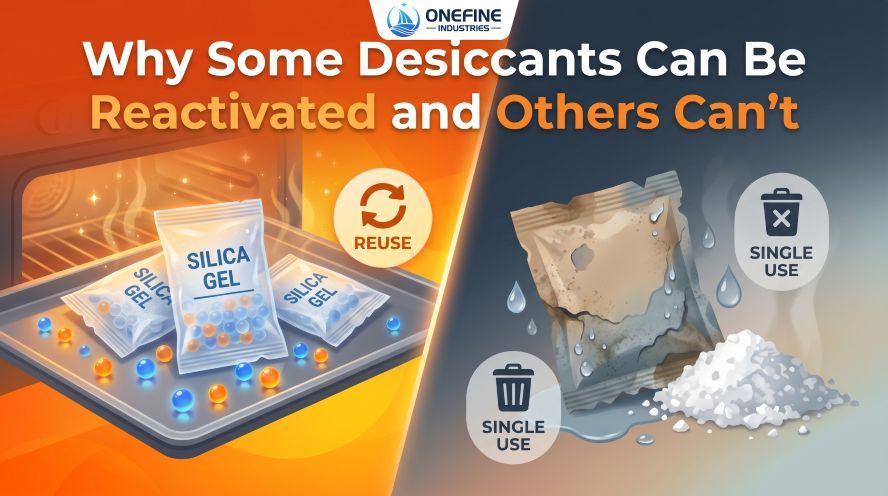
Why Some Desiccants Can Be Reactivated and Others Can't
Silica gel and molecular sieve can be oven-dried and reused. Calcium chloride cannot. The difference comes down to how each material holds moisture.