Desiccants in Camera and Lens Storage

Detailed Description
Key Takeaways
- Lens fungus doesn't consume the glass itself — it feeds on organic residues left on the optics (fingerprints, lubricant vapor, adhesive residue) and grows fastest at relative humidity of roughly 70% or higher.
- Once established, the fungus can grow inward along a lens's edge into the cement layer between elements, and its acidic metabolic byproducts can permanently etch coatings and glass.
- The practical prevention range cited in photography-equipment-care literature is roughly 30-60% relative humidity — dry enough to deny the fungus a growth environment, but not so dry it risks damaging the optics itself, with desiccant as the standard way to hold a storage space in that range.
Camera and lens storage is a humidity-control problem with a specific failure mode most people don't think about until it's already happened: lens fungus. It isn't dust, and it isn't the fungus eating the glass — but it's a genuinely destructive, often irreversible problem, and understanding the actual mechanism explains why humidity control (not just keeping gear in a dark bag) is the real prevention method.
What Lens Fungus Actually Does
Lens fungus — typically water molds (Oomycetes) or sac fungi (Ascomycota) — doesn't feed on glass. It feeds on organic material already present on or near the optics: fingerprints, lubricant or plastic vapor residue, adhesive residue, dust with organic content, or manufacturing residues left on internal surfaces. Growth risk rises sharply at relative humidity of roughly 70% or more, which is why fungus problems are especially common for gear stored in humid climates or sealed, poorly ventilated bags.
Once a colony establishes, it doesn't stay on the surface. It can grow inward from a lens's edge into the cement layer between cemented lens elements — a part of the lens that's effectively impossible to clean without disassembly. Its metabolic byproducts are acidic, and that acidity is what causes the real damage: etched coatings and, in bad cases, permanently damaged glass. This is why lens fungus is treated as a serious problem in photography equipment care rather than a cosmetic one — by the time it's visible, some of the damage may already be done.
Why Humidity Control Is the Real Prevention Method
Camera manufacturer guidance (Sony's own lens care documentation, among others) consistently recommends two things: keep lenses in a cool, dry environment — ideally a see-through, humidity-controlled storage cabinet — and keep them out of dark, moist conditions, since both moisture and darkness favor fungal growth. Light actually works against fungus, which is part of why clear storage cabinets are commonly recommended over opaque cases for long-term storage.
Photography-equipment-care literature cites a practical storage range of roughly 30-60% relative humidity: high enough to avoid over-drying the optics (very low humidity is its own risk, since some lens materials and lubricants aren't meant to be kept bone-dry), but low enough to stay well clear of the roughly 70% threshold where fungus growth risk rises. This is a maintained-range problem, not a one-time drying problem — a camera bag or storage cabinet needs ongoing moisture control, not just a single drying pass before storage.
What This Means for Storing Camera Gear
- A sealed storage cabinet, dry box, or airtight container with desiccant inside is the standard way to hold a storage space within the recommended 30-60% RH range over time, rather than relying on ambient room humidity
- Color-changing (indicating) silica gel is a practical fit for this use case specifically because it shows at a glance when it's approaching saturation and needs reactivating — important for a desiccant that's expected to keep working over weeks or months of storage, not a single use
- Wipe fingerprints and residue off lens surfaces before long-term storage — since the fungus feeds on organic residue rather than the glass itself, removing that residue removes part of what makes a humid environment risky in the first place
- Avoid storing gear in sealed, opaque bags for extended periods; some airflow and light exposure, combined with humidity control, is more protective than airtight darkness alone
Recommended Products from Onefine
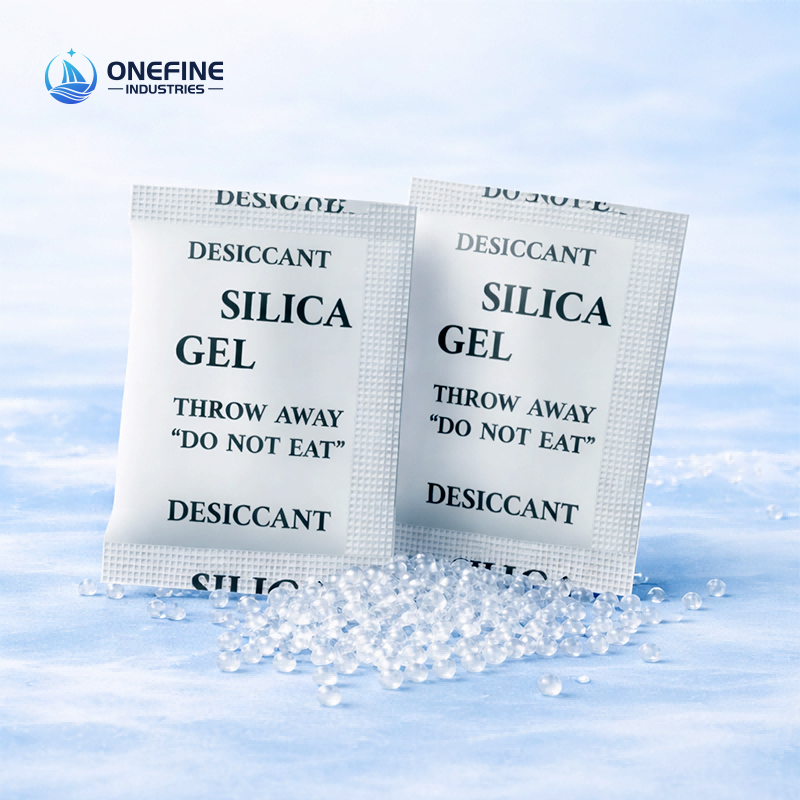
- Silica Gel Desiccant Sachet — reactivatable, suited to maintaining a stable low-humidity environment in a camera storage cabinet or dry box over repeated use cycles
Protecting Camera and Lens Equipment from Moisture and Fungus?
Onefine supplies desiccant suited to maintaining long-term, stable low-humidity storage environments. Tell us about your storage setup, and we'll help you choose the right desiccant.
We provide:
- ✅ Reactivatable silica gel desiccant suited to repeated, long-term use
- ✅ Technical support for matching desiccant type to your storage environment
- ✅ Custom packaging and private label options
- ✅ Worldwide shipping
- ✅ Multiple desiccant materials across our product range
Related Reading

Blue Indicating Silica Gel to Pink When Watering
Blue Indicating Silica Gel blue silica gel indicating silica gel silica gel desiccant transformer breather silica gel moisture control desiccant industrial silica gel desiccant for packaging blue silica gel beads

Why Molecular Sieve Desiccant Comes in Beads, Not Powder
Zeolite starts as a fine crystalline powder, nearly impossible to package directly. Here is what actually turns it into the beads inside a desiccant packet.