Desiccant Sachets for Collectible Trading Card Storage: Application Case Analysis
Detailed Description
Key Takeaways
- Moisture control for card storage concerns the enclosure and its contents, not just the visible air space.
- Sleeves and rigid holders provide physical protection but do not establish a controlled humidity environment.
- Silica gel sachets should remain intact and separate from card surfaces, with a way to monitor conditions.
- The aim is suitable, stable storage; this analysis does not promise card restoration or a higher grading result.
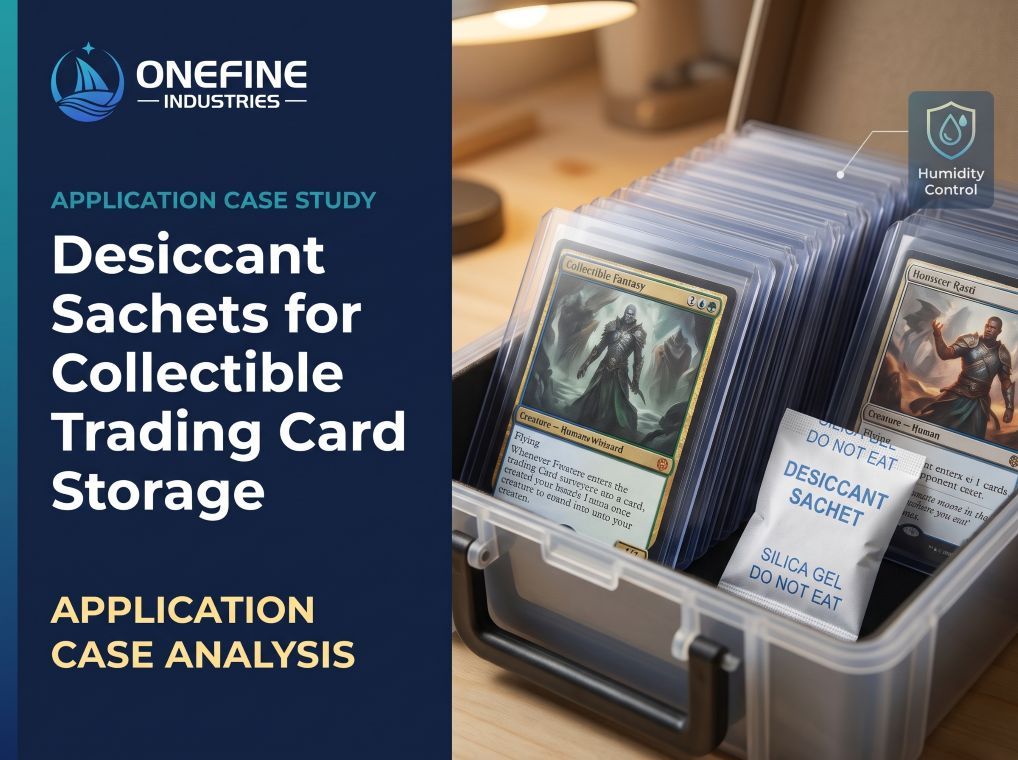
A collector keeps sleeved trading cards inside a lidded storage container. The cards are protected against casual handling, but the storage room becomes humid seasonally and the box is opened regularly. The collector wants to manage moisture without placing loose desiccant beside valuable printed surfaces.
This case considers that representative situation. It applies published paper-conservation principles to a small enclosed storage system, while recognizing that modern cards can contain coatings, foils and adhesives. It is not a test report for a particular card brand or a claim that one humidity setting suits every collection.
The Storage Problem Starts Outside the Sachet
Fanatics Collect identifies humid storage as a risk for card warping, mold and sticking. Its advice also distinguishes environmental problems from physical damage caused by overcrowded containers or excessive pressure. These risks need different responses.
An intact sachet cannot correct direct sunlight, a cramped holder or water entering a damaged box. Its role is narrower: to help manage water vapor in an enclosure that has already been chosen and used appropriately.
For this scenario, the first step is therefore to review the room and storage container. A cupboard in a stable indoor location is a different starting point from a damp basement. Adding packets does not remove the need to address the surrounding storage conditions.
Why Paper and the Enclosure Matter
The water in a storage system is not limited to the air initially trapped under the lid. Paper-based contents respond to surrounding humidity, and the enclosure exchanges moisture with its environment to a degree determined by its construction and use.
The Canadian Conservation Institute describes the sensitivity of paper objects to high humidity and humidity fluctuations. Those general principles provide the background here; they are not card-specific test results or a universal prescription for modern laminated cards.
Our guide to packaging and moisture load explains why the outer packaging belongs in the assessment. A sleeve inside a frequently opened box is not the same moisture-control system as a suitably closed outer enclosure.
The Role of an Intact Silica Gel Sachet
Silica gel is used in enclosure humidity management, including collection-care applications. For a small retail storage format, a contained sachet provides a way to evaluate that material without distributing loose granules among the cards.
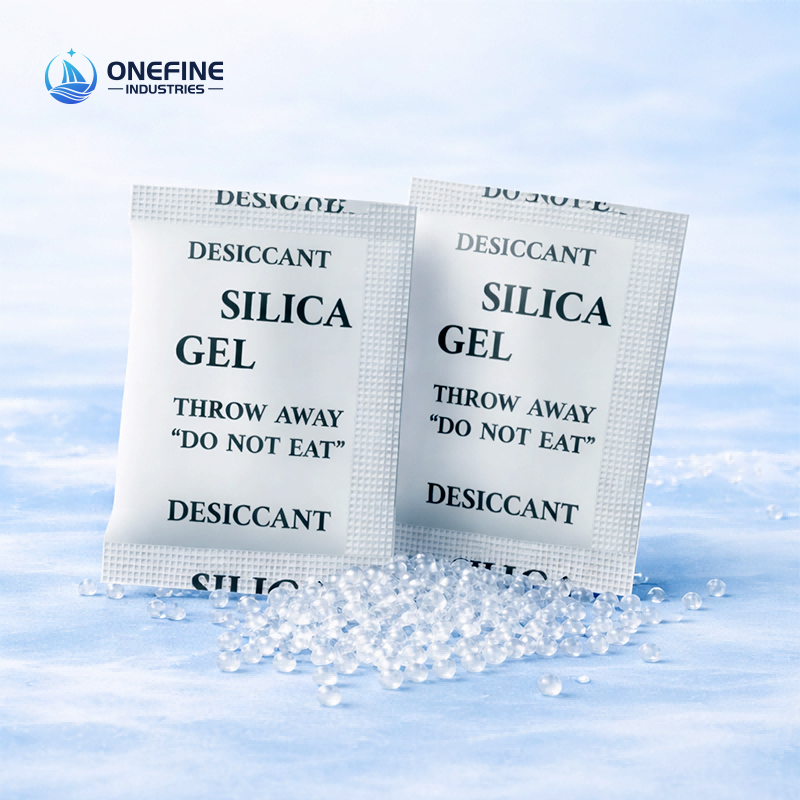
Onefine's Silica Gel Desiccant Sachet is the relevant catalog product to discuss. The amount and initial condition of the desiccant still need evaluation against the storage goal. A general product name does not demonstrate that a packet will maintain a chosen RH for a stated number of months.
In this scenario, the proposed sachet location is a dedicated space in the outer container, separate from card faces and edges. It should not be forced into a sleeve, pressed against a foil surface or placed where movement could abrade a collectible. That is a conservative layout proposal, not a tested card-brand instruction.
Stable Conditions Are More Useful Than Maximum Dryness
Published paper-care guidance emphasizes a suitable environment and protective storage, not the indiscriminate pursuit of zero humidity. Moisture sorbents used for collection care may be conditioned for a particular purpose; a fresh, very dry packet is not automatically equivalent to a prepared humidity buffer.
This distinction matters when evaluating a card-storage package. The intended range should account for the actual materials, their condition and appropriate conservation advice where the item is particularly valuable or vulnerable.
This case assigns no universal RH number to every trading card. It also gives no schedule for adding a fixed number of packets. A package that steadily becomes too dry would not be considered successful merely because its desiccant continues to absorb water.
Evaluating the Storage Arrangement
A useful evaluation records the container, sachet specification, opening pattern and measured conditions. The goal is to learn whether the complete arrangement supports the intended storage environment, rather than infer success from the packet's appearance.
- Start with an appropriate enclosure: Review its condition, closure and the way cards are supported.
- Keep materials separated: Leave the sachet intact and avoid direct contact with card surfaces.
- Monitor the interior: Use a suitable humidity measurement method and interpret it under its own instructions.
- Review the trend: Assess conditions through realistic opening and seasonal exposure, not just immediately after sealing.
Our article on desiccant quantity planning can inform the sizing discussion. It does not replace validation of the specific card-storage arrangement, and an industrial packaging formula should not be presented as a universal prescription for collectibles.
What This Approach Does Not Repair
Moisture management is preventive. A sachet is not a treatment for mold, delaminated foil, staining, a damaged coating or existing warping. Avoid improvised attempts to flatten or restore valuable cards by aggressively drying them.
The Library of Congress emphasizes careful handling and supportive enclosures for works on paper. Keeping light exposure low and avoiding damaging fasteners or adhesives remain relevant background principles, even when a packet is included in storage.
If an item already shows damage, evaluation by an appropriate conservation professional is a different task from selecting a desiccant product. This article does not promise restoration, preservation of resale value or a particular grading outcome.
Application Outcome and Product Evaluation
The intended outcome is a traceable storage approach: choose a suitable enclosure, evaluate an intact sachet, observe the humidity response and adjust only against a defined storage goal. A packet's presence alone is not the success criterion.
There are no before-and-after measurements or customer results in this case. Onefine can discuss sachet format and packaging requirements for evaluation; the final arrangement remains specific to the cards, their holders and the surrounding environment.
Recommended Products from Onefine
- Silica Gel Desiccant Sachet — An intact sachet format to evaluate for a separate compartment inside the outer storage enclosure. Select it against the storage goal rather than assume a fixed packet weight maintains a universal humidity level.
Discuss a Sachet Format for Your Storage Packaging
Share the outer-container dimensions, type of items, intended storage conditions and preferred sachet placement with Onefine. We can discuss suitable packaging options without treating a nominal packet weight as a guarantee of long-term protection.
We provide:
- ✅ Sachet material and format selection support
- ✅ Packaging options for small enclosed spaces
- ✅ Custom packaging and private label options
- ✅ Product documentation review for your application
- ✅ Help defining the information needed for a packaging inquiry
Related Reading

How Packaging Material Changes Desiccant Need
How much desiccant you need is not just about container volume. The packaging material itself lets moisture through at very different rates, and that single factor can change your desiccant requirement by two orders of magnitude.

How Much Desiccant Do You Actually Need?
Desiccant packaging follows a real industry standard (MIL-D-3464), not guesswork. Here's how the unit-based formula actually works, a worked example, and what the simplified version leaves out.