Key Takeaways
- "Desiccant unit" has a precise industry definition under MIL-D-3464: one unit adsorbs 3g of water vapor at 20% RH and 6g at 40% RH, both at 25°C — this is the baseline every sizing calculation starts from.
- For rigid, moisture-impervious containers, a common starting formula is roughly 1.2 units per cubic foot of internal air space, though desiccant type changes the physical quantity needed to deliver one unit.
- This formula only covers rigid containers under standard conditions — non-rigid packaging, high-humidity shipping routes, and long storage durations all call for sizing up beyond the baseline number.
"How many packets do I need?" is one of the most common questions in desiccant packaging, and "just throw in a few" is the most common wrong answer. There's an actual industry standard behind desiccant sizing, and understanding it — even in simplified form — gets you a lot closer to the right amount than guessing.
What a "Unit" of Desiccant Actually Means
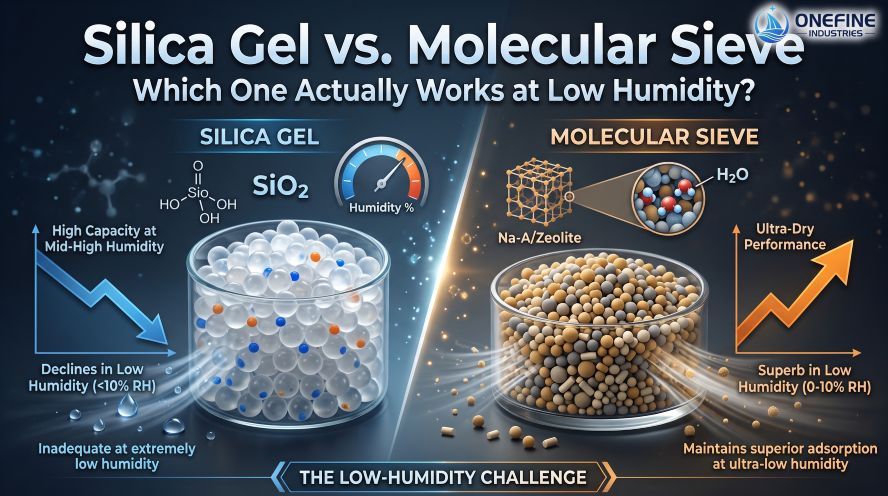
Desiccant quantities aren't usually sold or specified by weight alone — they're specified in "units," a standardized measure defined under military packaging specification MIL-D-3464. One unit is the amount of desiccant that can adsorb 3 grams of water vapor at 20% relative humidity, and 6 grams of water vapor at 40% relative humidity, both measured at 25°C (77°F). Because different desiccant materials have different adsorption capacities (see our guide on silica gel vs. molecular sieve for why), the physical quantity of material needed to deliver one unit varies by material type — a "1-unit" molecular sieve packet will generally weigh less than a "1-unit" silica gel packet.
The Volume-Based Starting Formula
For rigid, moisture-impervious containers (metal, rigid plastic, glass), a commonly used baseline formula is roughly 1.2 units of desiccant per cubic foot of internal air space. Worked example: a container measuring 15" x 15" x 12" has an internal volume of 2,700 cubic inches, or about 1.6 cubic feet. At 1.2 units per cubic foot, that works out to roughly 1.9 units — in practice, rounded up to the nearest standard pack size, since fractional units aren't a real product.
As a rough reference, unit requirements for rigid containers scale with volume in a fairly predictable way — small containers under 1.5 gallons typically need well under 1 unit, mid-size containers in the 5-15 gallon range typically land in the 1-2 unit range, and large containers above 60 gallons can require 10 units or more. The relationship isn't perfectly linear in practice because of how standard pack sizes round up, but the volume-to-unit ratio stays roughly consistent across container sizes.
What This Simple Formula Doesn't Account For
The volume formula above is a starting point, not a complete answer. It assumes a rigid, essentially moisture-impervious container and doesn't factor in several things that matter in real shipping and storage conditions:
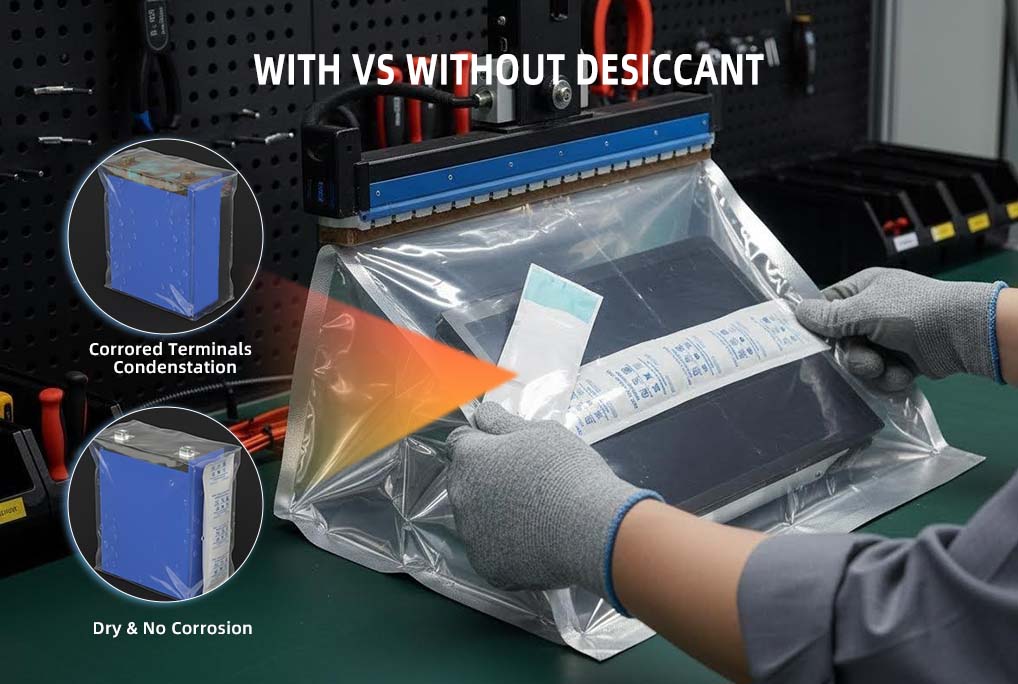
- Relative humidity at the point of sealing and during transit or storage — a package sealed and shipped through a humid climate needs more desiccant than the same package sealed in a dry environment
- Moisture vapor transmission rate (MVTR) of the packaging material — flexible plastic pouches, cardboard, and other non-rigid materials let moisture through at a meaningfully higher rate than rigid containers, so the rigid-container formula understates what's needed
- How moisture-sensitive the product itself is — electronics, pharmaceuticals, and some food products need a much tighter RH target than general merchandise
- How long the desiccant needs to keep working — a short domestic shipment and a multi-month overseas storage period aren't the same sizing problem, even in an identical container
A Practical Starting Point for Small-Pack Retail Packaging
For most retail and e-commerce packaging — the kind Onefine's products are sized for — exact MIL-D-3464 engineering calculations are usually more precision than the application needs. A practical approach: start from the rough volume-based ratio above, round up rather than down, and size up further for humid shipping routes, non-rigid packaging, or longer storage windows. For a typical retail carton or poly bag, that usually means choosing a desiccant pack size closer to the higher end of what the volume formula suggests, not the bare minimum. If you're unsure where your product falls, our team can help you work through the specifics based on your actual packaging and shipping conditions.
Quick Reference
- Small container (under ~1.5 gallons): well under 1 unit of desiccant
- Mid-size container (roughly 5-15 gallons): typically 1-2 units
- Large container (60+ gallons): 10 units or more
- Non-rigid packaging (pouches, cardboard): size up from the rigid-container baseline
- Humid shipping route or long storage duration: size up further; don't rely on the bare-minimum number
Recommended Products from Onefine
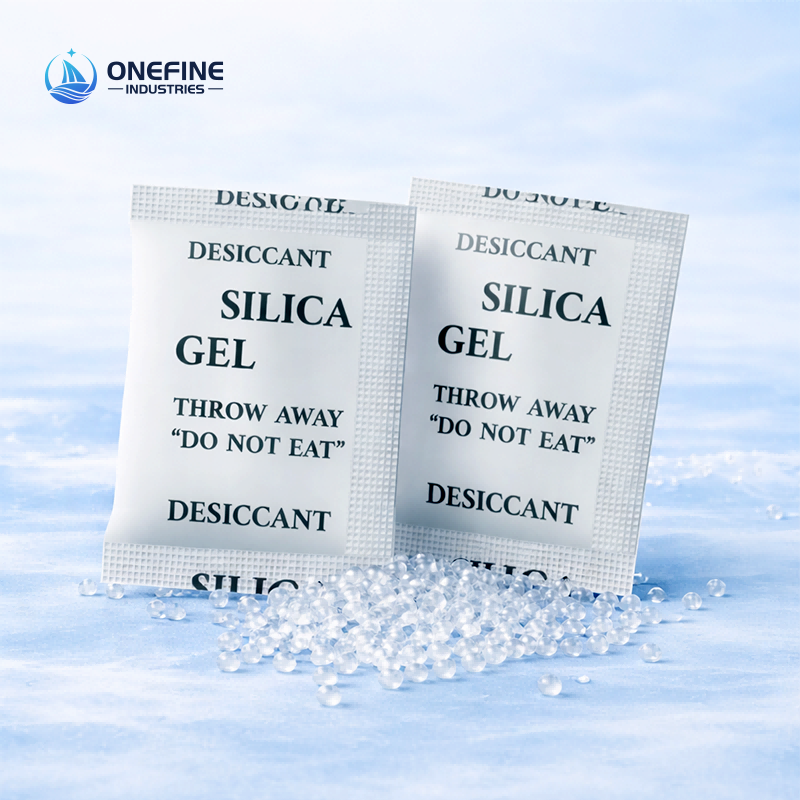
- Silica Gel Desiccant Sachet — general-purpose, available across Onefine's standard 1-100g weight range for sizing to your package volume (already linked above via related content)
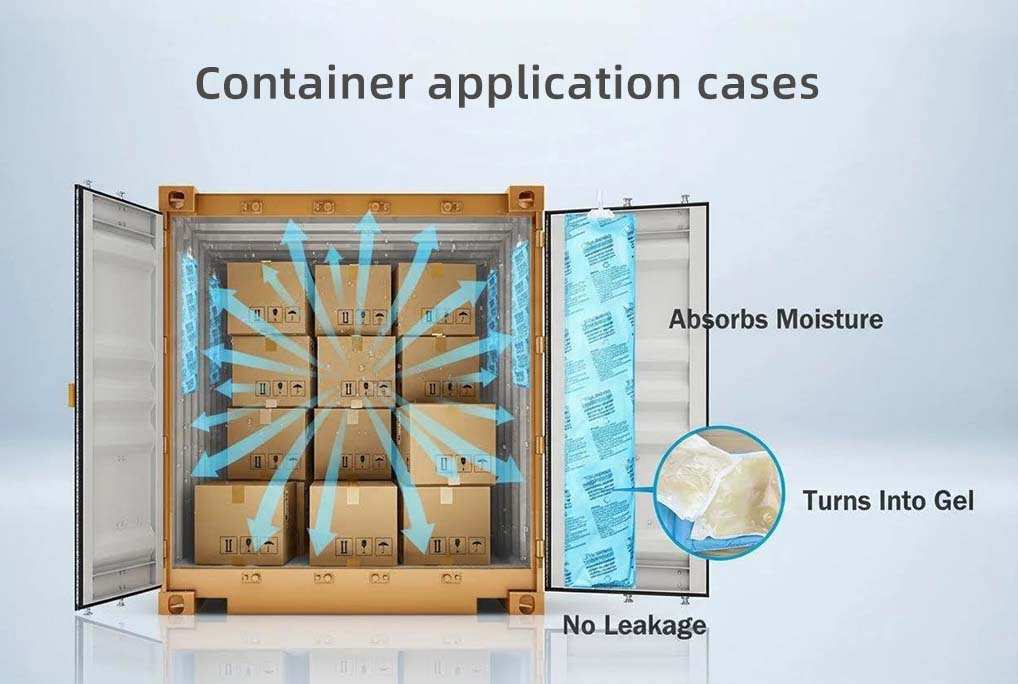
- Container Desiccant Strip — sized by kg rather than gram sachets, built for larger shipping container volumes where the unit-based math above applies most directly
Not Sure How Much Desiccant Your Product Needs?
Onefine supplies desiccants across a full range of pack sizes, from small retail sachets to container-scale strips. Tell us your package volume, packaging material, and shipping route, and we'll help you size the right amount rather than guess.
We provide:
- ✅ Full range of pack sizes from small retail sachets to container-scale formats
- ✅ Multiple desiccant materials to match your RH and sizing needs
- ✅ Custom packaging and private label options
- ✅ Worldwide shipping
- ✅ Technical support for sizing your specific application
Related Products
Silica Gel Desiccant Sachet
Silica gel desiccant is a high-performance, non-toxic adsorption material widely used to protect moisture-sensitive products from damage.
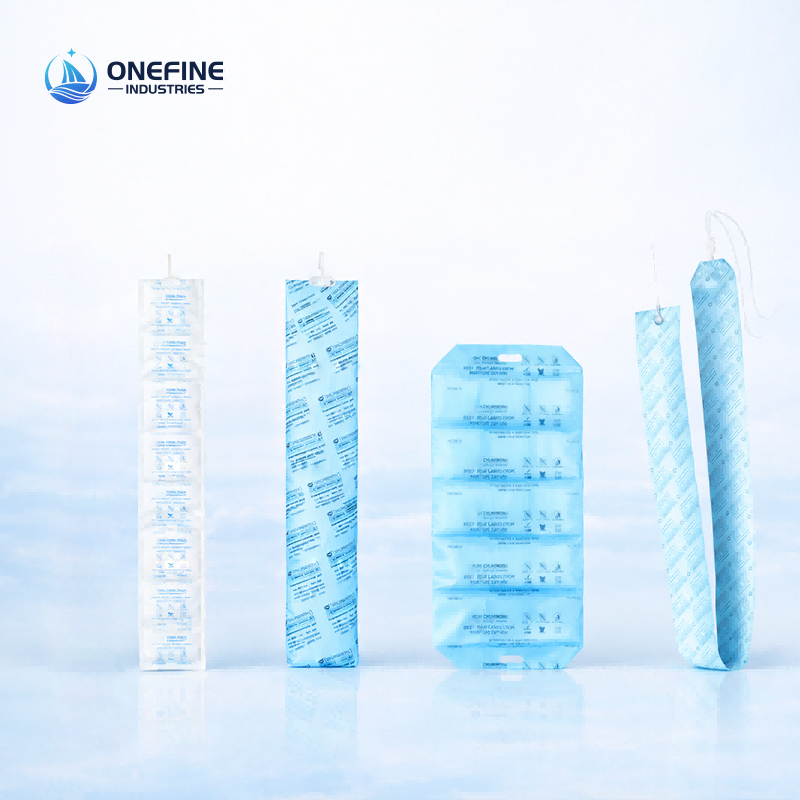
Container Desiccant Strip
Container desiccant strips use high-absorption calcium chloride to control humidity inside shipping containers, preventing condensation damage during long ocean voyages.