Desiccants in Automotive Lighting
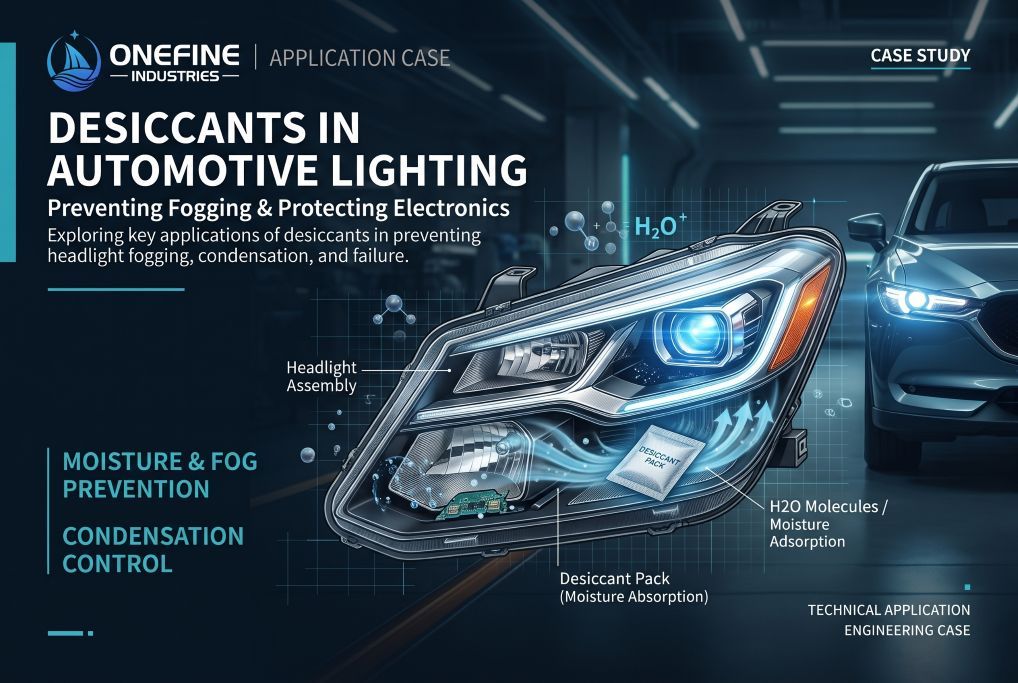
Detailed Description
Key Takeaways
- Headlamp fogging is commonly assumed to come from air leaking in through the housing's vent during heating/cooling cycles, but documented testing shows this vent-driven air exchange is actually the smaller contributor to moisture buildup.
- The larger source is the plastic housing itself: when the bulb heats the enclosure, the plastic releases absorbed moisture into the air inside; when it cools, the plastic reabsorbs moisture from both inside and outside — and this exchange shows up within minutes of a temperature change.
- Because moisture keeps cycling in and out of the housing material itself, a desiccant inside the lamp assembly is managing an ongoing moisture exchange, not a one-time sealing failure.
Why Headlamps Fog Up
A foggy headlamp lens is a common complaint, and the usual explanation is "the seal or vent is letting humid air in." That's part of the picture, but documented engineering testing on automotive lamp enclosures found something less intuitive: the plastic housing material itself is typically responsible for the majority of the moisture moving in and out of the enclosure — not just air exchange through the vent opening.
Here's the mechanism: when the headlamp bulb is on, it heats the enclosure, and the plastic housing releases moisture it had absorbed back into the air — both into the enclosure's interior and out to the surrounding environment. When the bulb turns off and the enclosure cools, the plastic reabsorbs moisture again, pulling it in from the enclosure's interior air and from the outside environment. Documented testing shows measurable moisture-level changes within minutes of a temperature change, while the same testing shows that moisture diffusion through the plastic itself (as opposed to this quick in/out exchange) happens on a slower timescale of hours to days to weeks, depending on the specific plastic and vent design.
Vent-driven air exchange does still happen — heating expands the air inside the enclosure and pushes some out, cooling contracts it and draws some back in — but testing described this as a smaller contributor relative to the housing's own moisture sorption and desorption behavior.
Why This Matters for How Fogging Actually Plays Out
This explains a pattern that can otherwise seem odd: a headlamp assembly can fog up repeatedly even when its vent and seals are functioning exactly as designed, because the housing material itself is continuously taking on and releasing moisture as the bulb cycles on and off through normal driving. It's not necessarily a sign of a failed seal — it can simply be the housing doing what the plastic does under thermal cycling.
It also means that managing moisture inside a lamp assembly isn't a one-time problem to seal away. The moisture keeps moving, cycle after cycle, as the vehicle is driven and the lights are used. A fixed amount of desiccant inside the housing is there to keep absorbing that recurring moisture before it reaches the point of condensing on the cool inner surface of the lens.
What This Means for Desiccant Choice
Since the moisture exchange is recurring rather than a single event, the practical considerations are:
- Capacity needs to account for repeated cycling, not just a one-time initial moisture load, since the housing plastic keeps releasing and reabsorbing moisture with every heating/cooling cycle the vehicle goes through
- A reactivatable desiccant like silica gel fits this kind of recurring-exposure environment well, since it's designed to adsorb and release moisture repeatedly without being chemically used up
- Placement near the lens or in the main airflow path inside the housing matters, since that's where condensation actually becomes visible as fogging
Recommended Products from Onefine
- Car Lamp Desiccant Bags — calcium chloride-based, sized for automotive lamp housing applications
Dealing with Headlamp Fogging?
Onefine supplies desiccant bags specifically sized for automotive lamp housings. Tell us your housing size and application, and we'll help you choose the right fit.
We provide:
- ✅ Car Lamp Desiccant Bags sized for automotive housing applications
- ✅ Custom packaging and private label options
- ✅ Worldwide shipping
- ✅ Technical support for automotive lighting moisture control

Related Reading

Why Activated Carbon Targets Odors, Not Water
Activated carbon desiccant bags get grouped in with silica gel and other desiccants, but the surface chemistry behind activated carbon is built to prefer odors and organic vapors over water. Here is the adsorption mechanism that explains why, and what it means for choosing the right product.
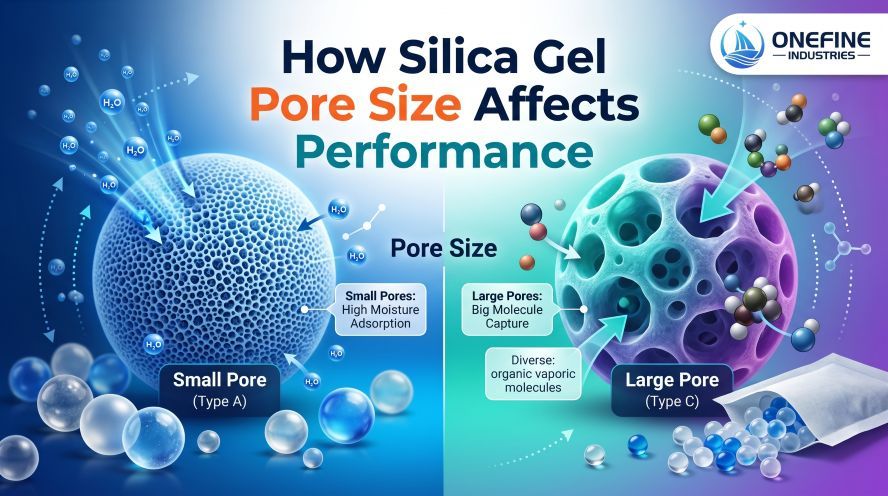
How Silica Gel Pore Size Affects Performance
Two silica gel desiccants can look identical and still perform very differently depending on the humidity range. The reason comes down to pore size, which decides whether the material pulls moisture out of the air best at low humidity or high humidity.