Key Takeaways
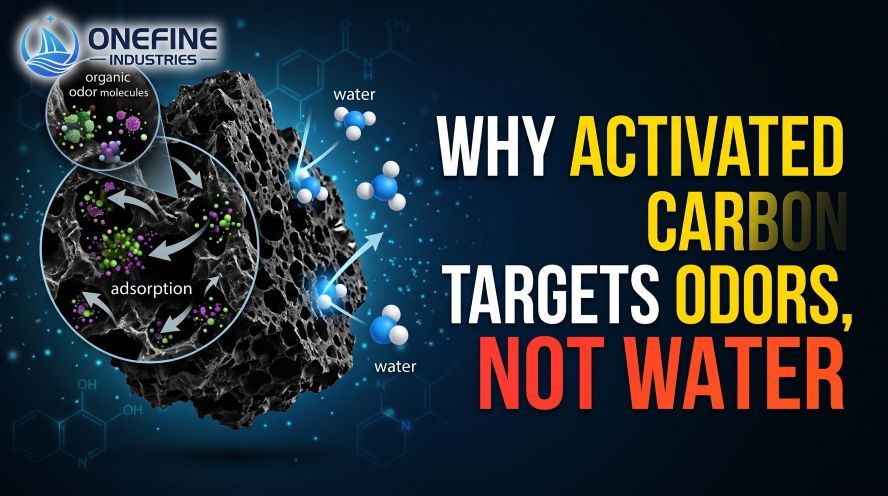
- Activated carbon's internal surface — typically 500 to 1,200 m²/g, almost all of it inside pores under 2 nanometers wide — is largely non-polar, and physical adsorption on that surface strongly favors low-to-medium molecular weight hydrophobic compounds (the chemistry behind most odors and VOCs), not water.
- Research on activated carbon's water-vapor isotherm shows a distinctly different adsorption pattern (a "Type V" curve with significant hysteresis) compared to how it adsorbs organic vapors — water interacts weakly with the carbon surface itself and instead clusters around scattered surface defects and functional groups.
- This isn't a flaw — it's why activated carbon is positioned as an odor/VOC absorber first, with moisture control as a secondary function, rather than being marketed as a primary high-capacity desiccant the way silica gel or molecular sieve are.
Activated carbon desiccant bags often sit on the same page as silica gel and molecular sieve products, which can make it easy to assume they all compete on the same axis — "how much water can it hold." But activated carbon's actual adsorption chemistry isn't built around water at all. Understanding why requires looking at what's actually happening on its internal surface.
What Activated Carbon's Surface Actually Looks Like
Activated carbon's defining feature is an enormous internal surface area created by an extensive network of pores — typically in the range of 500 to 1,200 m²/g, according to water-treatment industry reference data from the American Water Works Association. The pore structure is classified by width: micropores are defined as under 2 nanometers wide, and this is where the large majority of the internal surface area — and the large majority of adsorption — actually happens. Wider mesopores and macropores (over 2 nanometers) mostly serve as transport channels, carrying molecules through the particle toward the micropore surface rather than doing much adsorbing themselves.
Critically, adsorption onto this surface is overwhelmingly physical adsorption (physisorption) — a nonspecific secondary bonding process, not a chemical reaction — which is why it's generally reversible as conditions change. And the surface itself has a clear chemical preference: it's predominantly non-polar carbon, with only a smaller fraction (roughly 10-20%) made up of oxygen-containing functional groups. This composition means the surface preferentially binds low-to-medium molecular weight hydrophobic compounds — exactly the category most odor-causing and volatile organic compounds fall into — while compounds that are more hydrophilic in nature are comparatively not attracted to the surface at all.
Why Water Behaves Differently on Activated Carbon
This surface preference shows up directly in how activated carbon adsorbs water vapor versus how it adsorbs organic vapors. Research on activated carbon's adsorption isotherms (the curve describing how much of a substance is adsorbed as its concentration or humidity rises) finds that most gas and organic-vapor isotherms on activated carbon follow a "Type I" pattern — a steep initial rise that reflects strong, straightforward micropore filling, the same general pattern you'd see from a dedicated desiccant like silica gel adsorbing water.
Water vapor on activated carbon does something different: it follows a "Type V" isotherm, characterized by weak initial uptake and a pronounced hysteresis loop (meaning the desorption curve doesn't retrace the adsorption curve). The proposed explanation is that water doesn't interact strongly with the carbon's largely hydrophobic internal surface the way organic molecules do — instead, water molecules first need to find and cluster around scattered polar sites (oxygen-containing functional groups, often concentrated at pore edges) before they can begin filling the pore space, and once clustered, the resulting water structure inside the pore behaves differently from how it adsorbs onto a surface built to attract it.
What This Means for Choosing the Right Product
None of this makes activated carbon a poor product — it means it's solving a different problem than a dedicated moisture desiccant is. The same non-polar, low-to-medium-molecular-weight-preferring surface chemistry that makes activated carbon comparatively uninterested in water vapor is exactly what makes it effective against odors and volatile organic compounds, which is why activated carbon desiccant bags are typically positioned for combined odor-control-plus-moisture applications (shoes, closed containers, musty storage spaces) rather than as the primary desiccant for packaging where water vapor control alone is the goal.
Key Differences at a Glance
- Primary target molecule: Activated Carbon — odors and VOCs (non-polar, low-to-medium molecular weight compounds). Silica Gel — water vapor specifically
- Surface chemistry: Activated Carbon — predominantly non-polar carbon surface, ~10-20% oxygen functional groups. Silica Gel — polar hydroxyl (Si-OH) surface built to attract water
- Water-vapor isotherm shape: Activated Carbon — Type V, weak initial uptake with hysteresis. Silica Gel — steep, Type I-like uptake from low RH
- Typical surface area: Activated Carbon — roughly 500-1,200 m²/g. Silica Gel — generally lower, pore-size-dependent
- Best positioned for: Activated Carbon — combined odor/VOC control plus secondary moisture control. Silica Gel — primary, high-capacity moisture control
Recommended Products from Onefine
- Activated Carbon Deodorizing Desiccant Bags — non-polar carbon surface built for odor and VOC adsorption, with secondary moisture control (already linked above)
- Silica Gel Desiccant Sachet — polar surface built specifically for water vapor adsorption, for when moisture control is the primary goal
Need Odor Control, Moisture Control, or Both?
Onefine supplies both activated carbon and silica gel desiccants, so you don't have to guess which mechanism fits your packaging. Tell us whether odor, moisture, or both are the priority, and we'll help you pick the right material.
We provide:
- ✅ Both activated carbon and silica gel desiccant lines
- ✅ Retail-ready small-pack sizes and custom packaging options
- ✅ Worldwide shipping
- ✅ Technical support for matching adsorption mechanism to your application
- ✅ Fast quote response
Related Products

Activated Carbon Deodorizing Desiccant Bags
Activated carbon deodorizing desiccant bags combine moisture absorption with odor control, using a porous carbon structure to adsorb both excess humidity and unwanted smells.
Silica Gel Desiccant Sachet
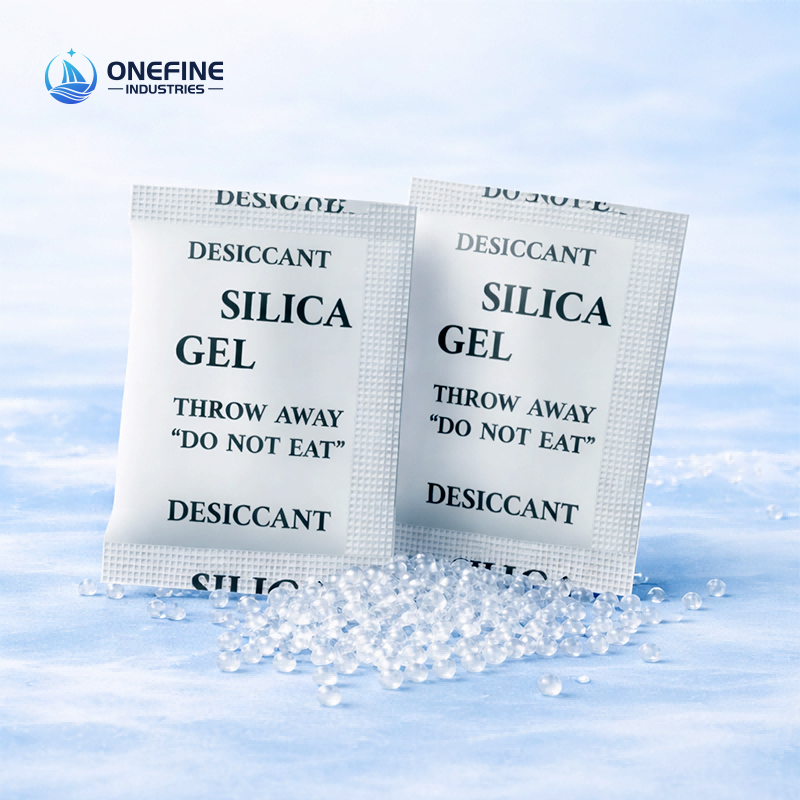
Silica gel desiccant is a high-performance, non-toxic adsorption material widely used to protect moisture-sensitive products from damage.
Related Reading
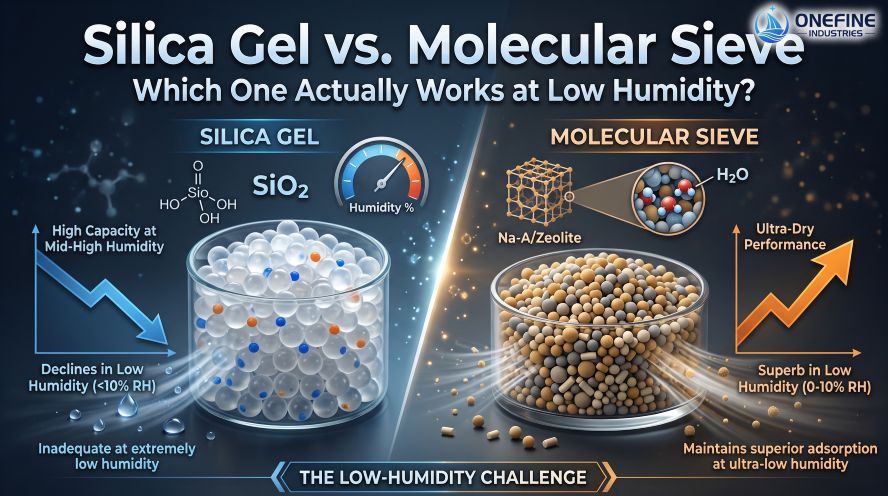
Silica Gel vs. Molecular Sieve: Which One Actually Works at Low Humidity?
Silica gel and molecular sieve are both common desiccants, but they work through different mechanisms, and that difference matters most at low relative humidity. Here's what actually happens at the molecular level, and when each one is the right choice.
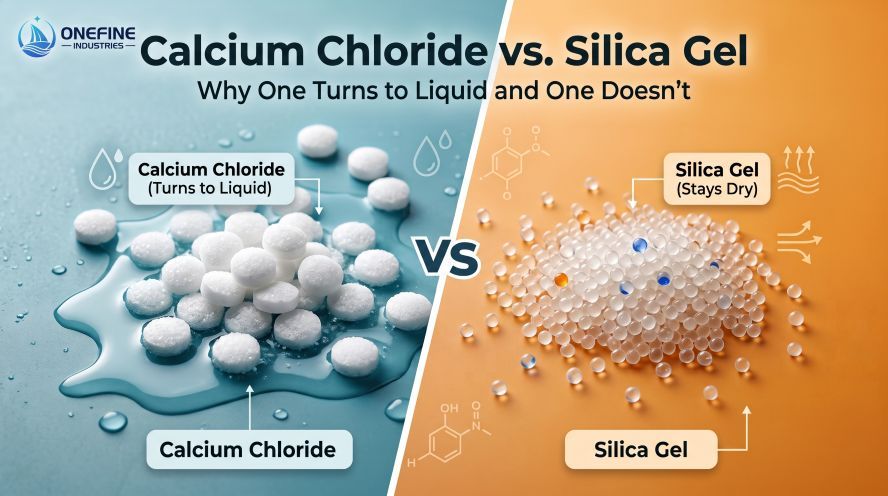
Calcium Chloride vs. Silica Gel: Why One Turns to Liquid and One Doesn't
Calcium chloride and silica gel are often treated as interchangeable desiccants, but one is deliquescent and one is not. Here is the humidity threshold that explains the difference, and what it means for your packaging.