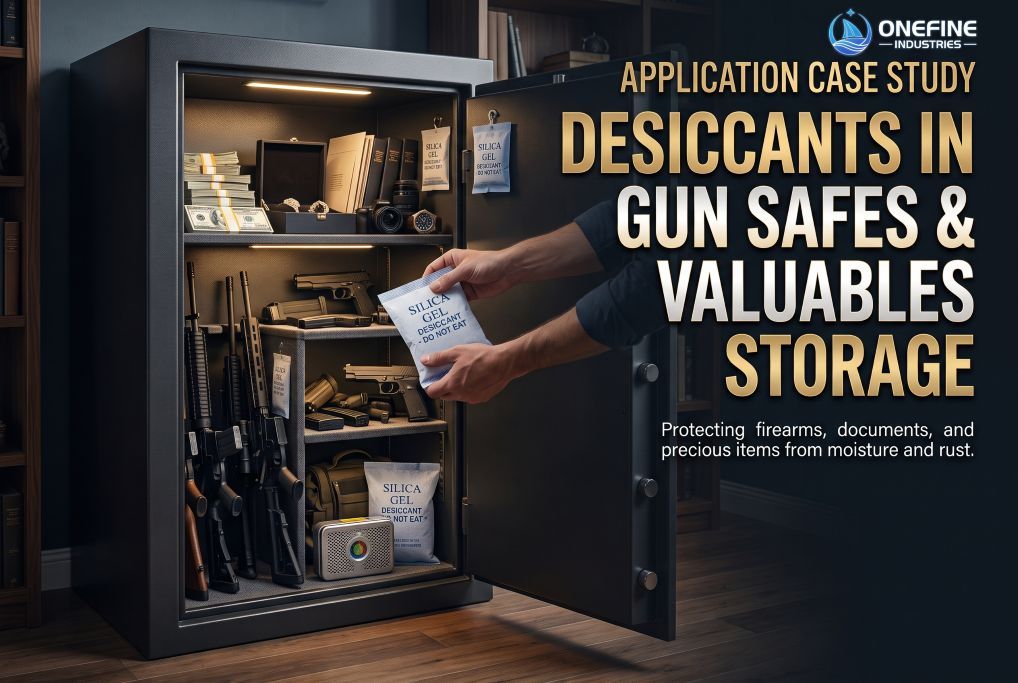
Desiccants in Gun Safes and Valuables Storage
Detailed Description
Key Takeaways
- Gun safes and security cabinets are not sealed enclosures — they're insulated steel boxes with enough gaps and thermal mass to trap and cycle humid air, which is exactly the condition that causes rust on firearms and metal valuables.
- Steel corrosion isn't a gradual, even curve against humidity — research from MIT's Corrosion Laboratory identifies a critical relative humidity threshold (commonly cited around 60% RH) above which corrosion rate increases sharply, not gradually.
- Desiccant works by keeping the air inside the safe below that threshold — but it's one layer in a corrosion-prevention approach, not a substitute for basic maintenance like oiling and avoiding storing contaminated items inside.
Why a "Sealed" Safe Still Rusts
Gun safes and valuables cabinets are built to resist forced entry and, in some cases, fire — not to be airtight. Door seals, bolt-work cutouts, and the safe's own thermal mass mean humid air gets in and, worse, gets trapped. A safe in a garage or basement that goes through a daily temperature swing will cycle through condensation-prone conditions even though the door hasn't been opened — warm, moist air enters when the ambient temperature is higher, then as the safe's interior cools, that trapped air's relative humidity rises, sometimes to the point of condensing directly onto bare metal surfaces.
This is the core problem with gun safes specifically: they hold blued or matte-finish steel firearms, which have minimal corrosion protection compared to stainless or coated surfaces, in an enclosure that's good at keeping intruders out but not particularly good at keeping humidity out.
The Humidity Threshold That Actually Matters
Not all humidity levels are equally dangerous to steel. Classic corrosion research from Prof. H.H. Uhlig at MIT's Corrosion Laboratory identified what's known as a critical relative humidity — a threshold above which the corrosion rate of iron and steel increases sharply rather than gradually. Below that threshold, roughly cited around 60% RH in atmospheric corrosion literature, steel corrodes very slowly; above it, the rate climbs markedly, because there's enough adsorbed moisture on the metal surface to sustain the electrochemical reaction that drives rust.
This is why "a little humidity" and "too much humidity" aren't really points on a smooth gradient — there's a meaningful threshold effect, and the practical goal for firearm and valuables storage is to keep the safe's interior air reliably below it, not just "drier than outside."
One important caveat worth being direct about: the critical-RH threshold describes clean steel in otherwise uncontaminated air. In real-world corrosion studies, surface contamination (such as residual salts or chlorides) can lower the effective threshold at which corrosion accelerates — meaning dry air alone doesn't fully compensate for a dirty or uncleaned metal surface. For firearms specifically, this is also an argument for basic maintenance (wiping down, light oiling) alongside humidity control, not instead of it.
Where Desiccant Fits
A desiccant unit placed inside a gun safe or valuables cabinet works by continuously adsorbing moisture from the trapped air, keeping the interior RH below the level where corrosion risk sharply increases — rather than reacting after the fact. Because safes are small, closed volumes rather than open rooms, a correctly sized desiccant can meaningfully influence the interior humidity in a way that would be impractical for a whole room. Reactivatable options — silica gel that can be dried out in an oven and reused — are a practical fit here specifically because a safe is opened infrequently, so a desiccant that can be periodically pulled, refreshed, and put back is lower-maintenance than a one-time-use pack that needs frequent replacement.
What Desiccant Does Not Replace
Desiccant lowers ambient humidity; it doesn't clean a surface or displace fingerprint oils and residual salts already on metal. For firearms and other metal valuables, that means desiccant works best as one part of a routine that also includes basic cleaning and light oiling before long-term storage — not as a standalone fix for items that go into the safe dirty or already showing surface contamination.
Recommended Products from Onefine
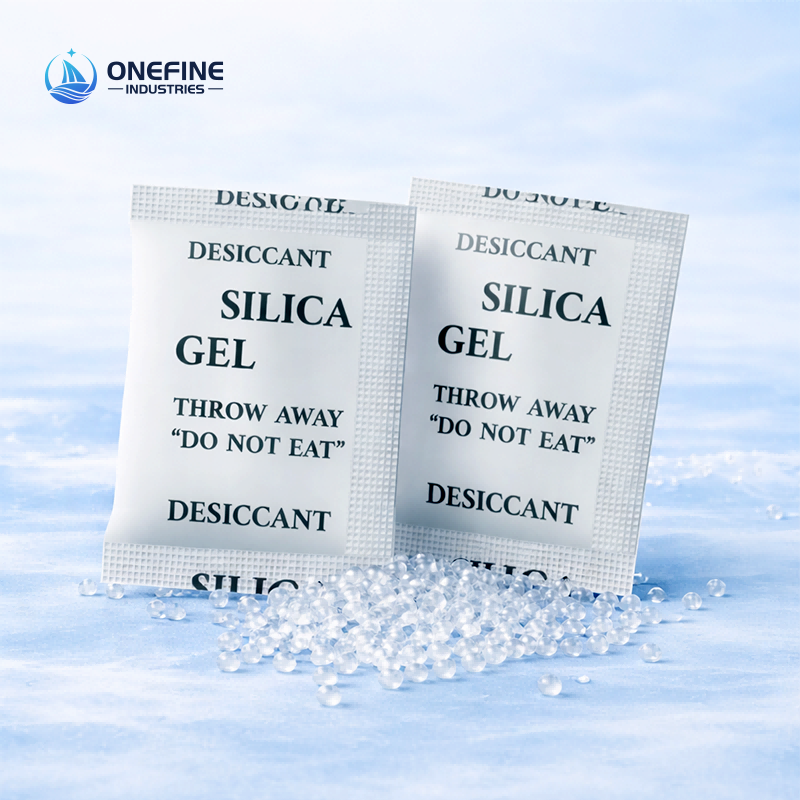
- Silica Gel Desiccant Sachet — reactivatable by drying, well suited to a safe's infrequent-access, long-duration storage pattern (already linked above)
Keeping Metal Valuables Rust-Free in Storage?
Onefine supplies reactivatable silica gel desiccants sized for small, enclosed spaces like safes and secure cabinets. Tell us your safe's approximate interior volume, and we'll help you choose the right size and format.
We provide:
- ✅ Reactivatable silica gel for long-term, low-maintenance humidity control
- ✅ Pack sizes suited to small enclosed spaces like safes and cabinets
- ✅ Custom packaging and private label options
- ✅ Worldwide shipping
- ✅ Technical support for sizing your specific enclosure
Related Reading

How Much Desiccant Do You Actually Need?
Desiccant packaging follows a real industry standard (MIL-D-3464), not guesswork. Here's how the unit-based formula actually works, a worked example, and what the simplified version leaves out.
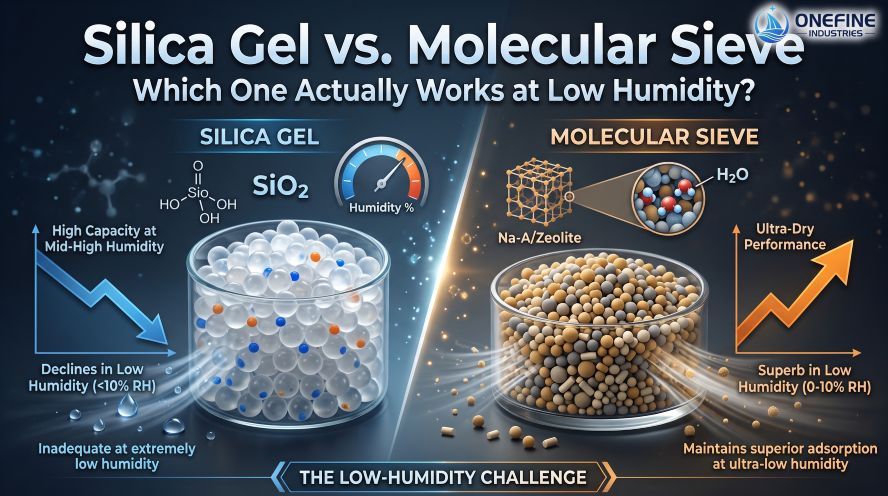
Silica Gel vs. Molecular Sieve: Which One Actually Works at Low Humidity?
Silica gel and molecular sieve are both common desiccants, but they work through different mechanisms, and that difference matters most at low relative humidity. Here's what actually happens at the molecular level, and when each one is the right choice.