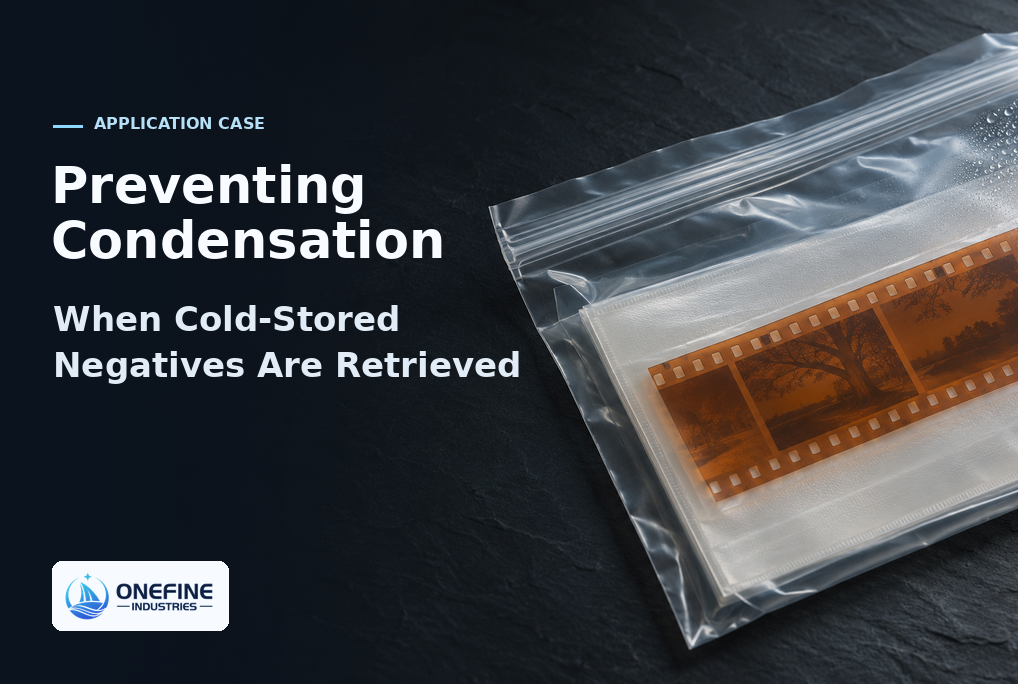
Preventing Condensation When Cold-Stored Negatives Are Retrieved
Detailed Description
Key Takeaways
- Keep the vapor barrier sealed until the film is warm enough to open safely.
- Validate the warm-up time with a representative test package.
- Use a sachet only where it supports a defined packaging moisture target.
Application scenario
A small photo archive retrieves batches of cold-stored negatives for scanning. The collection includes packs of different sizes, and the scanning room is warmer than the store. This illustrative case draws on public preservation guidance. It describes a workflow the archive could validate for its own collection.
Why condensation occurs during retrieval
Room air can deposit moisture on a film surface colder than the room-air dew point. The outside of a package warms first, so a dry-looking exterior does not establish that the film inside is ready. A sealed vapor barrier keeps humid room air away from the film during this transition. The enclosure should follow the collection’s preservation requirements for the relevant film type.
Before removing a batch
Identify the requested negatives and prepare the scanner, holders and work surface in advance. Check the outer seal for damage. Withdraw only the batch you plan to scan and log when it left storage. Keep the package closed while moving it to a clean staging area away from direct heat.
Establish when a package can be opened
Use a representative test pack to establish the warm-up time for a given package size and room condition. Place a temperature logger near the slowest-warming part of the test pack and record room temperature and relative humidity. Use the room-air dew point and a margin agreed with the preservation team to decide when the test pack can be opened. Test thicker packs separately and revisit the schedule if the room conditions or packing arrangement change.
Handle exceptions and return the film
If water is visible on the outside of the closed barrier, keep the package sealed and allow it to continue warming. If moisture appears inside, the seal is damaged, or the film is already sticking or deteriorating, pause normal handling and seek the collection’s preservation guidance. After scanning, return the batch using the approved rehousing and resealing procedure. Record any anomalies so the next retrieval can use a better-tested schedule.
Where silica gel sachets fit
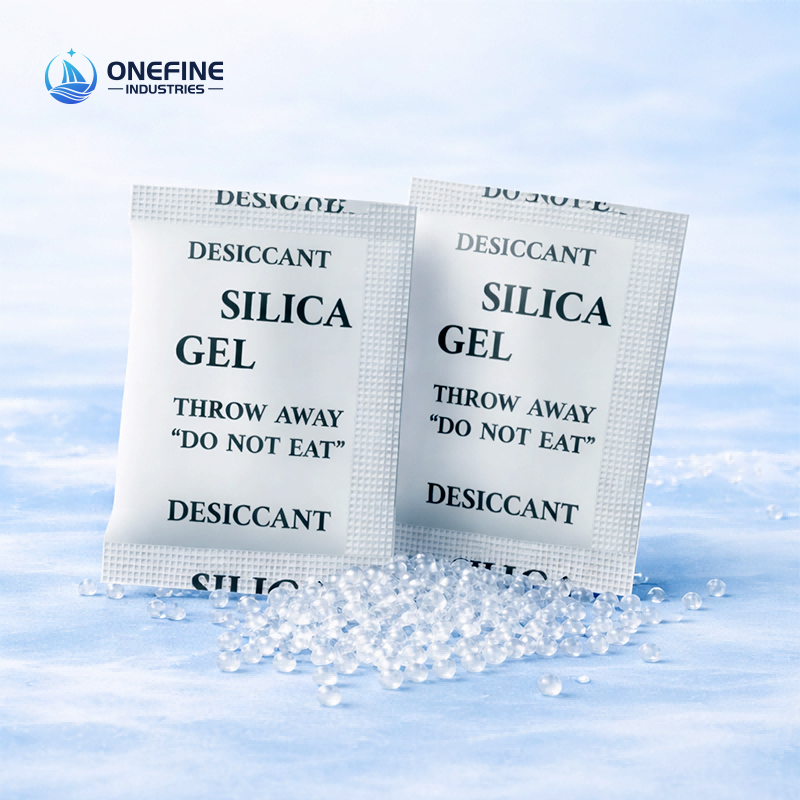
A sachet may be useful in a package designed for a specific storage humidity. Review the target range, barrier and placement with the archive team before choosing a sachet. Keep it separate from direct contact with the negatives. During retrieval, the vapor barrier and the sealed warm-up step are the primary controls.
Start with the collection inventory
Before changing the packaging routine, group the negatives by identified film base, condition and handling requirements. Identify which groups are accessed most often and which can stay in storage for longer intervals. Keep unidentified or deteriorating material outside the routine retrieval trial until the collection's preservation team has assessed it. A handling method that works for one group does not establish the right storage conditions for another.
A working inventory can be simple. Record the shelf location, package identifier, film format, approximate package thickness and typical number of items taken out per session. If one outer package holds more material than staff normally need, review whether smaller separately sealed retrieval batches would reduce unnecessary openings. Consider the impact of repackaging on labeling, protective sleeves and the collection's existing handling rules.
Design a retrieval trial around the slowest package
Make a test pack with the same outer barrier, packing density and dimensions as the batch staff normally retrieve. Use expendable materials or a suitable surrogate rather than exposing valuable negatives during a trial. If the collection regularly retrieves two sizes, track them separately. A thin envelope and a tightly stacked pack can warm at different rates even when both come from the same shelf.
For each trial, record the cold storage conditions, the time the pack enters the room, the room temperature and humidity, and the internal temperature trend. Preserve the position of the logger in your notes so another person can repeat the trial. Compare the result with the room dew point and the opening margin agreed with the preservation team. Repeat under representative conditions if the room becomes more humid during a different season.
Turn the trial into a staff procedure
Give staff a short sequence with an explicit decision point. Check package integrity and the room conditions. Log removal time and stage the closed pack in the approved location. Apply the validated opening procedure for that pack type. If the room or package falls outside the conditions covered by the trial, keep the barrier closed and consult the designated collection lead. This prevents an example warm-up time from becoming a universal rule.
Keep the work session short enough that the scheduled material can be handled and returned using the approved workflow. A staging list can distinguish packs still warming, packs cleared for handling and packs ready for return. Place labels where staff can read them without opening the barrier. Record exceptions, including an interrupted scan session, an unknown seal condition or an unexpected move to a different room.
Review whether the workflow is ready for routine use
Check that two staff members can follow the same instructions and identify the same opening decision with the information available to them. Review whether the records make it possible to reconstruct which pack was opened, in what room conditions and after which validated warm-up step. Revisit the trial if the barrier, packing thickness, room, or access pattern changes. A successful handling trial supports that specific workflow and should be recorded alongside the collection's preservation policy.
When reviewing sachets, compare the proposed format with the placement allowed by the package and the relevant storage humidity target. Log any change to both placement and sachet type to avoid confusing the result of a new barrier or seal with the contribution of the sorbent.
For handover, keep a blank retrieval log and one completed example beside the storage procedure. Include a place for the person opening the pack to record the decision, any reason for delay, and whether the batch returned to its original storage location.
Discuss the package format with Onefine
Share the enclosure dimensions, access frequency and preservation requirements to discuss suitable sachet formats and placement for a packaging trial.