Humidity Indicator Cards vs. Desiccant Packets: What Each One Tells You
Key Takeaways
- A humidity indicator card responds to the surrounding relative humidity; a desiccant packet removes water vapor.
- A printed RH percentage is not a percentage of desiccant capacity remaining.
- Reversible indicators do not provide a complete record of past exposure.
- Read the indicator instructions and investigate the whole package before blaming the packet.
A color-changing spot inside a storage bag can be useful, but it does not answer every moisture question. It may show that a humidity condition has been reached without explaining how much water a nearby desiccant packet has collected or how much useful capacity remains.
Confusing these jobs can lead to two mistakes: treating an indicator as moisture protection, or replacing a packet on the assumption that the card acts like a fuel gauge. Understanding the difference helps you choose and check a small-package moisture-control system more carefully.
Monitoring and Moisture Removal Are Different Jobs
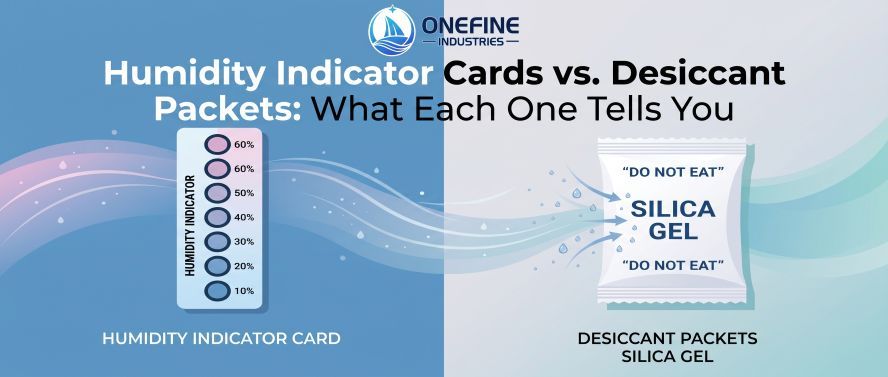
A humidity indicator card uses humidity-sensitive spots to provide a visual indication of relative humidity, or RH. A desiccant packet contains material intended to take up water vapor. One helps you observe a condition; the other helps you change it.
For example, Brownell describes indicator cards with chemically treated spots designed to change color at specified RH levels. Its published examples include reversible cards, so their appearance can respond again when conditions change. The printed instructions and color reference belong to the specific card, not to all products that look similar.
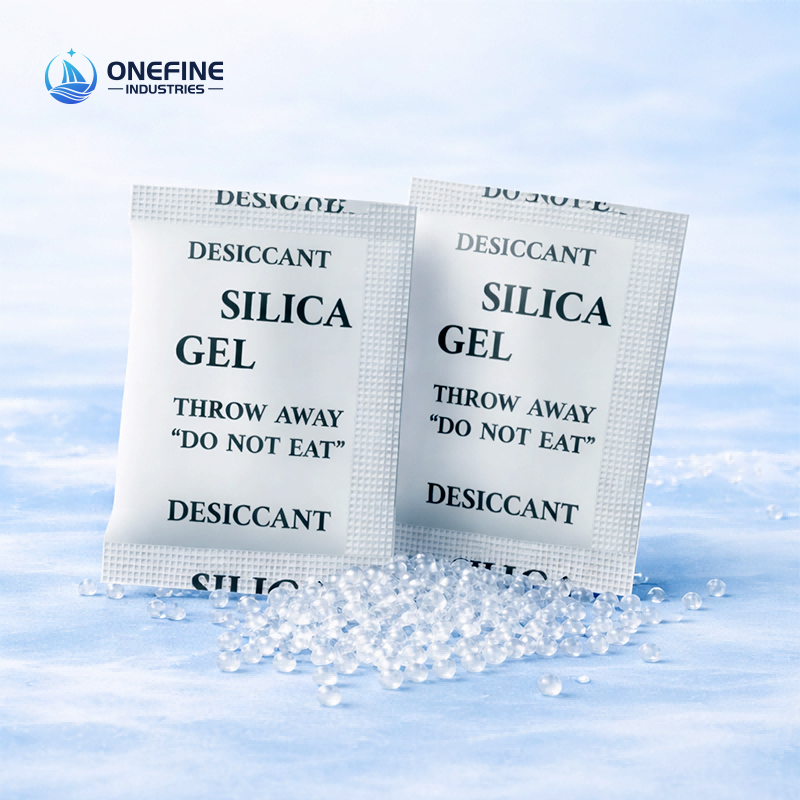
A silica gel sachet serves a different purpose inside the package. It is the moisture-removing component, not a calibrated display of the air condition. An ordinary card is not a substitute for the desiccant quantity required by the package.
Why RH Does Not Mean Remaining Packet Capacity
Relative humidity describes the surrounding air at a particular temperature. It is not the mass of water already held by a packet. A card marked at 40% RH, for example, is not saying that the desiccant is 40% full or has 60% capacity left.
Two separate measurements would be needed to investigate those different questions: humidity information for the enclosure, and material-specific information about water uptake under the relevant conditions. A card alone supplies neither the packet's loading history nor its full adsorption behavior.
The practical consequence is straightforward: do not convert a spot's number into grams of water, remaining storage days or a universal replacement date. That conclusion follows from the difference between an air-condition indicator and an adsorbent-capacity measurement; it is not a performance promise for any particular card.
A Color Change Does Not Identify the Cause
If an indicator shows an unexpected condition, the packet is only one part of the investigation. The enclosure may admit moisture, the contents may carry moisture into storage, or opening the package may change the environment inside it.
The Canadian Conservation Institute explains that moisture control in enclosures depends on factors including the sorbent, the enclosure and the environment. Although its guidance concerns collection storage, the general distinction is useful here: changing the packet alone does not establish that the moisture load has been controlled.
This is where our guide to packaging and moisture load provides the next question to consider. The indicator reports a condition; it does not tell you whether the seal, packaging material or initial moisture load caused it.
Read the Indicator Within Its Limits
Use the color chart and reading conditions supplied for the actual indicator. Check whether it is reversible and whether its instructions specify temperature, exposure or handling requirements. Do not import a color interpretation from another card or from indicating silica gel.
Brownell's older card data sheet describes particular cobalt-salt indicators, while its current catalog also lists a cobalt-free model. These are product-specific examples, not a basis for assuming every blue, pink or orange indicator uses the same chemistry.
A reversible card also cannot be treated as proof that no earlier humidity excursion occurred. If you need a history rather than a visual reading, choose a monitoring method designed to record it. That requirement is different from simply including an indicator in the pack.
Choose the Packet and the Indicator Separately
Start with the product being protected and the intended storage conditions. Then consider enclosure design, exposure during packing, the desiccant material and the way the package will be checked.
Our article on desiccant quantity planning addresses the sizing question. A humidity card can support the checking process, but does not replace a suitable sizing method or validation of the finished package.
Do not assume that adding more dry material is always the correct response. The humidity requirement belongs to the protected item. For sensitive paper, leather or mixed-material objects, the goal may be a suitable stable environment rather than the lowest achievable RH.
Recommended Products from Onefine
- Silica Gel Desiccant Sachet: A small-package moisture-control product to evaluate against the enclosure, required conditions and intended service period.
Humidity indicator cards are discussed as monitoring accessories. This article does not claim that they are part of Onefine's confirmed product catalog.
FAQ
Can I replace a desiccant packet with an indicator card?
No. A card indicates a humidity condition; it is not designed to carry the package's moisture-removal duty.
Does a dry-looking card prove the packet is new?
No. It does not identify the packet's age, previous exposure or remaining useful capacity.
Should I use the same color rule for every indicator?
No. Use the instructions and reference colors for the specific card or indicating material.
Need Desiccant Sachets for Your Packaging?
Share the item being packed, enclosure dimensions, storage conditions and preferred sachet format with Onefine. We can discuss the material and packaging requirements for evaluation, without treating an indicator reading as a substitute for package testing.
We provide:
- ✅ Sachet material and format selection support
- ✅ Packaging options for small enclosed spaces
- ✅ Custom packaging and private label options
- ✅ Product documentation review for your application
- ✅ Help defining the information needed for a packaging inquiry
Related Reading

How Packaging Material Changes Desiccant Need
How much desiccant you need is not just about container volume. The packaging material itself lets moisture through at very different rates, and that single factor can change your desiccant requirement by two orders of magnitude.

How Much Desiccant Do You Actually Need?
Desiccant packaging follows a real industry standard (MIL-D-3464), not guesswork. Here's how the unit-based formula actually works, a worked example, and what the simplified version leaves out.

Why Is Humidity Still High with Desiccant in a Sealed Box?
Troubleshoot high humidity in a storage box: check the meter, closure, damp contents and packet condition before changing your desiccant setup.
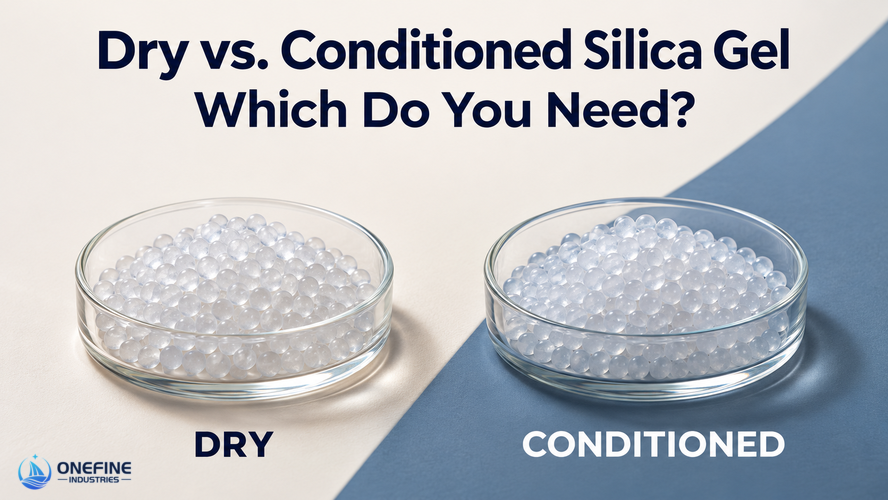
Dry vs. Conditioned Silica Gel: Which Do You Need?
Choose between dry silica gel for moisture removal and conditioned silica gel for buffering humidity around a target range.