How to Prevent "Container Rain" and Protect Your Cargo
What Is Container Rain?
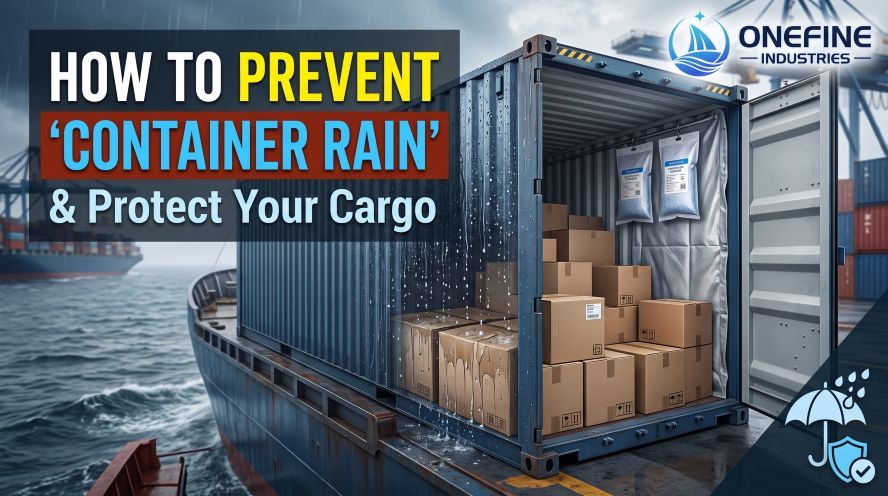
If you've ever opened a shipping container and found your cargo damp, stained, or covered in mold despite leaving the factory bone dry, you've likely encountered "container rain." The name is accurate — water droplets form on the ceiling and walls of the container during transit, then drip down onto the goods below, just like indoor rain.
This isn't a leak in the strict sense, though standard containers aren't fully vapor-tight either — wear around the door seals can let in small amounts of outside air over a long voyage. But the main cause isn't a hole in the container. It's condensation forming from moisture that was already sealed inside.
Why Does It Happen?
A container sitting in the sun heats up far more than most people expect. With an outside air temperature of around 25°C, the air inside a dark-painted steel container can climb to roughly 50°C during the day, while a white-painted container stays closer to 38°C — cargo itself heats up more slowly and lags behind the air. Overnight, that heat radiates back out, and the air — and especially the roof panel, which cools fastest — drops well below its daytime peak.
That swing is what triggers condensation. Warm air can hold far more moisture than cool air at the same relative humidity, so as the container cools overnight, the air reaches its dew point — the temperature at which it can no longer hold all its moisture — and the excess condenses out, typically on the coldest surface available: the ceiling and upper walls.
A simple way to picture it: air at 20°C and 70% relative humidity has a dew point of around 14°C. Any surface that cools to 14°C or below in that air — a cold drink, or a container roof overnight — will start to "sweat." The closer the gap between air temperature and dew point, the easier it is for condensation to happen, and that gap is driven mostly by how much moisture is in the air to begin with.
Which raises the real question: where does that moisture come from? Mostly from the cargo itself. Wood pallets, paper packaging, and many commodities carry residual water content, and as the container heats up during the day, that moisture evaporates into the enclosed air — then has nowhere to go but to condense somewhere cooler once night falls. The wetter the cargo and its packaging at loading, the worse the problem tends to be, regardless of outside weather.
The Real Cost of Container Rain
Container rain isn't just an inconvenience — it's a recognized cause of serious cargo loss, and it affects some cargo more than others. Hygroscopic goods (textiles, paper products, many food items) absorb and re-release moisture themselves, which drives the humidity cycle further. Cargo with naturally high water content narrows the gap to the dew point and raises risk across the board. Condensation damage shows up as mold growth, corrosion and rust on metal goods, warped packaging, delaminated labels, and outright spoilage.
For exporters, the financial impact goes beyond the damaged goods themselves: buyers can reject an entire shipment over moisture damage, leading to return shipping costs, disputes over liability, and reputational damage that outlasts any single order.
Prevention Checklist Before You Load the Container
Desiccants are one part of the answer — but a few loading habits make a bigger difference than most exporters realize:
- Check cargo moisture content before loading. Wood pallets, cartons, and paper-based packaging that haven't fully dried can keep "sweating" into the container air for days after the doors close.
- Avoid loading during peak humidity hours. Early morning loading at a humid port bakes more moisture into the container than loading later in the day.
- Don't overpack the container. Airflow around cargo matters — stacking goods flush against the walls traps condensation against the product instead of letting it run harmlessly down the container's drainage channels.
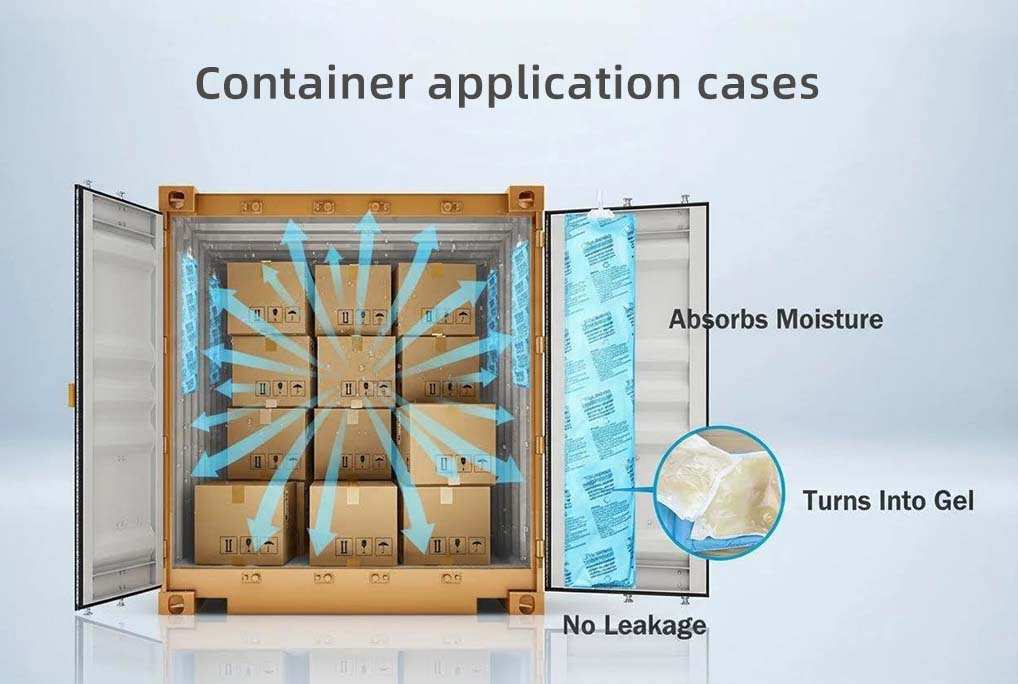
- Match desiccant placement to how condensation actually forms. Most container rain starts at the ceiling and upper corners, so that's where moisture control needs to be concentrated, not just scattered at floor level.
- Factor in route and season, not just destination climate — a container crossing multiple temperature zones over a long voyage faces more condensation risk than a short, climate-stable route.
A rough rule of thumb: the more your route crosses climate zones, and the more moisture-sensitive your cargo, the more conservative you should be on desiccant coverage — see our Container Desiccant Strip and Calcium Chloride Desiccant Packets pages for the specs, formats, and MOQs available for your shipment size.
What to Do If You Find Container Rain on Arrival
If a container is opened and moisture damage is already visible, a few steps can limit the fallout:
- Photograph everything before unloading — the condensation pattern, affected cartons, and any visible mold or corrosion. This documentation matters for insurance claims and supplier disputes.
- Separate affected goods immediately so moisture doesn't transfer to unaffected cargo during unloading and storage.
- Note where in the container the damage is concentrated. Damage clustered near the ceiling or one wall usually points to a condensation issue rather than a packaging or product defect — useful information when working out who's responsible.
- Review desiccant placement and quantity for the next shipment rather than assuming the same loading plan will work differently next time.
FAQ
Can container rain be completely eliminated? It's difficult to eliminate entirely, but it can be reduced dramatically with the right loading practices and a properly sized desiccant plan.
Is container rain more common on certain routes? Yes — routes that cross large temperature zones (for example, a hot loading port to a cooler destination, or vice versa) see it far more often than short, climate-stable routes.
Who's responsible when container rain damages a shipment? It depends on the contract terms and who controlled the packing and desiccant placement. This is exactly why documenting the damage pattern on arrival matters.
Does container type make a difference? Yes. Standard dry containers are the most exposed to large daily temperature swings. Insulated containers see smaller swings but can still condense if cargo is loaded cold into a hot climate (or vice versa), and ventilated containers rely on airflow to carry moisture out rather than letting it build up.
Where can I find the right desiccant for my shipment? That depends on your cargo type, container size, and route — reach out to our team with your shipment details and we'll help you work out a suitable plan.
Looking for Container-Ready Moisture Protection?
Onefine supplies moisture-control solutions built for the realities of ocean freight — from full container strips to retail-ready packets. Our team can help you work out the right format and quantity for your next shipment.
Related Products
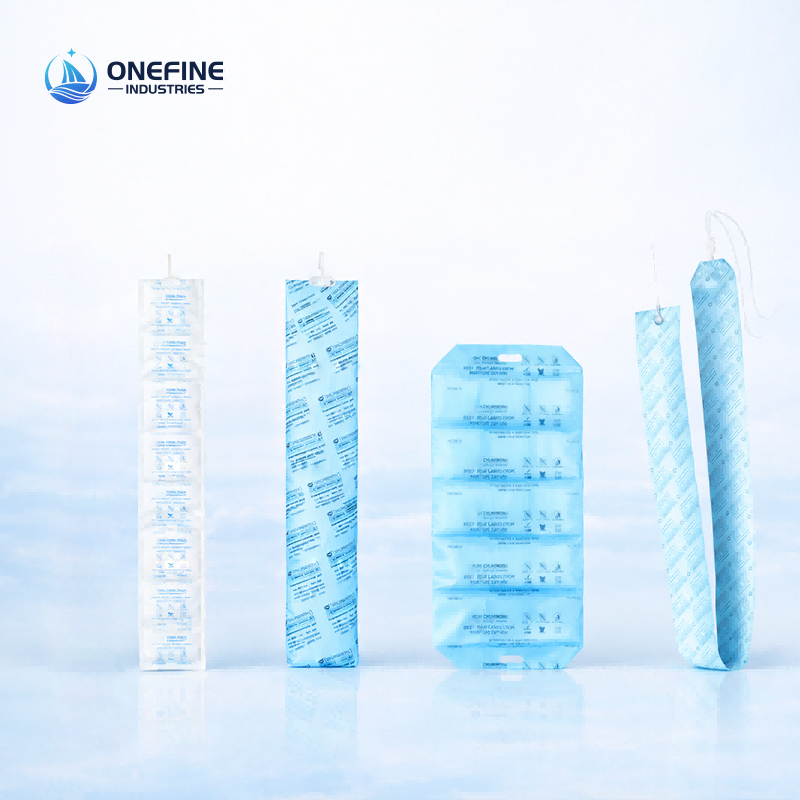
Container Desiccant Strip
Container desiccant strips use high-absorption calcium chloride to control humidity inside shipping containers, preventing condensation damage during long ocean voyages.
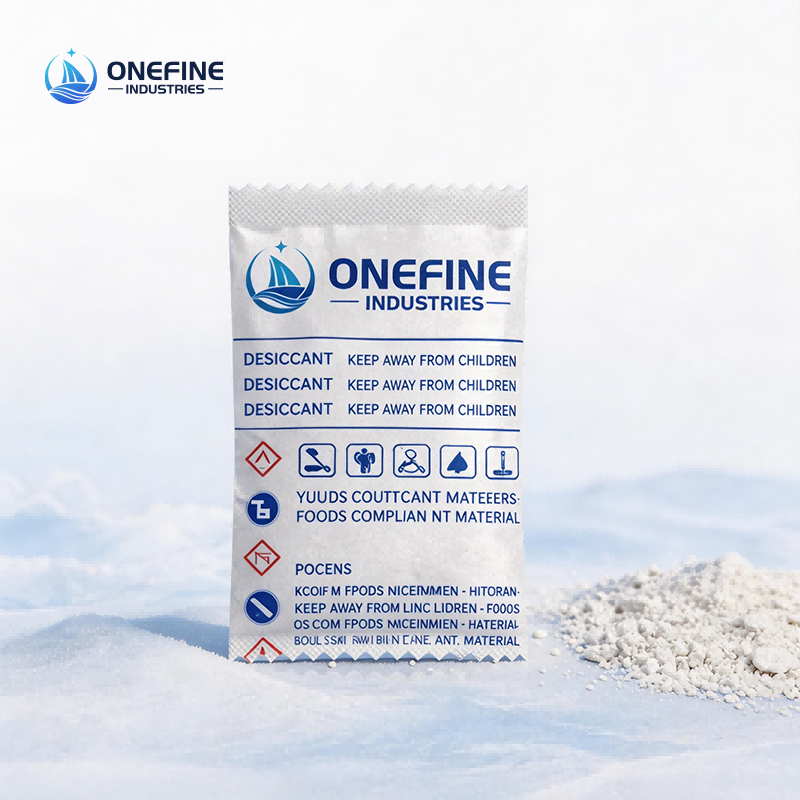
Calcium Chloride Desiccant Packets
Calcium chloride desiccant packets are a highly effective moisture-absorbing solution designed to prevent "container rain" and condensation damage during shipping and storage.
Related Applications
Related Reading
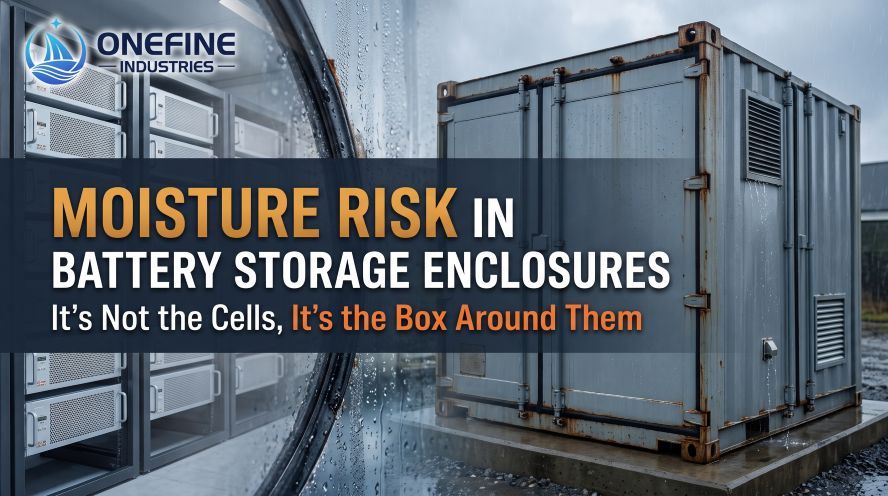
Moisture Risk in Battery Storage Enclosures: It's Not the Cells, It's the Box Around Them
Lithium battery cells are hermetically sealed, so it's easy to assume moisture isn't a storage concern. But the enclosure around those cells isn't sealed the same way — and that's where real moisture damage happens. Here's the actual mechanism, and what a desiccant inside the enclosure does and doesn't protect against.
Silica Gel Desiccant: Applications and Industry Insights

Orange Indicating Silica Gel to Green When Watering - Cobalt-Free
Orange Indicating Silica Gel orange silica gel indicating silica gel silica gel desiccant transformer breather silica gel moisture control desiccant industrial silica gel desiccant for packaging cobalt-free silica gel