Moisture Risk in Battery Storage Enclosures: It's Not the Cells, It's the Box Around Them
Key Takeaways
- A properly sealed lithium cell is airtight — the real moisture risk during storage, shipping, and field use is at the pack/enclosure level, not inside the cell can itself.
- Battery enclosures can't be fully sealed either: they need pressure-equalizing vents or breather membranes to survive thermal cycling, and that same air exchange lets humid air in.
- Condensation inside the enclosure causes corrosion and short circuits on the BMS board, connectors, and terminals — this is what a desiccant placed inside the enclosure is actually protecting against.
If you've ever wondered why a sealed lithium battery pack still ships with a desiccant strip inside it, the intuitive answer — "to keep the battery dry" — is only half right, and the half that's wrong is the important part.
Why Lithium Cells Are So Moisture-Sensitive in the First Place
To understand why the battery industry is so paranoid about moisture, it helps to know what actually happens when water reaches the inside of a lithium-ion cell. According to degradation research published by Amazon's science team, water reacts with the cell's electrolyte salt (LiPF₆) in a specific chain of reactions: LiPF₆ + H₂O → LiF + 2HF + POF₃, and the resulting POF₃ further hydrolyzes as POF₃ + 3H₂O → H₃PO₄ + 3HF. Separately, the carbonate solvents in the electrolyte (EC/PC/DEC) hydrolyze directly into alcohols and CO₂ gas. The HF produced attacks the cell's protective SEI layer (mainly LiF and Li₂CO₃), and the CO₂ from solvent breakdown is what causes the swelling.
The same study measured this directly: cells deliberately perforated to let in air and moisture swelled 30–65% in thickness, compared to about 5% for undamaged control cells, and their capacity fell below 80% within roughly 100 charge cycles. That's a dramatic, measurable failure from a breach that, in an intact cell, simply doesn't exist — the can is welded and hermetically sealed.
This is also why lithium battery manufacturing happens in dedicated "dry rooms" with humidity held in the low single digits of relative humidity or lower — the moisture-sensitivity window is during manufacturing, before the cell is sealed and filled with electrolyte, not after.
So Why Does a Finished Battery Pack Still Need Desiccant?
Here's the part that's easy to miss: once a cell is welded shut, humidity in the surrounding environment has no path to the electrolyte inside. A desiccant sachet sitting inside a battery pack enclosure is not fighting the LiPF₆ hydrolysis reaction described above — it has no way to. What it's actually protecting is everything else inside the enclosure that isn't hermetically sealed: the battery management system (BMS) circuit board, wiring connectors, bus bars, and terminals.
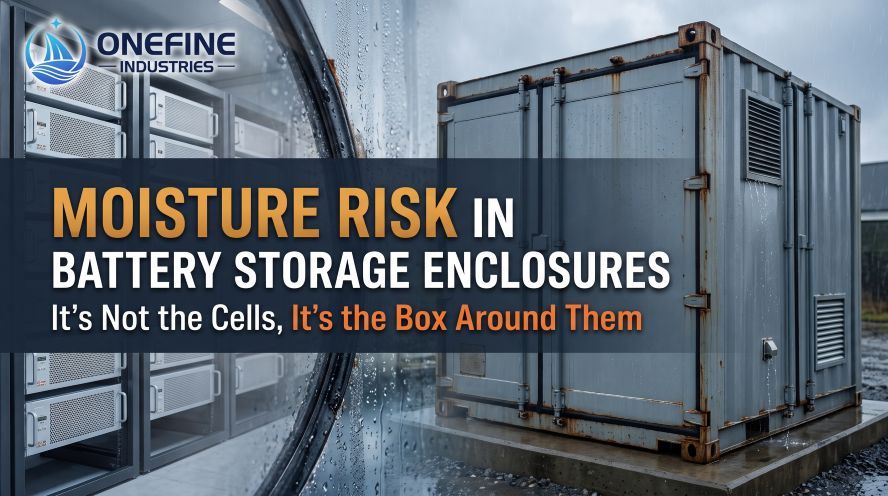
Battery pack and energy storage enclosures face a design problem that has nothing to do with the cells themselves: they can't be fully airtight either. As the enclosure heats and cools during charge/discharge cycles and ambient temperature swings, internal air pressure rises and falls. Without some way to equalize that pressure, the stress can crack seals or damage the housing over time — so enclosures are built with pressure-equalizing vents or breathable membranes. That same air exchange that relieves pressure is also the path humid air uses to get inside.
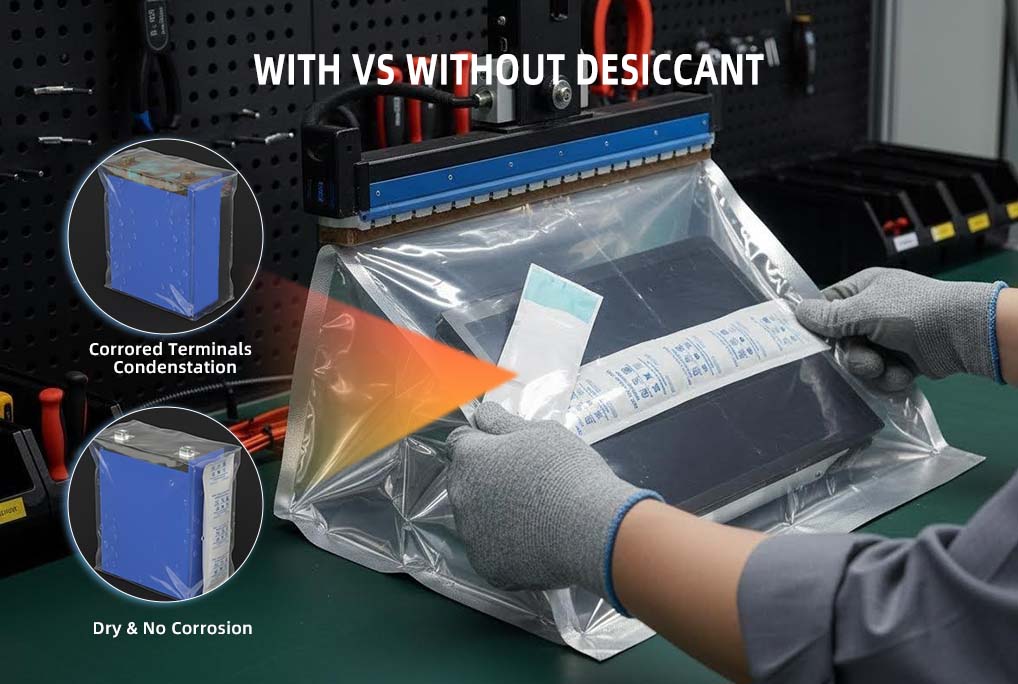
Once humid air is inside a sealed-but-vented enclosure, temperature cycling does the rest: warm, moist air condenses into liquid water on the cooler BMS board and connector surfaces, the same basic physics behind fogging in a vented automotive lamp housing, just with higher stakes. Condensation on a circuit board or connector causes corrosion over time and creates the conditions for electrical short circuits — a failure mode that can affect the battery management electronics long before the cells themselves are degraded by anything.
Where Moisture Actually Causes Damage, Stage by Stage
- During manufacturing (before the cell is sealed): Moisture reacting directly with exposed electrode and electrolyte materials — this is why dry-room humidity control exists, and it's a production-floor problem, not a storage/shipping one.
- Inside a properly sealed, undamaged cell: No moisture pathway exists. The hermetic can blocks it. A desiccant placed near the cell doesn't change this.
- Inside the pack/enclosure during storage, shipping, and field operation: This is the real, ongoing risk — humid air enters through pressure-equalizing vents or breather membranes, condenses on the BMS board and connectors as temperature cycles, and causes corrosion and short-circuit risk over time.
What a Desiccant Inside the Enclosure Actually Does
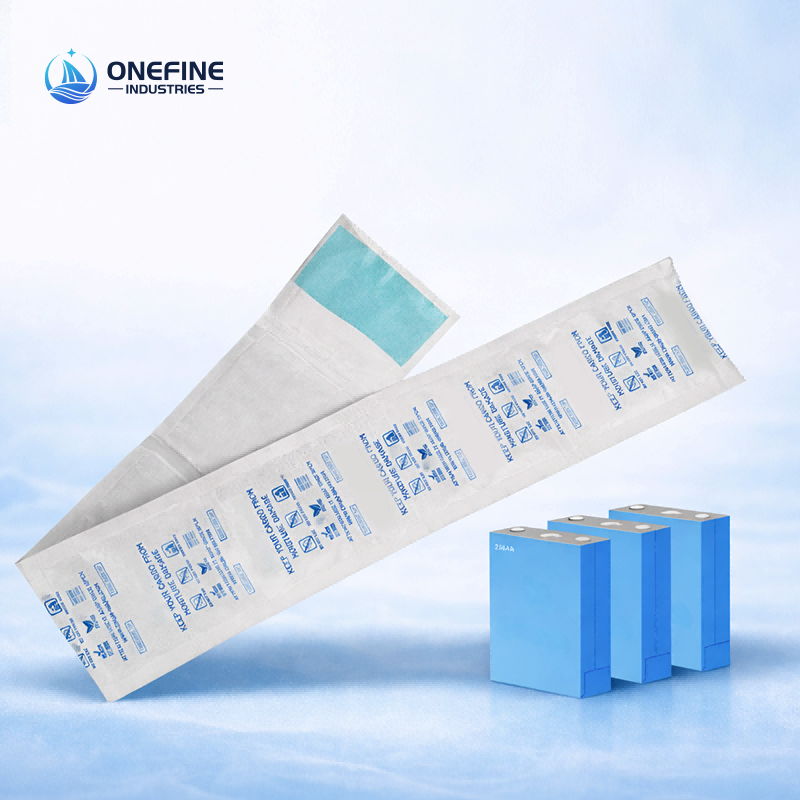
A desiccant placed inside the pack enclosure (not inside the individual cells, which isn't physically possible for a sealed cell anyway) absorbs the moisture that enters through the enclosure's pressure-equalizing vent or breather membrane before it can condense on the BMS board, connectors, or terminals. Onefine's Desiccant for Electrochemical Energy Storage uses a calcium chloride / magnesium chloride blend and is supplied by strip rather than by gram-weight sachet, sized to fit inside pack and cabinet enclosures rather than loose product packaging.
This is the same underlying principle used in other vented-enclosure applications — keeping the enclosed air's moisture from reaching a condensation point on sensitive components — just applied to a higher-consequence electrical environment than, say, a consumer electronics housing.
Recommended Products from Onefine
- Desiccant for Electrochemical Energy Storage — calcium chloride / magnesium chloride blend, strip format sized for pack/cabinet enclosures (already linked above)
- Calcium Chloride Desiccant Packets — general-purpose version of the same high-absorption chemistry, for packaging and shipping use outside battery enclosures
Looking for Battery Enclosure Desiccant Solutions?
Onefine supplies the Desiccant for Electrochemical Energy Storage in strip format for battery pack and energy storage cabinet enclosures, alongside our full line of small-pack desiccants for other packaging needs. Tell us your enclosure size and venting design, and we'll help you work out the right strip count and placement.
We provide:
- ✅ Strip-format desiccant sized for pack and cabinet enclosures
- ✅ High-absorption calcium chloride / magnesium chloride chemistry
- ✅ Custom packaging and pack sizes
- ✅ Worldwide shipping
- ✅ Fast quote response
Related Products
Desiccant for Electrochemical Energy Storage
Desiccant for electrochemical energy storage uses a calcium chloride and magnesium chloride blend to maintain the extremely low humidity levels required in battery manufacturing and storage.
Calcium Chloride Desiccant Packets
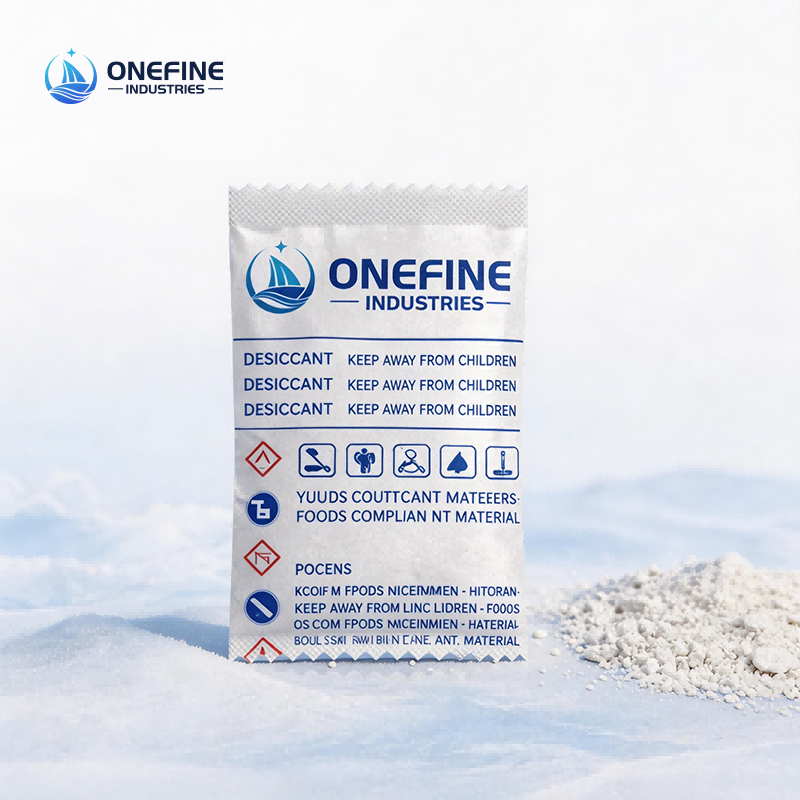
Calcium chloride desiccant packets are a highly effective moisture-absorbing solution designed to prevent "container rain" and condensation damage during shipping and storage.
Related Applications
Related Reading

How to Prevent "Container Rain" and Protect Your Cargo
Container rain can quietly destroy an entire shipment before it reaches port. Here's what causes it, what it costs exporters, and how the right desiccant stops it before it starts.
Silica Gel Desiccant: Applications and Industry Insights

Orange Indicating Silica Gel to Green When Watering - Cobalt-Free
Orange Indicating Silica Gel orange silica gel indicating silica gel silica gel desiccant transformer breather silica gel moisture control desiccant industrial silica gel desiccant for packaging cobalt-free silica gel