Guides & Best Practices
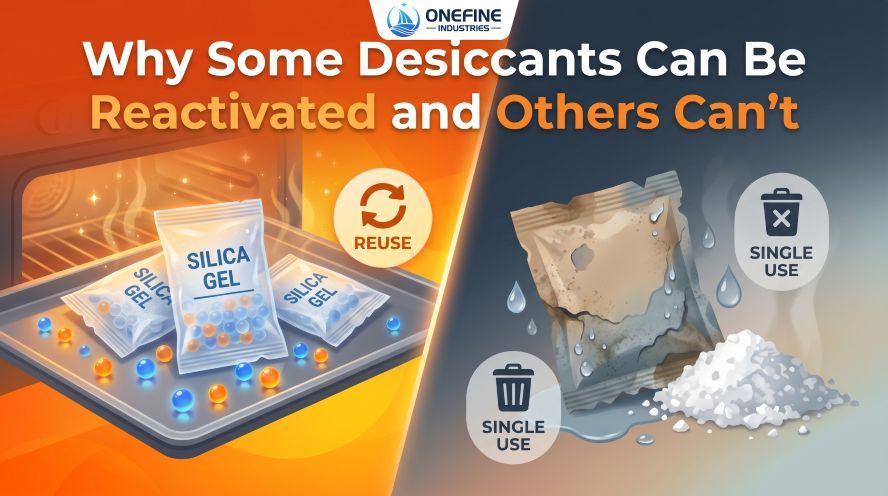
Why Some Desiccants Can Be Reactivated and Others Can't
Silica gel and molecular sieve can be oven-dried and reused. Calcium chloride cannot. The difference comes down to how each material holds moisture.
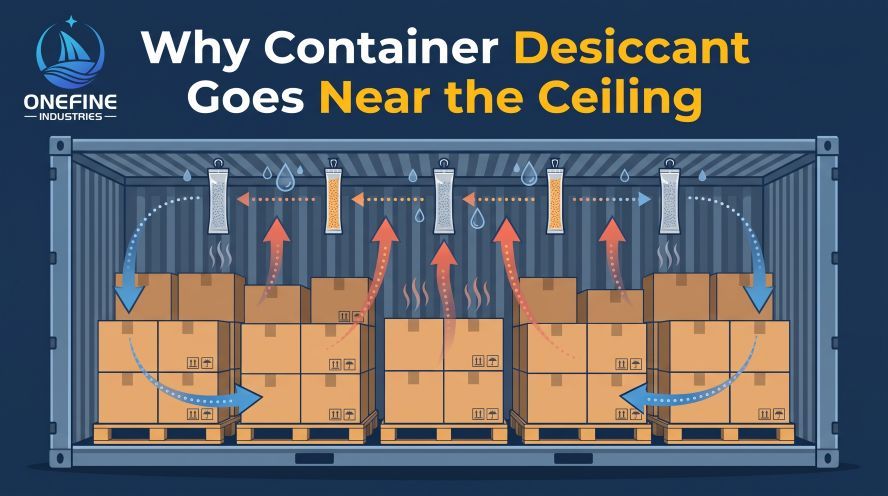
Why Container Desiccant Goes Near the Ceiling
Floor-level desiccant does little against container rain. Warm, moist air rises and condenses at the top, which is exactly where the desiccant needs to be.

Why Temperature Changes Which Desiccant Works Best
A desiccant that works great in a cool, humid warehouse can underperform in a hot one, and vice versa. The reason is not vague — it comes down to how strongly each material actually binds water, measured as heat of adsorption.

How Packaging Material Changes Desiccant Need
How much desiccant you need is not just about container volume. The packaging material itself lets moisture through at very different rates, and that single factor can change your desiccant requirement by two orders of magnitude.

How Much Desiccant Do You Actually Need?
Desiccant packaging follows a real industry standard (MIL-D-3464), not guesswork. Here's how the unit-based formula actually works, a worked example, and what the simplified version leaves out.

How to Prevent "Container Rain" and Protect Your Cargo
Container rain can quietly destroy an entire shipment before it reaches port. Here's what causes it, what it costs exporters, and how the right desiccant stops it before it starts.