Key Takeaways
- Published research on silica gel used in grain storage shows it can hold roughly 25-39% of its own weight in water — a concrete number that explains why it actually works as a desiccant.
- A widely cited 2014 test found that putting a wet electronic device in uncooked rice was actually less effective at drying it out than doing nothing at all — not just "not as good," but measurably worse than leaving the device alone.
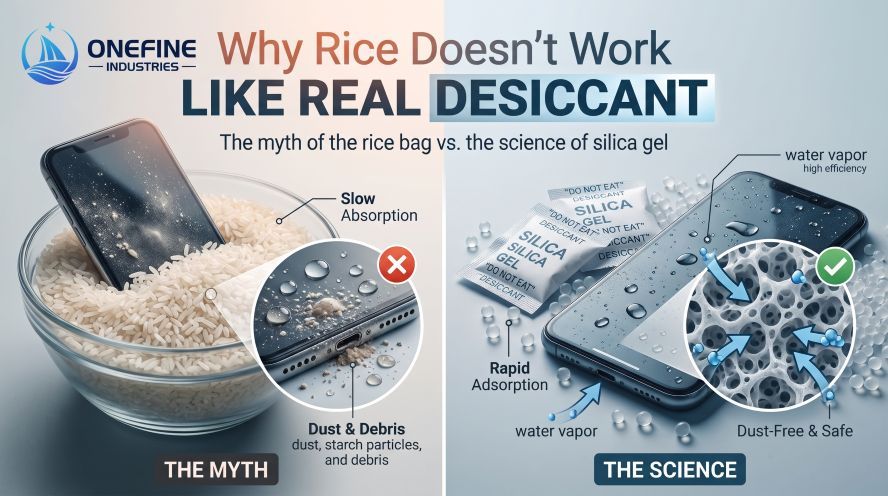
- The gap comes down to structure: silica gel is a porous mineral engineered with an enormous internal surface area built specifically to adsorb water vapor, while rice is a food starch with no comparable pore structure — it's being asked to do a job it was never built for.
"Put it in rice" is one of the most repeated pieces of moisture-control advice there is, usually aimed at a phone that fell in water. It's intuitive — rice looks and feels dry — but intuition and actual performance turned out to be two different things when people tested it.
The Rice Myth, and Where It Comes From
The appeal of rice as a makeshift desiccant is understandable: it's cheap, it's already in most kitchens, and dry rice does genuinely feel moisture-free to the touch. That's a reasonable-sounding basis for folk advice, even though it doesn't actually test whether rice can pull meaningful amounts of water out of the air or out of a wet object.
What the Actual Tests Found
A 2014 test conducted by consulting group DTJ found that placing a wet electronic device in uncooked rice was less effective at drying it than simply doing nothing at all — a result that goes further than "rice isn't great," suggesting rice may actively interfere with drying rather than just underperforming. A separate hands-on side-by-side test by hobbyist engineering outlet Hackaday compared several real desiccant materials (including silica gel, bentonite clay, and zeolite) against easy-cook rice under the same conditions over several months; silica gel "won by a country mile," with the write-up noting rice wasn't close to the best performer in the group even though it did show some desiccant-like behavior.
Neither test published exact numbers for how much water the rice itself absorbed — the available evidence here is consistently qualitative and directional rather than precisely quantified, and it's worth being upfront about that rather than inventing a specific rice figure to make the comparison look more precise than the underlying tests actually were.
Why the Difference Is So Large
[Internal link] The explanation is structural, not just a matter of degree. Silica gel is manufactured specifically to have an enormous internal surface area of microscopic pores — the same pore structure that determines silica gel's performance in general — giving water vapor molecules an enormous amount of surface to physically adsorb onto. Published agricultural research on silica gel used for drying stored grain gives a concrete sense of just how much capacity that pore structure provides: tested packets held roughly 25% to 39% of their own weight in water, depending on how fresh or regenerated the silica gel was.
Rice, by contrast, is a food starch — its structure is built for the plant's own biology, not for holding open microscopic pores that pull water vapor out of surrounding air. It isn't that rice absorbs zero moisture ever; it's that it was never engineered for this specific job, and the test results above suggest it doesn't do it particularly well even informally.
Key Differences at a Glance
- Silica gel: Engineered porous structure, holds roughly 25-39% of its own weight in water according to published research, purpose-built for moisture adsorption
- Uncooked rice: Food starch with no comparable pore structure; documented tests found it performed worse than doing nothing in a real drying scenario
If You Actually Need Reliable Moisture Control
[Internal link] For anything where moisture control actually matters — not just a one-off emergency — calculating the right amount of real desiccant for the space or product involved is the more reliable path than reaching for whatever's in the pantry.
Recommended Products from Onefine
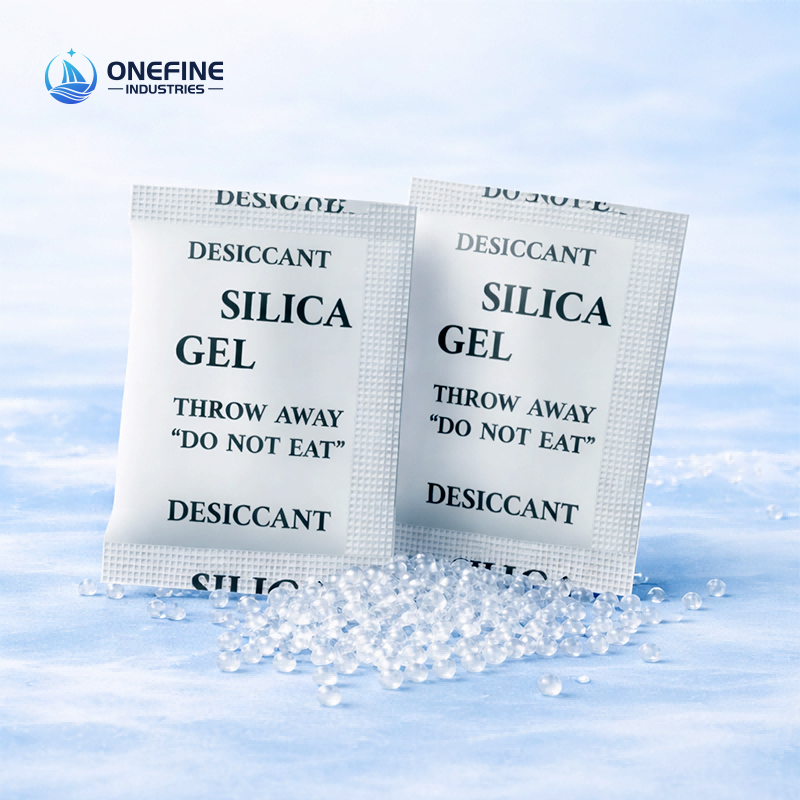
- Silica Gel Desiccant Sachet — general-purpose moisture control engineered for actual adsorption capacity, not a kitchen substitute
Need Desiccant That Actually Works?
Onefine supplies silica gel desiccant engineered for real moisture adsorption performance, not improvised substitutes. Tell us your application, and we'll help confirm the right product and quantity.
We provide:
- ✅ Silica gel desiccant for general packaging and shipping applications
- ✅ Retail-ready small-pack sizes and custom packaging options
- ✅ Worldwide shipping
- ✅ Technical support for confirming the right desiccant amount for your use case
- ✅ Fast quote response
Related Reading
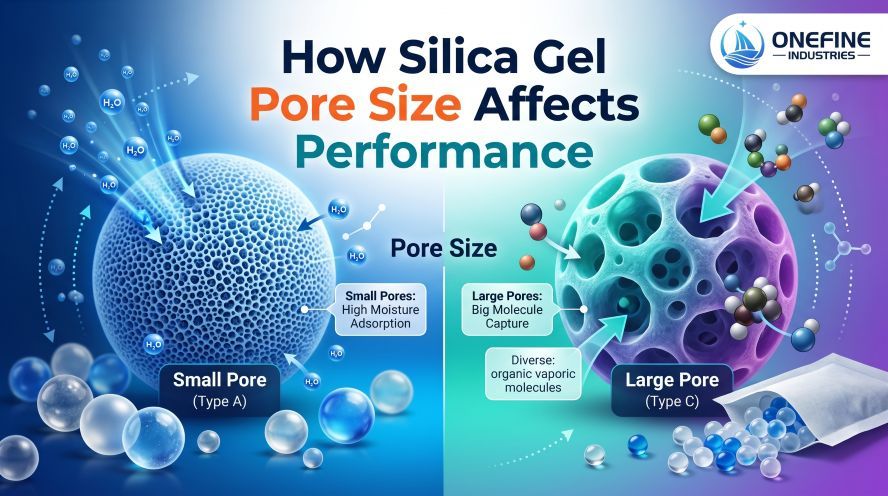
How Silica Gel Pore Size Affects Performance
Two silica gel desiccants can look identical and still perform very differently depending on the humidity range. The reason comes down to pore size, which decides whether the material pulls moisture out of the air best at low humidity or high humidity.

How Much Desiccant Do You Actually Need?
Desiccant packaging follows a real industry standard (MIL-D-3464), not guesswork. Here's how the unit-based formula actually works, a worked example, and what the simplified version leaves out.