Key Takeaways
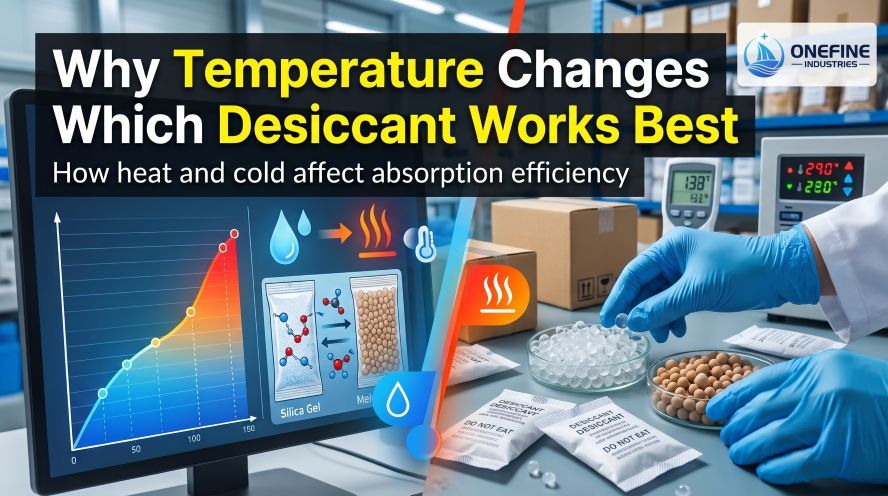
- Silica gel and molecular sieve respond to rising temperature in opposite ways: silica gel releases moisture back into the air more readily as temperature climbs, while molecular sieve holds onto moisture more stubbornly.
- The underlying reason is heat of adsorption — roughly 1,300 BTU per pound of water for silica gel versus roughly 1,800 BTU per pound for molecular sieve — a direct measure of how strongly each material binds water molecules.
- This is why silica gel is generally the better fit for cooler, high-humidity conditions, while molecular sieve holds its performance better in hot, low-humidity environments.
"Which desiccant is better" doesn't have one fixed answer — it depends partly on the temperature the desiccant will actually be sitting in. We've already covered how silica gel and molecular sieve compare at low humidity; temperature is the other variable that shifts which one actually performs best. Two materials that look similar on a spec sheet can behave quite differently once the storage or shipping environment gets hot, and the reason isn't mysterious — it's a measurable difference in how tightly each material holds onto the water it's adsorbed.
The Real Difference: Heat of Adsorption
Heat of adsorption is the amount of energy released when a water molecule binds to a desiccant material — in effect, a direct measure of how strong that bond is. Industry reference data on desiccant materials puts silica gel's heat of adsorption at roughly 1,300 BTU per pound of water adsorbed, compared to roughly 1,800 BTU per pound for molecular sieve. That's a meaningfully stronger bond for molecular sieve.
This matters because rising temperature works against that bond — heat adds energy to the system, and the weaker the original bond, the more easily added heat can knock a water molecule back loose into the surrounding air. Since silica gel's bond is comparatively weaker, it loses adsorbed moisture back into the air more readily as temperature rises. Molecular sieve's stronger bond resists that release more effectively, which is why it tends to hold its drying performance at higher temperatures better than silica gel does.
What This Looks Like in Practice
Reference data on desiccant selection by environment describes the practical split this creates: silica gel performs best in conditions of lower temperature combined with higher relative humidity, while molecular sieve performs comparatively better in conditions of higher temperature combined with lower relative humidity. Neither material is simply "better" — their effective operating range shifts in opposite directions as temperature changes.
This also explains something that can look confusing in practice: the same desiccant product, performing well in one storage location, can underperform in another location that's otherwise similar except for being noticeably warmer — not because the desiccant is defective, but because its effective capacity genuinely shifts with temperature.
What This Means for Choosing a Desiccant
- Cooler storage or shipping environments with meaningful ambient humidity → silica gel is typically the stronger fit, and it's also the easiest to reactivate if reuse is part of the plan
- Hot environments, especially combined with a need for very low target humidity → molecular sieve's stronger moisture-holding bond makes it the more temperature-resilient choice
- If storage conditions swing significantly with the seasons, it's worth reconsidering desiccant choice seasonally rather than assuming one material performs consistently year-round
Temperature is also a factor worth folding into how much desiccant you size for a package in the first place, since a desiccant running closer to its temperature limit may need a bit more margin than the base calculation alone suggests.
Key Differences at a Glance
- Silica gel: heat of adsorption ≈1,300 BTU/lb — weaker bond, releases moisture more readily as temperature rises, best in cooler/higher-humidity conditions
- Molecular sieve: heat of adsorption ≈1,800 BTU/lb — stronger bond, holds moisture-adsorbing performance better as temperature rises, best in hot/low-humidity conditions
- Practical implication: desiccant choice is not purely about target humidity — expected storage temperature is a second variable that changes which material is the better fit
Recommended Products from Onefine
- Silica Gel Desiccant Sachet — general-purpose desiccant, best suited to cooler, higher-humidity storage conditions (already linked above)
- Molecular Sieve Desiccant Bags — stronger moisture-holding bond, better suited to hot or low-humidity storage conditions
Not Sure Which Desiccant Fits Your Storage Conditions?
Onefine supplies both silica gel and molecular sieve desiccant. Tell us your expected temperature range and humidity conditions, and we'll help you choose the material that actually holds up in them.
We provide:
- ✅ Both silica gel and molecular sieve product lines
- ✅ Technical support for matching desiccant to your actual temperature/humidity conditions
- ✅ Full range of pack sizes
- ✅ Custom packaging and private label options
- ✅ Worldwide shipping
Related Products
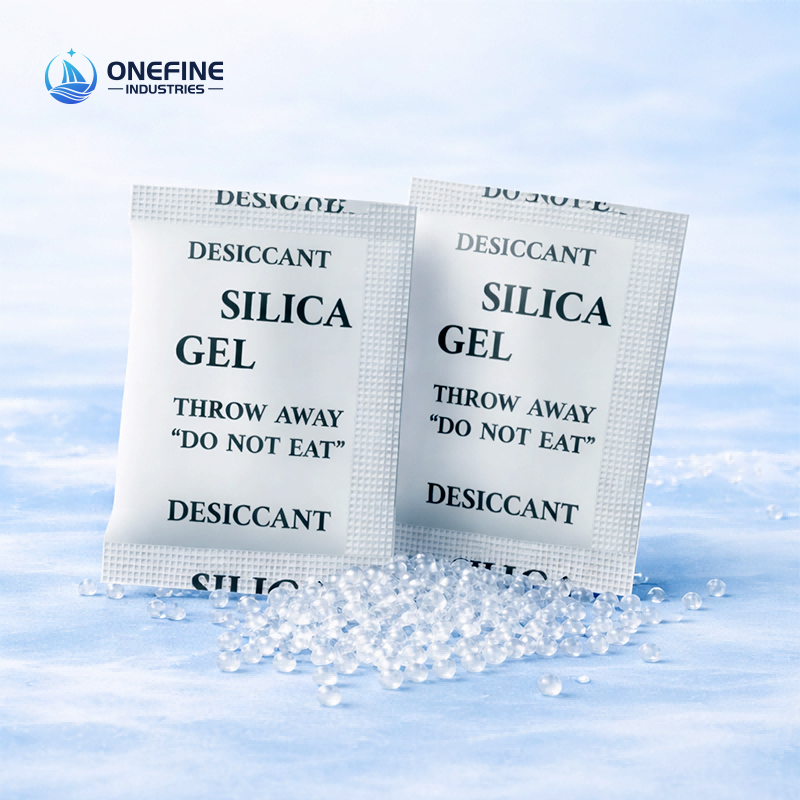
Silica Gel Desiccant Sachet
Silica gel desiccant is a high-performance, non-toxic adsorption material widely used to protect moisture-sensitive products from damage.
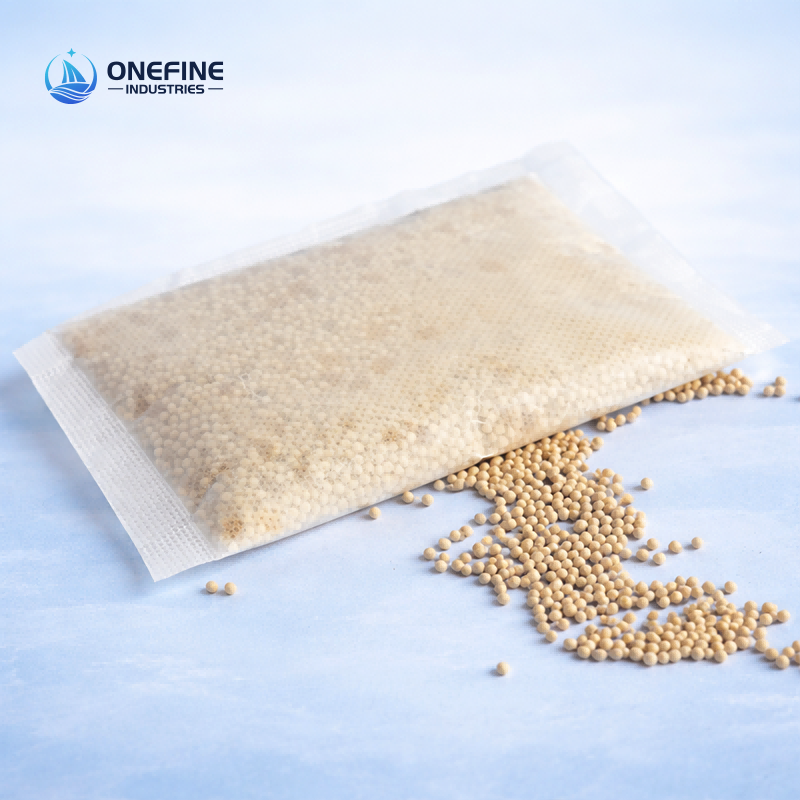
Molecular Sieve Desiccant Bags
Molecular sieve desiccant bags feature a microporous structure that selectively adsorbs molecules based on pore size, delivering deep drying performance for gases and liquids.
Related Reading
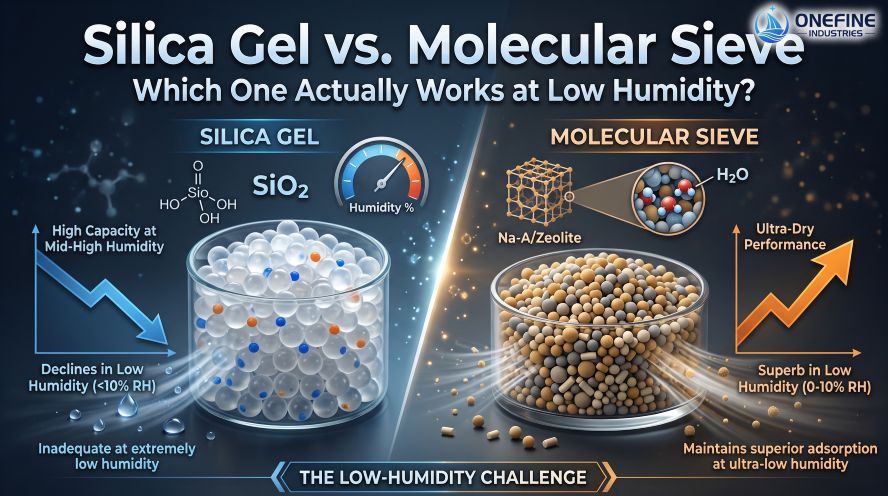
Silica Gel vs. Molecular Sieve: Which One Actually Works at Low Humidity?
Silica gel and molecular sieve are both common desiccants, but they work through different mechanisms, and that difference matters most at low relative humidity. Here's what actually happens at the molecular level, and when each one is the right choice.

How Much Desiccant Do You Actually Need?
Desiccant packaging follows a real industry standard (MIL-D-3464), not guesswork. Here's how the unit-based formula actually works, a worked example, and what the simplified version leaves out.