Desiccants in Musical Instrument Storage and Cases

Detailed Description
Key Takeaways
- Wood is hygroscopic — it releases or absorbs moisture depending on surrounding humidity, and a sealed instrument case concentrates whatever humidity swing is happening around it.
- According to guitar manufacturer Martin's own technical bulletin, roughly 50% relative humidity is the target; cracking risk starts appearing around 40%, and becomes common by 25-30%. A separate HVAC-industry reference puts the safe range for guitars, violins, cellos, and pianos at 45-55% RH.
- Desiccant helps hold a case inside that range, but only when matched to the case's actual air volume and climate — over-drying a sealed case is a real risk too, which is why monitoring with a visual indicator matters as much as adding desiccant in the first place.
Musical instrument cases are a smaller, more extreme version of the same humidity problem that shows up in any sealed storage space — except the material inside reacts to humidity swings by cracking, warping, or going out of tune, sometimes permanently.
Why Wood Instruments Are This Sensitive to Humidity
Wood is hygroscopic: it absorbs moisture from the air when humidity rises and releases it when humidity drops, physically swelling and shrinking as it does. A solid-wood guitar top, violin body, or piano soundboard is essentially a thin panel under constant tension from its own strings or frame — so when the wood shrinks from dryness, it has nowhere to relieve that stress except by cracking.
According to Martin Guitar's own technical humidity bulletin, the effects follow a fairly predictable progression as relative humidity drops: around 40% RH, fret ends can start to feel sharp and a small crack may begin to form in the fingerboard area; at 35%, the top can look and feel "dried in" or rippled; at 30%, cracking becomes more common and the top visibly sinks; at 25%, cracking is widespread. On the high side, Martin's bulletin notes that at 60% RH and above, wood swells, bracing and bridges can loosen, and the action becomes harder to play. The company's own target for safe storage is close to 50% RH.
A separate HVAC-industry reference, covering humidity control across factories, retail spaces, and concert halls, puts the specific safe range for guitars, violins, cellos, and pianos at 45-55% RH — closely matching Martin's own numbers from an independent angle, even though the two sources are commercial in different industries (instrument manufacturing vs. climate-control equipment) rather than independently verified academic data.
Where Desiccant Actually Fits In
A sealed instrument case is a small, controlled air volume — which is exactly the kind of space where a desiccant packet can meaningfully hold humidity inside a target range, rather than just slowing down a large room's humidity swings. [Internal link] The same logic covered in our guide on how much desiccant you actually need applies here: the right amount depends on the case's actual air volume and how often it's opened, not a one-size-fits-all packet count.
That cuts both ways. Too little desiccant in a humid climate won't do much against a real humidity swing. But too much desiccant in a small, mostly-sealed case can pull humidity below the safe range just as easily as an outside humidity swing can push it above — which is the opposite problem, with the same cracking symptoms Martin's bulletin describes at 25-40% RH. [Internal link] This is part of why color-indicating silica gel is a common recommendation specifically for instrument cases: it gives a visual read on whether the air inside the case is trending too dry or staying in range, instead of leaving it to guesswork between case openings.
Recommended Products from Onefine
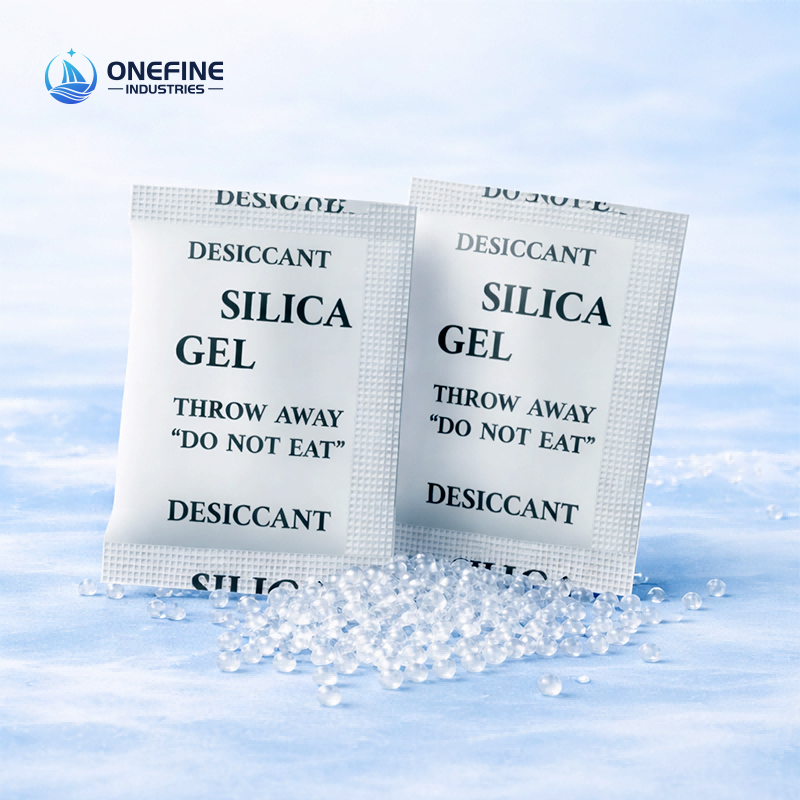
- Silica Gel Desiccant Sachet — general-purpose moisture control sized for small, enclosed spaces like instrument cases; talk to us about pack size if you want help matching desiccant amount to a specific case volume
Need Moisture Control for Sensitive Storage?
Onefine supplies silica gel desiccant sized for small, enclosed storage environments where humidity needs to stay in a specific range. Tell us your case size and typical climate, and we'll help confirm the right pack size.
We provide:
- ✅ Silica gel desiccant for small, enclosed storage applications
- ✅ Retail-ready small-pack sizes and custom packaging options
- ✅ Worldwide shipping
- ✅ Technical support for confirming the right desiccant amount for your use case
- ✅ Fast quote response
Related Applications

Desiccants in Gun Safes and Valuables Storage
Safes are not airtight. Here is why gun safes still need desiccant, and what RH threshold actually matters for rust prevention.

Desiccants in Camera and Lens Storage
Lens fungus does not feed on glass, but it etches coatings permanently once it takes hold. Humidity control, not just darkness, is what actually prevents it.
Related Reading

Why Indicating Silica Gel Changed from Blue to Orange
Indicating silica gel used to mean one thing: cobalt chloride, and a color shift from blue to pink. Most of what's sold today works differently — here's the chemistry behind the color change, and why the underlying compound changed.

How Much Desiccant Do You Actually Need?
Desiccant packaging follows a real industry standard (MIL-D-3464), not guesswork. Here's how the unit-based formula actually works, a worked example, and what the simplified version leaves out.