Why Indicating Silica Gel Changed from Blue to Orange
Key Takeaways
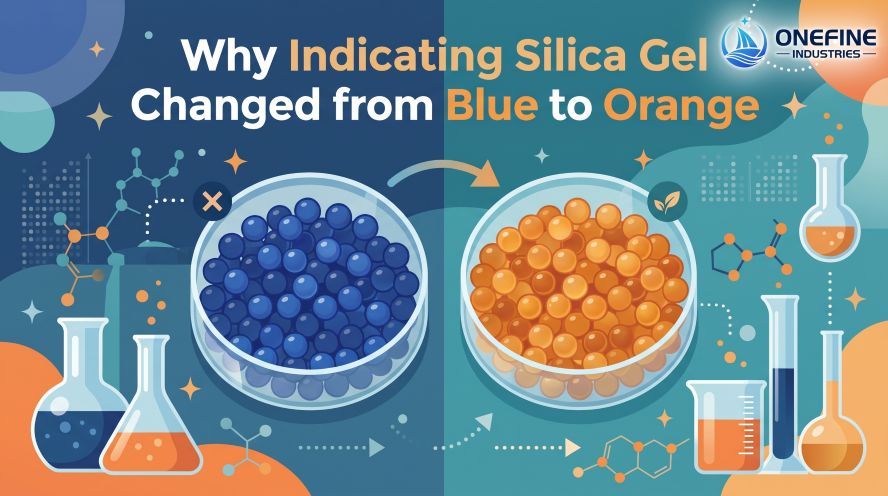
- The color change in indicating silica gel isn't a visual trick — it comes from a real chemistry fact: the compound's molecular structure shifts as it binds water molecules, which changes which wavelengths of light it absorbs.
- Cobalt chloride, the original color-change compound used in this type of silica gel, was formally identified by the EU as a Substance of Very High Concern due to carcinogenicity — which is the main reason the desiccant industry largely shifted to cobalt-free indicator chemistry.
- Cobalt-free indicating silica gel uses a different class of compound entirely, with its own color transition and its own moisture-capacity threshold — the two aren't interchangeable just because both are called "indicating silica gel."
Indicating silica gel is popular because it gives a visual answer to a question that's otherwise invisible: has this desiccant absorbed as much moisture as it can hold? But "indicating silica gel" isn't one single formula — the compound responsible for the color change has changed over time, for reasons that have more to do with chemical safety regulation than with desiccant performance.
Why the Color Actually Changes
The classic indicating compound, cobalt chloride, works because cobalt ions bond differently depending on how much water is around them. In its dry, low-water state, the cobalt complex absorbs light in a way that reads as blue. As the surrounding silica gel adsorbs moisture, water molecules coordinate directly onto the cobalt ion, reshaping the complex — and that reshaping shifts which wavelengths of light get absorbed, so the visible color shifts toward pink. It's the same basic chemistry behind cobalt chloride's long-standing use as a moisture-indicator compound on test papers and in humidity indicator cards, not something unique to silica gel.
This matters because the color change is a genuine chemical signal of water content, not a cosmetic dye effect — which is also exactly why regulators started paying attention to the compound itself, not just its usefulness as an indicator.
Why the Chemistry Behind the Color Change Became a Problem
Cobalt chloride's issue was never its performance as an indicator — it was the cobalt itself. The European Chemicals Agency's Member State Committee formally identified cobalt dichloride as a Substance of Very High Concern on the basis of carcinogenicity, following a proposal from France in 2008; under the EU's classification system it carries a Category 2 carcinogen designation with the risk phrase "may cause cancer by inhalation." In practical terms, that risk is tied to inhaling contaminated dust from the material — relevant for handling and disposal, not for a sealed packet sitting in a box. UK regulations had already required cobalt-indicating silica gel to be labeled and disposed of as hazardous material starting in 2000, well ahead of the EU's formal SVHC identification.
That combination — a real carcinogenicity classification plus hazardous-disposal labeling requirements — is what pushed much of the desiccant industry toward reformulating indicating silica gel around a different compound family entirely, rather than continuing to rely on cobalt chloride.
What Replaced It
Cobalt-free indicating silica gel uses organic indicator compounds instead of a cobalt-based one. As an industry reference point, one documented cobalt-free formulation uses a biodegradable organic indicator at roughly 5-10 times lower concentration than the cobalt-based version, shifting from bright orange to translucent at around 6% water content by weight; a separate documented formulation uses a phenolphthalein-type indicator that shifts from yellow through green to deep blue at around 5% water adsorption. These are cited here as real documented examples of how cobalt-free chemistry behaves, not as an endorsement of any particular supplier's brand.
The practical point for a buyer is that these are a genuinely different chemical system, not a repackaged version of the cobalt original — the color transition sequence is different, and the water-content percentage that triggers it isn't automatically the same number either.
Key Differences at a Glance
- Cobalt-based indicating silica gel: Color shift is blue (dry) to pink (saturated); EU-classified as a Category 2 carcinogen and identified as a Substance of Very High Concern; subject to hazardous-material labeling and disposal requirements in some jurisdictions
- Cobalt-free indicating silica gel: Color shift depends on the specific organic indicator used (examples: orange to translucent around 6% water content, or yellow through green to deep blue around 5% water content); not carcinogen-classified; now the more common default across the desiccant industry
What This Means When You're Choosing Indicating Desiccant
If a product is simply labeled "indicating silica gel" without specifying which indicator chemistry it uses, that's worth asking about directly — especially for shipments headed into the EU, where cobalt dichloride's SVHC status carries its own compliance and labeling implications. [Internal link] As with calculating how much desiccant you actually need, knowing your desiccant is color-indicating only helps if you also know what color change, and what percentage threshold, you're actually looking for.
Recommended Products from Onefine
- Silica Gel Desiccant Sachet — general-purpose moisture control; talk to us if your application specifically calls for color-indicating silica gel and we'll confirm indicator chemistry and compliance documentation for your shipping destination
Need Moisture Control with Clear Compliance Documentation?
Onefine supplies silica gel desiccant for general packaging and shipping moisture control, with REACH-compliant documentation available for your markets. Tell us your requirements, and we'll help confirm the right desiccant — including indicator chemistry, if that's part of your spec.
We provide:
- ✅ Silica gel desiccant for general packaging and shipping applications
- ✅ Retail-ready small-pack sizes and custom packaging options
- ✅ Worldwide shipping
- ✅ REACH/RoHS compliance documentation on request
- ✅ Fast quote response
Related Applications
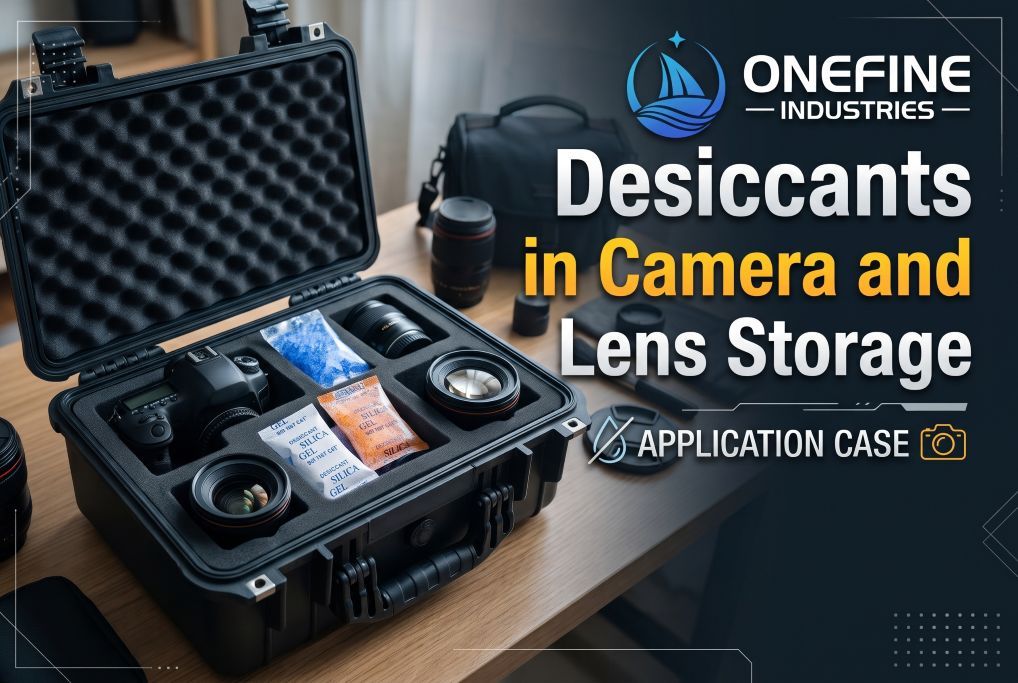
Desiccants in Camera and Lens Storage
Lens fungus does not feed on glass, but it etches coatings permanently once it takes hold. Humidity control, not just darkness, is what actually prevents it.

Desiccants in Gun Safes and Valuables Storage
Safes are not airtight. Here is why gun safes still need desiccant, and what RH threshold actually matters for rust prevention.
Related Reading

How Much Desiccant Do You Actually Need?
Desiccant packaging follows a real industry standard (MIL-D-3464), not guesswork. Here's how the unit-based formula actually works, a worked example, and what the simplified version leaves out.
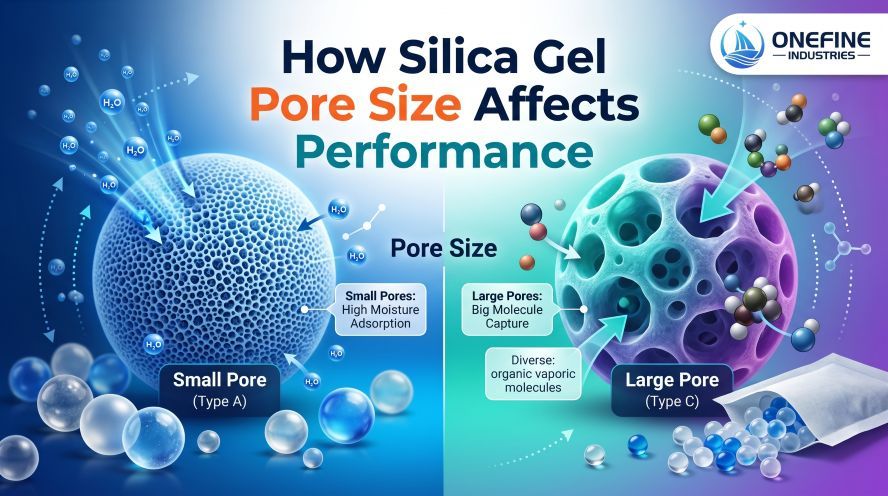
How Silica Gel Pore Size Affects Performance
Two silica gel desiccants can look identical and still perform very differently depending on the humidity range. The reason comes down to pore size, which decides whether the material pulls moisture out of the air best at low humidity or high humidity.
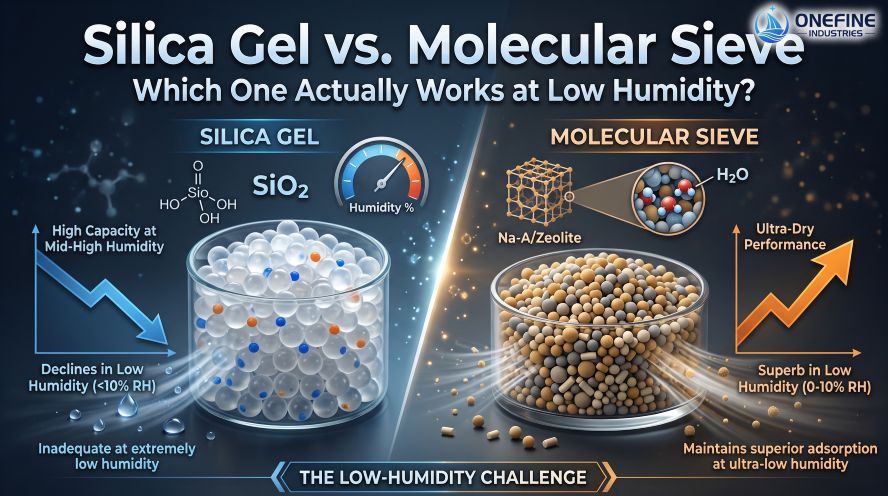
Silica Gel vs. Molecular Sieve: Which One Actually Works at Low Humidity?
Silica gel and molecular sieve are both common desiccants, but they work through different mechanisms, and that difference matters most at low relative humidity. Here's what actually happens at the molecular level, and when each one is the right choice.