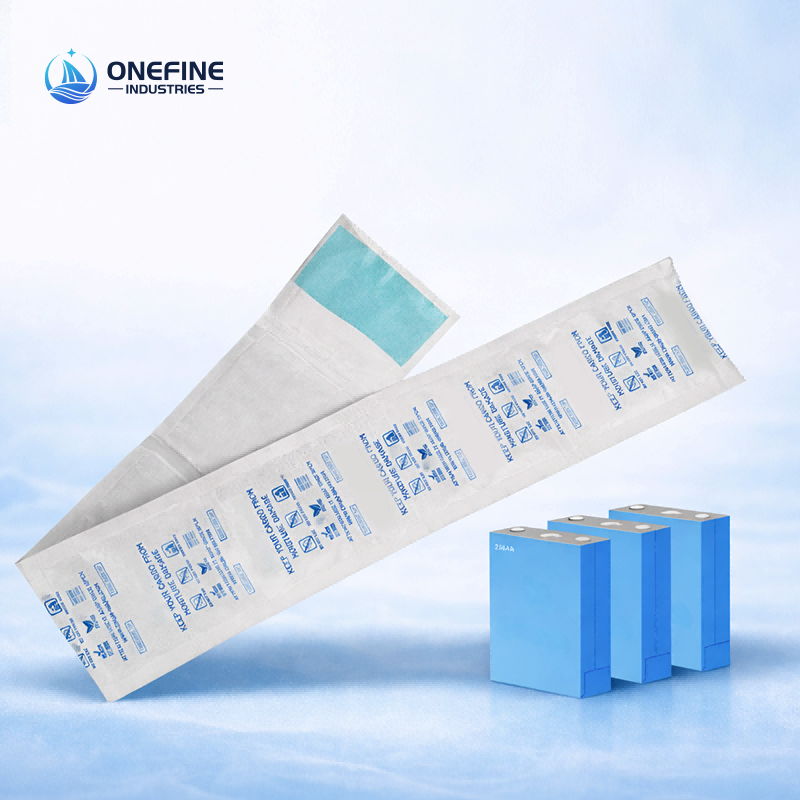
Desiccant for Electrochemical Energy Storage
Desiccant for electrochemical energy storage uses a calcium chloride and magnesium chloride blend to maintain the extremely low humidity levels required in battery manufacturing and storage.
Get QuoteKey Attributes
- Calcium chloride and magnesium chloride blend delivers high-absorption moisture control
- Connected packet format allows for easy, precise placement within battery packs and storage enclosures
- Available in 120g strips or custom sizes to match specific equipment dimensions
- Custom packaging materials available for specialized applications
Applications
- Lithium-ion battery cell manufacturing and assembly
- Electric vehicle (EV) battery pack moisture control
- Energy storage system (ESS) enclosures
- Supercapacitor and electrochemical capacitor packaging
- Battery pack breather vent and desiccant holder applications
Product Description
What is Desiccant for Electrochemical Energy Storage?
Desiccant for electrochemical energy storage is a high-absorption calcium chloride and magnesium chloride blend, formulated to meet the demanding moisture control requirements of battery manufacturing and storage. Lithium-ion battery cell manufacturing typically requires relative humidity below 1%, with battery assembly requiring below 10% RH, since even trace moisture can compromise battery performance, safety, and longevity. Desiccants placed within battery packs — often near a breather vent that equalizes internal and external pressure — help absorb any moisture that enters the enclosure, protecting sensitive battery components throughout their service life.
Benefits
- High-absorption blend — the calcium chloride and magnesium chloride formula is well suited to the strict humidity requirements of battery manufacturing
- Precise placement — the connected packet format allows for easy, targeted placement within battery packs and storage enclosures
- Flexible sizing — available in 120g strips or custom sizes to match specific equipment and enclosure dimensions
- Customizable — supports custom packaging materials for specialized battery and energy storage applications
Applications
Desiccant for electrochemical energy storage is used across battery and energy storage manufacturing:
- In lithium-ion battery cell manufacturing and assembly, it helps maintain the extremely low humidity levels required to protect sensitive battery chemistries.
- In electric vehicle (EV) battery packs, it works alongside breather vents to control internal moisture levels throughout the vehicle's service life.
- In energy storage system (ESS) enclosures, it helps protect sensitive electronic and chemical components from humidity damage.
- In supercapacitors and electrochemical capacitors, it supports the moisture control needed for stable, reliable performance.
Packaging & Shipping
We offer flexible sizing and packaging options to fit both trial orders and full production runs.
Standard Specifications:
- Available in 120g strips, or custom sizes
- Packaging materials: Dumei paper, connected packets
Minimum Order Quantity (MOQ): This is a custom-configured product, so minimum order quantities are based on your specific size and application requirements. Please contact our team for details and a tailored quote.
Custom Options:
- Custom size and packaging material available
- Sample orders available for qualified buyers before committing to a bulk order
Lead Time:
- Stock items: 3–7 days
- Custom/private label orders: 7–15 days
Shipping Terms: FOB / CIF / EXW — flexible based on destination and order volume.
Documents & Certificates
We provide complete documentation to support your import, retail, and compliance requirements:
📄 Certificate of Analysis (COA) — Issued for each production batch, confirming moisture absorption capacity and material composition.
📄 Material Safety Data Sheet (MSDS/SDS) — Provided for all products, meeting international shipping and handling standards.
📄 ISO 9001 / ISO 14001 Certification — Quality and environmental management system certification.
📄 REACH & RoHS Compliance — Confirms compliance with EU chemical and hazardous substance regulations for products destined for EU markets.
Additional documents available on request: Certificate of Origin (COO), Packing List, Commercial Invoice.
FAQ
Q1: Why do batteries need desiccant during manufacturing? Lithium-ion battery manufacturing requires extremely low humidity — typically below 1% RH for cell manufacturing and below 10% RH for assembly — since trace moisture can compromise battery performance, safety, and longevity.
Q2: Can this desiccant be reused? No, calcium chloride and magnesium chloride are single-use desiccants. Once saturated, they cannot be dried out and reused.
Q3: What sizes are available? Standard strips are 120g, with custom sizes available to match your specific equipment or enclosure dimensions.
Q4: What is the minimum order quantity? MOQ is based on your specific size and application requirements. Please contact our team for a tailored quote.
Need a Custom Solution?
Looking for a specific size, packaging material, or configuration for your battery or energy storage application? Send us your requirements and our technical team will get back to you within 24 hours with a tailored recommendation.
Technical Specifications
| Raw Material | Calcium Chloride, Magnesium Chloride |
| Packaging Materials | Dumei paper, connected packets |
| Available Sizes | 120g per strip, custom sizes available |
| Certification | REACH, RoHS |
| MOQ | Custom orders based on quantity required — contact our team for details |
| Shelf Life | 2 years when stored in a sealed container away from moisture |
| Single-Use | Yes — calcium chloride and magnesium chloride deliquesce once saturated and are not reusable |
Related Products
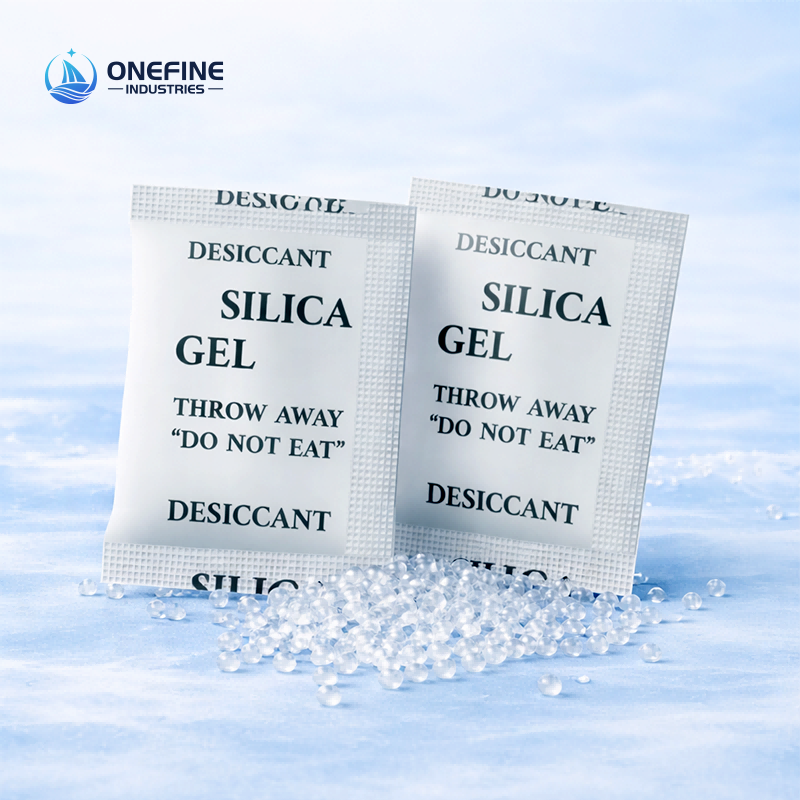
Silica Gel Desiccant Sachet
Silica gel desiccant is a high-performance, non-toxic adsorption material widely used to protect moisture-sensitive products from damage.
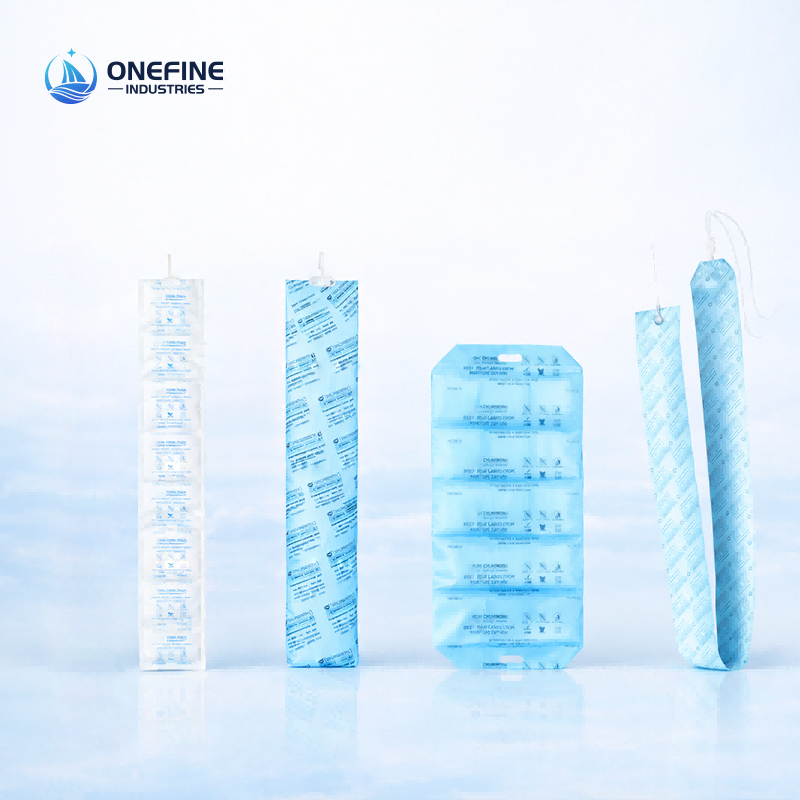
Container Desiccant Strip
Container desiccant strips use high-absorption calcium chloride to control humidity inside shipping containers, preventing condensation damage during long ocean voyages.
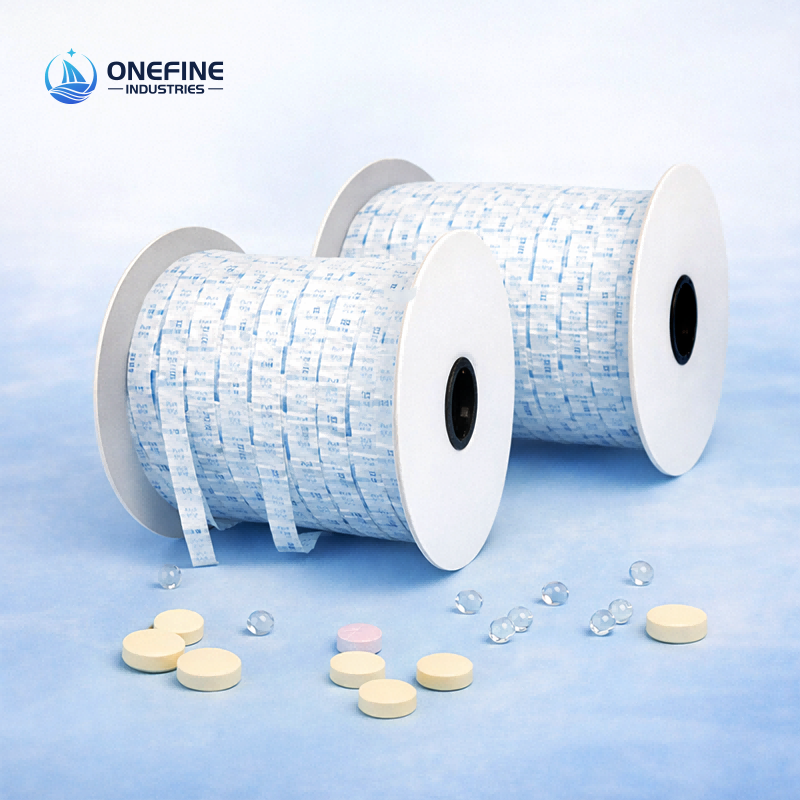
Pharmaceutical Desiccant Strips
Pharmaceutical desiccant strips are compact silica gel strips produced in a UV-sterilized packaging process, designed for moisture protection in pharmaceutical bottles and blister packaging.
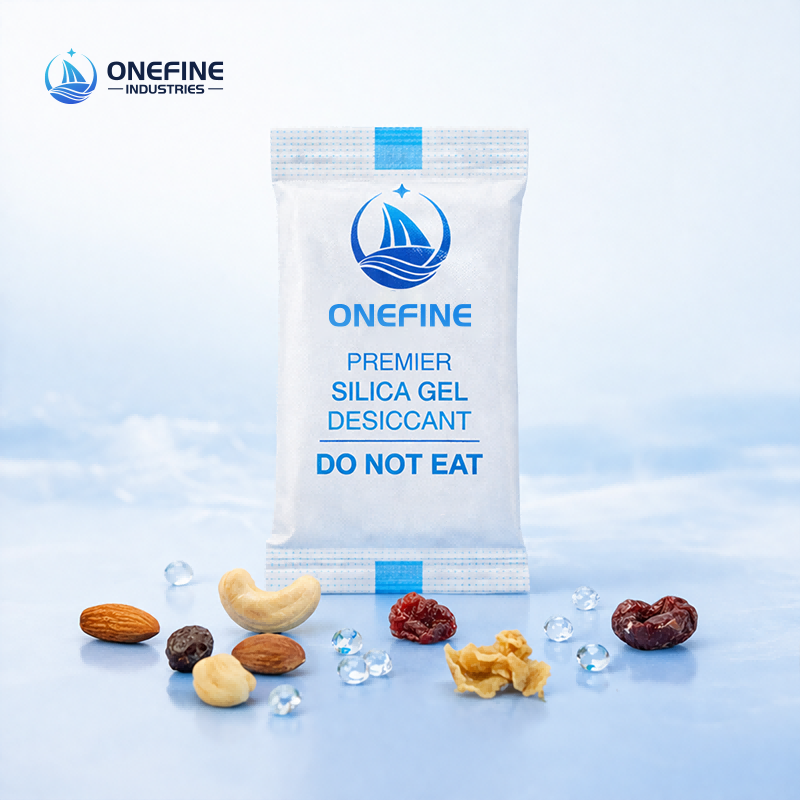
Food Safe Desiccant Bags
Food safe desiccant bags are high-purity silica gel sachets certified for direct contact with food, keeping snacks, dried goods, and packaged foods fresh and moisture-free.