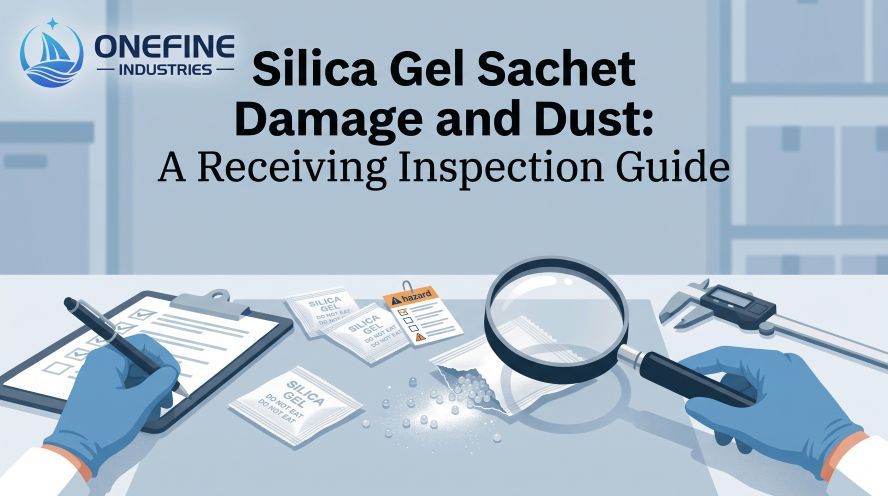
Silica Gel Sachet Damage and Dust: A Receiving Inspection Guide
Key Takeaways
- Check the sachet, its seals and its protective outer packaging separately. Damage in one layer does not explain every problem in the others.
- Loose beads, recurring powder release and open seams need investigation before packets enter finished-product packaging.
- Visual inspection cannot establish remaining adsorption capacity. Agree the inspection method, sampling plan and acceptance criteria before ordering.
Intro
A shipment of silica gel sachets arrives with a few loose beads in the carton. Should the buyer reject everything, remove the visibly broken packets, or change the packaging material next time? Start by identifying where the material escaped and which packs were affected.
This receiving guide focuses on Onefine's silica gel desiccant sachets. It helps purchasing and quality teams describe defects and request suitable evidence. The checklist is a practical starting point for an agreed inspection procedure, not a universal acceptance standard or a claim that every Onefine order has undergone the tests described.
Separate Sachet Damage from Outer-Pack Damage
The sachet must allow water vapour to reach the silica gel while containing the granules. Its protective storage bag has a different job: limiting moisture exposure before use. A torn carton, a punctured storage bag and an open sachet seam therefore require different follow-up.
Record the carton condition before opening. Then check the protective bag, closure and batch label. An intact sachet inside a damaged storage bag may still have been exposed to humid air. Conversely, beads inside a sealed storage bag can indicate a broken sachet even when the shipping carton looks normal.
Keep these observations separate in the receiving record so the supplier can investigate the correct packaging layer.
Inspect the Seam Before Blaming the Material
Look along each sampled sachet's sealed edges for visible openings, separation, trapped granules or an irregular sealing area. Check the cut edges and corners too. Photograph an abnormality before handling changes it.
DuPont's guidance on sealing Tyvek explains that the sealing method and surface treatment can affect seal strength. That is a material-specific example of why a material name alone cannot establish the quality of a finished seam. It does not provide acceptance limits for Onefine sachets.
A visual gap identifies a containment concern; an apparently continuous seam does not prove its strength. If mechanical seal testing is needed, agree a method suitable for the actual porous sachet construction, together with conditioning and pass criteria. Do not invent a pull force from a photograph.
Distinguish Loose Beads from Fine Residue
A whole bead outside its sachet is different evidence from a faint powder trace on an outer bag. Neither observation should be dismissed without checking its origin.
Suggested receiving observations include:
- The location of escaped material: shipping carton, protective bag, sachet surface or product contact area.
- Whether a matching hole, split edge or open seam is visible.
- Whether the issue appears in one sampled pack or across several locations in the shipment.
- Whether comparable unopened packs show the same condition.
Do not identify an unknown residue by colour alone. Retain affected samples and ask the supplier to investigate. A clean surface after wiping is not evidence that the release mechanism has stopped.
Check Handling and Packaging-Line Contact
If sachets pass receiving checks but fail after insertion, compare retained incoming samples with packs collected after handling. Inspect contact with sharp product edges, tight clearances and any cutting or feeding operation used by the buyer.
Repeated damage at the same location can guide an investigation, but it does not by itself establish the cause. Review packet dimensions, placement and handling conditions together. A more expensive wrap will not necessarily solve contact with a sharp edge.
Our sachet material comparison discusses paper, non-woven materials and Tyvek. Use that guide for material selection; use receiving and line observations to investigate the actual defect.
Keep Moisture Performance Separate from Appearance
A clean, unbroken sachet can still have consumed part of its adsorption capacity before use. Visual integrity and moisture performance answer different questions.
Check the supplier's storage instructions, the protective closure and the opening history. For background, see unopened desiccant storage life. Keep stock protected while samples are examined and avoid leaving an entire delivery exposed during a lengthy inspection.
If remaining capacity is a purchase requirement, request an agreed test and applicable batch documentation. A packet's appearance, feel or mass alone is not a substitute for a defined performance assessment.
Key Differences at a Glance
- Open seam or visible hole: investigate sachet containment and hold affected stock pending assessment.
- Loose granules or recurring powder: trace the source and extent; do not assume cleaning resolves the defect.
- Damaged protective storage bag: investigate moisture exposure even if individual sachets look intact.
- Damage after insertion: compare incoming and handled samples before changing the specification.
How to Choose Acceptance Criteria
Agree the sachet material and dimensions, fill specification, sealing requirements, cleanliness expectations and protective packaging before supply. Specify which documents are required and how batches will be identified.
Define sampling and defect categories with the supplier and your quality team. This article does not prescribe a universal sample size, acceptable dust quantity or seal-strength threshold. Requirements must reflect the actual product, handling process and consequences of escaped material.
For an abnormal delivery, record the batch, sampled quantity, observed defect count, photographs and stage of discovery. Separate affected stock and obtain a disposition before use rather than quietly mixing it into accepted material.
Recommended Products from Onefine
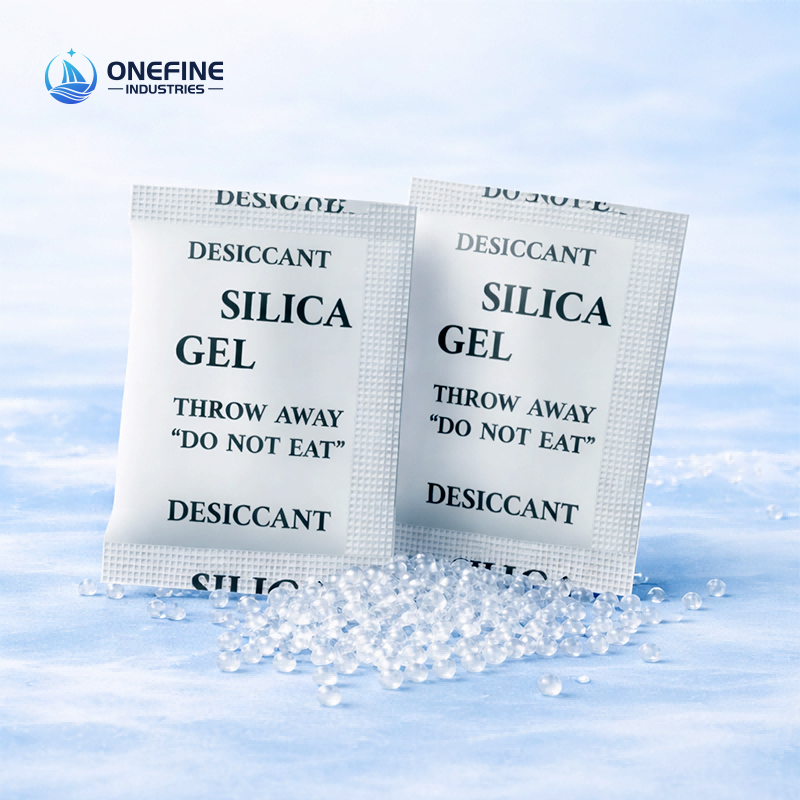
- Silica Gel Desiccant Sachet — the directly relevant product for this receiving checklist. Discuss sachet size, packaging requirements and intended handling conditions with Onefine; confirm the supplied specification before purchase.
FAQ
Does a stronger wrapper guarantee no leakage?
No. The seam, cut edges, handling and contact with the packed product also matter. Evaluate the finished sachet under relevant conditions.
Can an intact packet be accepted without checking storage history?
Appearance alone cannot confirm remaining adsorption capacity. Review protective packaging and storage evidence against the agreed requirements.
Should a damaged sachet be taped and used?
Keep it out of the packing process pending assessment. A taped repair has not demonstrated the original containment or moisture-transfer performance.
Need Silica Gel Sachets Matched to Your Packing Process?
Onefine supplies small-pack desiccants. Share your product, packet placement, handling process and packaging requirements so we can discuss the appropriate sachet specification.
We provide:
- ✅ Silica gel desiccant sachet supply
- ✅ Material and packet-format selection support
- ✅ Custom packaging options, subject to confirmation
- ✅ Private label options, subject to confirmation
- ✅ Worldwide shipping
Related Reading
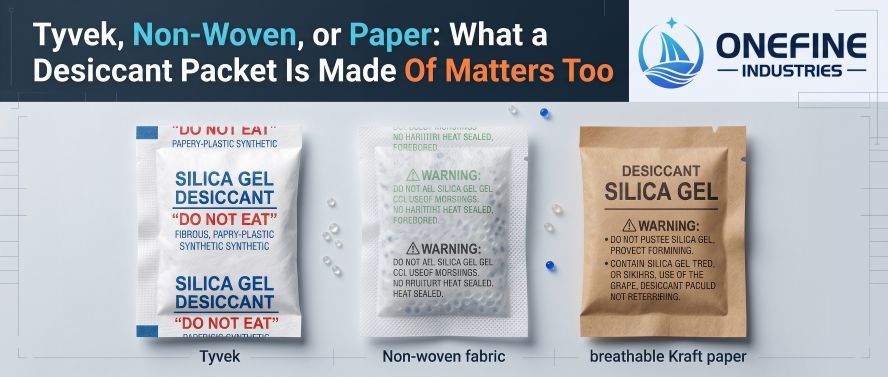
Tyvek, Non-Woven, or Paper: What a Desiccant Packet Is Made Of Matters Too
A desiccant packet's outer material isn't just packaging — it decides whether moisture vapor can get in and whether desiccant dust can get out. Here's how paper, non-woven fabric, and Tyvek actually compare on that trade-off.
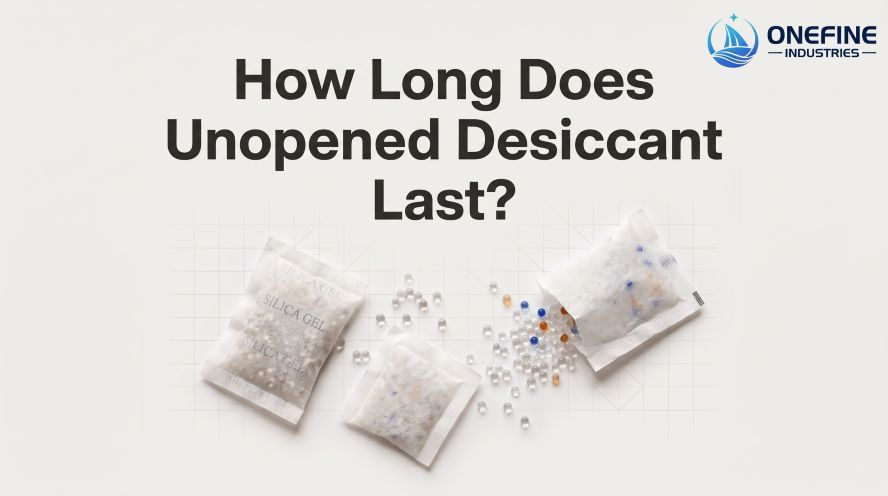
How Long Does Unopened Desiccant Actually Last Before You Use It?
Desiccant doesn't sit on a shelf forever without a cost — but the number that matters depends on whether you mean "sealed in storage" or "already opened." Those are two very different clocks, and mixing them up is an easy way to waste capacity before a packet ever does its job.
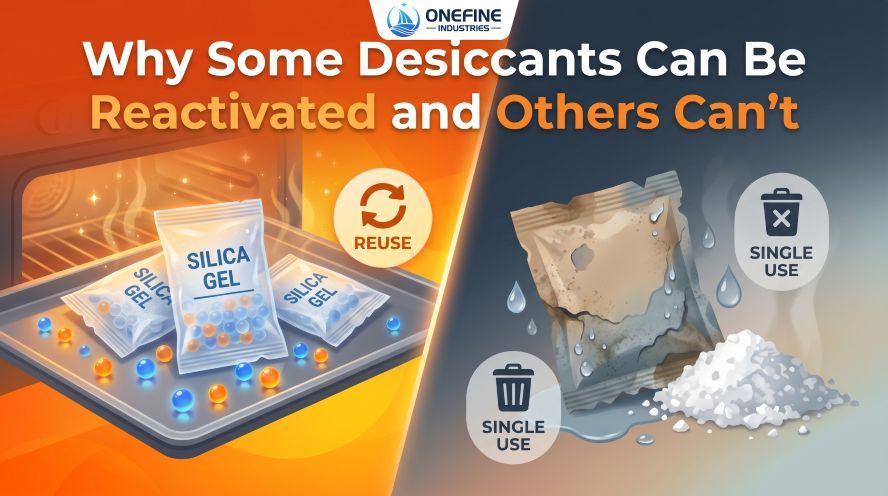
Why Some Desiccants Can Be Reactivated and Others Can't
Silica gel and molecular sieve can be oven-dried and reused. Calcium chloride cannot. The difference comes down to how each material holds moisture.