How Long Does Unopened Desiccant Actually Last Before You Use It?
Key Takeaways
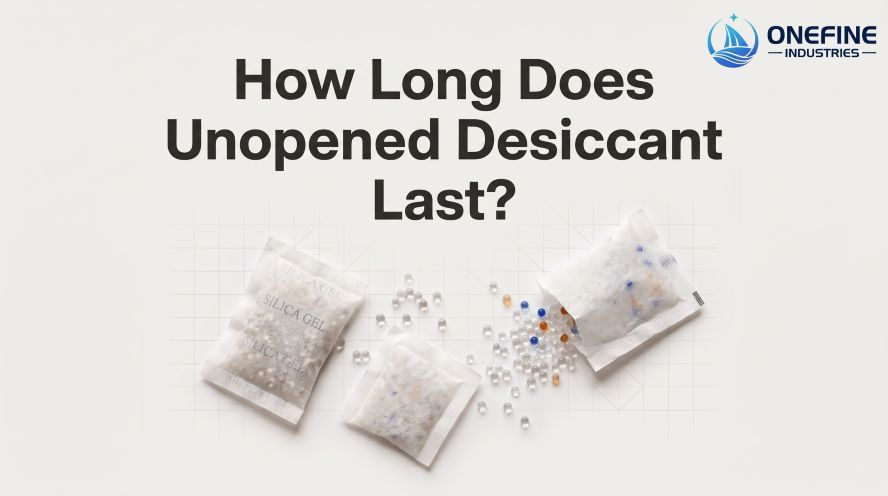
- Sealed, unopened desiccant can hold its capacity for roughly 24 months according to packaging suppliers' own published figures — but that number assumes the packet stays properly sealed the whole time, not sitting half-open on a shelf.
- Once a desiccant packet's outer seal is opened or breached, the clock changes completely: one documented test at 80% relative humidity found a 1g packet lost its usefulness in about 30 minutes, while packets in the 5-20g range — squarely inside the size Onefine typically supplies — lasted only about 2 hours before saturating with ambient air.
- The practical takeaway is to keep desiccant sealed in its original packaging until the moment it's actually deployed; opening a batch early for convenience quietly spends its capacity before it ever reaches the product it's meant to protect.
"How long does desiccant last?" is actually two separate questions with two separate answers, and conflating them leads to a common mistake: treating a sealed, unopened case of desiccant as if it were already ticking down the same clock as a packet sitting open on a workbench.
Why "Shelf Life" and "Working Life" Are Two Different Numbers
According to desiccant packaging supplier ARMOR's own published figures, the typical shelf life for its sealed desiccant packets is 24 months from the date of manufacture, shipped in vacuum-sealed foil or poly bags specifically to keep outside air away from the material. That's the "shelf life" number — what you can expect from desiccant that stays sealed and untouched.
The "working life" question is a different one entirely: how long does a packet last once it's actually exposed to the humidity it's meant to absorb? That clock starts the moment the packet's own protective seal is opened or broken, not when it was manufactured.
What Happens During Sealed Storage
Pharmaceutical excipient supplier Colorcon's own technical guidance explains the mechanism behind sealed shelf life: barrier packaging materials like aluminum foil block most external moisture from reaching the desiccant, but they can't do anything about moisture already present inside a sealed space. Colorcon also notes that once desiccant is exposed to uncontrolled open air, its effectiveness typically drops within 24 to 48 hours — and recommends keeping any necessary handling exposure during production to under one or two hours. That figure comes from pharmaceutical packaging conditions rather than a bare small retail packet sitting in open room air, so it's best read as a general order-of-magnitude warning rather than an exact number for every packaging context.
What Happens the Moment the Packet Is Opened
For a more size-specific picture, ARMOR's own testing at 80% relative humidity and 25°C found a clear pattern tied to packet weight: a 1g packet lost its effectiveness in about 30 minutes, a 1-5g packet in about 1 hour, a 5-20g packet in about 2 hours, and anything over 20g in about 3 hours. Smaller packets saturate faster simply because they have less material to absorb the same humid air — which matters directly for Onefine's typical 1-100g product range, since most of what we supply falls across exactly this size curve. [Internal link] This is also why how much desiccant you actually need is worth calculating properly before opening a batch: opening more packets than you'll use in that session starts this clock on all of them, whether they end up deployed right away or not.
This Isn't the Same Question as Reactivation
[Internal link] It's worth being precise about what this is and isn't. Desiccant reactivation is about restoring capacity in a packet that has already done its job — absorbed moisture during active use and reached saturation. What this article covers is different: desiccant that hasn't been deployed at all yet, sitting open and quietly losing capacity to ambient humidity before it ever gets the chance to protect anything. A packet degraded by premature air exposure isn't "used up" in the way a deployed packet is — it's wasted before the job even started.
Key Differences at a Glance
- Sealed, unopened storage: Roughly 24 months of held capacity (per packaging supplier figures), as long as the outer seal stays intact
- Opened and exposed to humid air: Minutes to a few hours depending on packet weight — smaller packets (1-5g) lose effectiveness fastest, larger packets (20g+) somewhat slower, but all well within a single day
Recommended Products from Onefine
- Silica Gel Desiccant Sachet — supplied in sealed packaging rated for extended storage; keep sealed until point of use for full capacity
Need Desiccant That Holds Up in Storage?
Onefine supplies silica gel desiccant in sealed packaging built to hold its capacity through storage and transit. Tell us your storage and deployment timeline, and we'll help confirm the right packaging and quantity.
We provide:
- ✅ Silica gel desiccant for general packaging and shipping applications
- ✅ Retail-ready small-pack sizes and custom packaging options
- ✅ Worldwide shipping
- ✅ Technical support for confirming the right quantity and timing for your use case
- ✅ Fast quote response
Related Reading

How Much Desiccant Do You Actually Need?
Desiccant packaging follows a real industry standard (MIL-D-3464), not guesswork. Here's how the unit-based formula actually works, a worked example, and what the simplified version leaves out.
Why Some Desiccants Can Be Reactivated and Others Can't
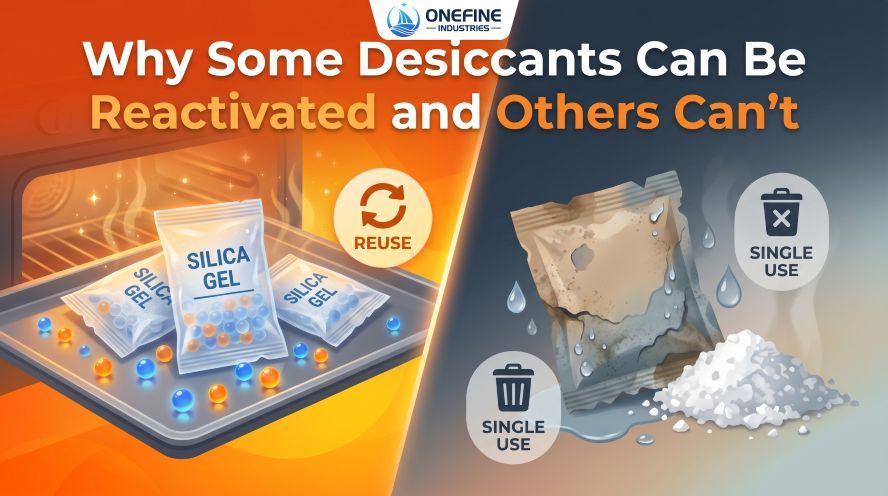
Silica gel and molecular sieve can be oven-dried and reused. Calcium chloride cannot. The difference comes down to how each material holds moisture.
Tyvek, Non-Woven, or Paper: What a Desiccant Packet Is Made Of Matters Too
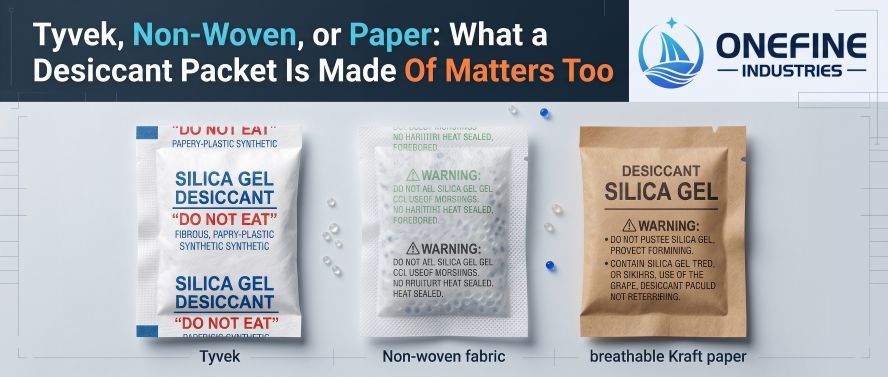
A desiccant packet's outer material isn't just packaging — it decides whether moisture vapor can get in and whether desiccant dust can get out. Here's how paper, non-woven fabric, and Tyvek actually compare on that trade-off.
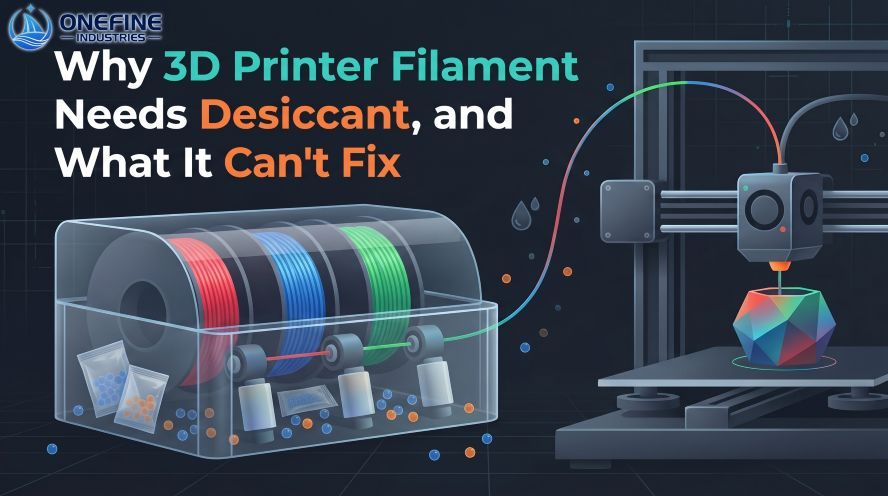
Why 3D Printer Filament Needs Desiccant, and What It Can't Fix
Some 3D printing filaments pull moisture out of the air far more aggressively than others, and the symptoms show up at the nozzle, not on the spool. Here's which materials are actually at risk, and why desiccant prevents the problem but can't undo it.