Why Is Humidity Still High with Desiccant in a Sealed Box?

Key Takeaways
- A packet cannot maintain low humidity if moisture keeps entering faster than it can adsorb it.
- Check the reading, closure, contents and packet condition before changing the desiccant material.
- Judge performance against the stored item's requirements and a humidity trend, rather than one reading.
Why Is the Humidity Still High?
You put a silica gel packet in a storage box, close the lid and return to a disappointing humidity reading. That result does not identify a defective packet. It tells you the complete storage system has not yet achieved the condition you want.
This guide concerns small enclosed storage and retail packaging. It is a troubleshooting method, not a guaranteed packet count or a specification for every material you store.
Start with the Reading
Write down the humidity, temperature, time and whether the lid was recently opened. Keep the sensor clear of the packet and wet surfaces. Check the meter's instructions and stated accuracy before treating a small change as meaningful.
A reading taken immediately after opening includes the effect of room air entering the box. For a useful comparison, close the box and follow its trend under similar conditions. Do not assume an arbitrary waiting time proves equilibrium.
Check What “Sealed” Means in Practice
Inspect the closure before adding another packet. Look for trapped fabric, a distorted lid, debris on a gasket and an incompletely closed zipper. A closed container and a moisture-resistant enclosure are not automatically equivalent.
The Canadian Conservation Institute's work on enclosure airtightness shows why leakage matters: better-sealed enclosures require less moisture sorbent and less frequent reconditioning. Its museum enclosure calculations are not retail packet dosing instructions, but the underlying relationship is relevant.
If humidity falls while the box stays closed but rises after every opening, record how often it is opened. A frequently accessed box presents a different duty from a package sealed once for storage.
Look Beyond the Air inside the Box
Check whether the contents were dry before packing. Damp fabric, paper inserts or recently cleaned accessories can introduce a moisture load that a small packet was never selected to handle.
Separate visibly damp items and follow their care instructions before storage. A packet should not become a substitute for drying the contents appropriately. Avoid applying heat to sensitive items simply to accelerate this check.
The useful diagnostic question is whether the problem follows the empty container or appears only after particular contents are added. When practical, compare those conditions with the same meter and similar room conditions. Treat this as a screening comparison rather than a laboratory capacity test.
Check the Packet's Starting Condition
A packet left exposed before use may already have taken up moisture. Check how it was stored, when its protective outer packaging was opened and whether its wrapper is intact. Replace a damaged or uncertain packet with a suitable fresh one for the comparison.
Do not cut the packet open to inspect the beads. Do not assume every sachet can be heated: the wrapper, printing and seals must be suitable for the supplier's stated procedure.
Separate Drying from Humidity Buffering
Silica gel exchanges moisture with its surroundings. The Canadian Conservation Institute describes conditioned silica gel as a humidity buffer that can take up or release water as conditions change. A dry packet and gel conditioned to a chosen humidity therefore serve different starting purposes.
For retail storage, the practical lesson is to define the item's acceptable conditions first. The lowest reading is not automatically the right result for every stored material. Museum conditioning procedures should not be copied into consumer sachet preparation without suitable instructions.
Key Differences at a Glance
- Moisture entry: A weak closure or frequent opening adds new moisture; address the enclosure and access pattern.
- Initial moisture: Damp contents add a load already inside; prepare the stored items appropriately.
- Packet condition: Prior exposure can reduce remaining capacity; compare with a suitable fresh packet.
- Measurement: A single reading without temperature and timing context does not identify the cause.
How to Choose the Next Step
Change one variable at a time and retain the observations:
- If a better closure improves the trend, address the enclosure before escalating packet quantity.
- If dry contents behave differently from damp contents, address preparation before packing.
- If a fresh packet changes the result, review packet handling and replacement practice.
- If none of these checks resolves the problem, review the required humidity, storage period, packaging and desiccant selection together.
There is no responsible universal rule that one packet protects every box of a given size. Air exchange, initial moisture and the intended storage conditions all affect the decision.
Recommended Products from Onefine
Silica Gel Desiccant Sachet
- For moisture control in suitable enclosed storage and retail packaging.
- Choose the packet format and quantity around the stored item, closure, initial moisture and storage period.
- A sachet supports moisture control; it does not repair a leaking enclosure or replace appropriate drying of damp contents.
FAQ
Does a high reading mean the silica gel is defective?
No. The reading alone cannot distinguish moisture entry, wet contents, a partly used packet or a measurement issue.
Should I simply add more packets?
First establish the likely cause. More desiccant may extend service under suitable conditions, but it does not repair an unsuitable closure or establish the correct humidity target.
Can a color change replace a humidity measurement?
An indicator describes its own response under specified conditions. Use an appropriate humidity measurement when you need to verify the conditions surrounding the stored item.
Need Help Choosing Packets for Your Storage Setup?
Onefine can help you match a small-packet moisture-control option to your storage setup.
We can help you review:
- ✅ Silica gel sachet options for enclosed storage and retail packaging
- ✅ Packet format and placement for your container or package
- ✅ Initial moisture, opening frequency and intended storage period
- ✅ Product selection against your humidity observations and stored item requirements
Tell us what you are storing, the packaging format, storage period and any humidity readings so we can discuss a suitable packet option and quotation.
Related Reading
How Long Does Unopened Desiccant Actually Last Before You Use It?
Desiccant doesn't sit on a shelf forever without a cost — but the number that matters depends on whether you mean "sealed in storage" or "already opened." Those are two very different clocks, and mixing them up is an easy way to waste capacity before a packet ever does its job.
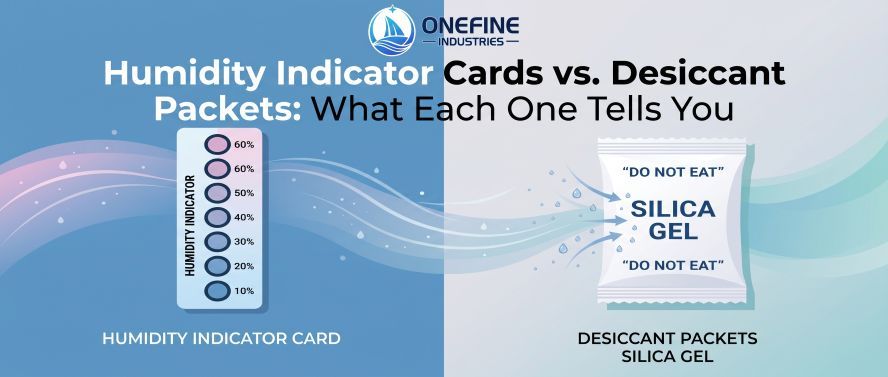
Humidity Indicator Cards vs. Desiccant Packets: What Each One Tells You
A humidity indicator card shows a humidity condition, while a desiccant packet removes water vapor. Learn why a color change cannot measure remaining packet capacity.
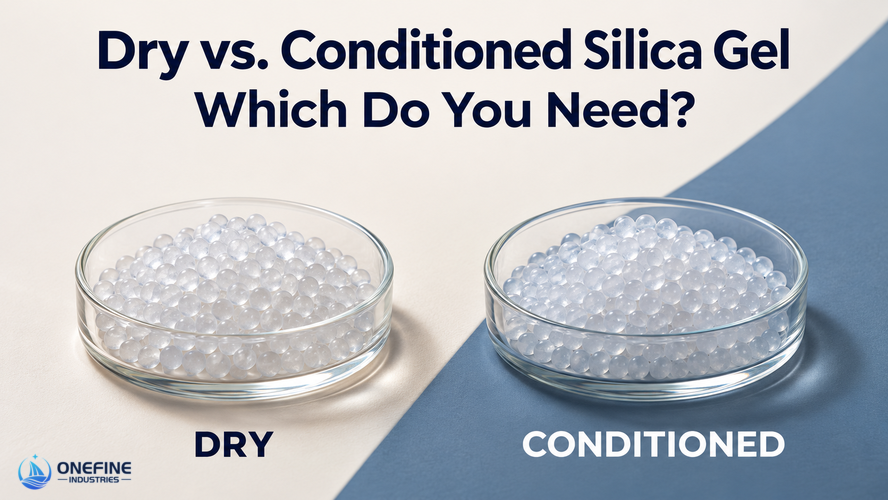
Dry vs. Conditioned Silica Gel: Which Do You Need?
Choose between dry silica gel for moisture removal and conditioned silica gel for buffering humidity around a target range.