How to Check Whether a Desiccant Sachet Fits Your Package
Key Takeaways
- Specify fill weight and finished sachet dimensions separately. Equal-weight sachets can have different footprints and thicknesses.
- Check the filled sachet in a loaded package, including any narrow insertion point and the clearance from the closure.
- Approve the physical fit and verify moisture performance in the final pack before releasing the order.
Introduction
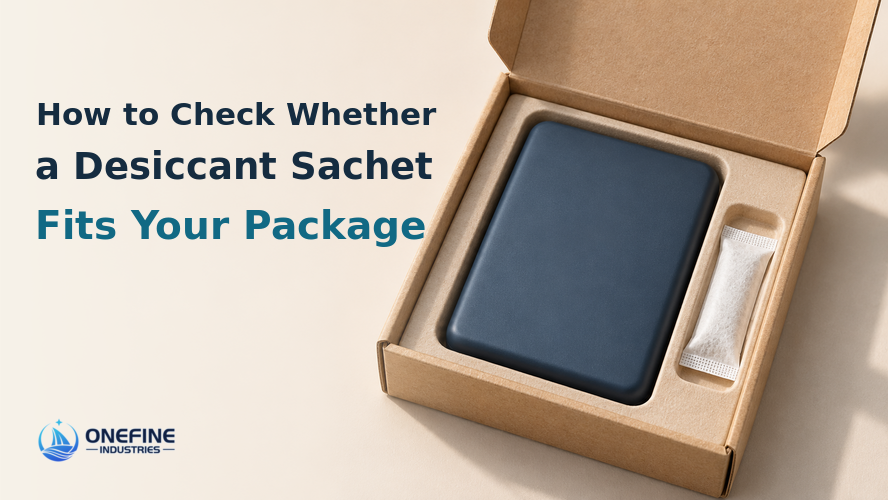
A 2 g desiccant sachet can meet the requested fill and still be awkward to use. It might fit in an empty pouch but catch on a tray after the product is inserted. It might lie flat on a sample bench and form a thicker pocket once the beads settle during filling or transport. Those problems can slow packing or interfere with the seal. Start with the available space in the assembled pack, then check an actual filled sachet. This guide explains what to put on the drawing and what to verify with the packing team.
Specify the Filled Sachet
Give the supplier the target fill, the allowable overall width and length, and any limit on thickness at rest. State whether the length includes all sealed margins. If thickness matters, agree on how the sample is oriented and measured, since loose granules move inside a flexible wrapper. Use a method that represents your packing step and avoids squeezing the packet thinner than it will be in use.
Silica gel sachets are available in multiple weights and wrapper options. A nominal fill identifies how much material you intend to buy. It does not define the dimensions of every format that could hold that fill. Ask for a drawing or finished samples for the exact construction you plan to qualify.
Measure Clearance With the Product in Place
Check the narrowest point the sachet must pass through on the way in. Then identify where it will sit after closing. Measure that space with the product, tray, cushioning and inserts fitted as they will be in production. Include moving features such as a lid tab or folding flap. A marked pocket or a retaining feature can help the packet stay in position. Give it access to the same airspace as the product by following the packet placement guide.
Run samples through the normal packing sequence. Check for snags, product abrasion, punctures and sachets migrating toward the closure. When the retail pouch is heat sealed, make sure the selected position stays clear of the seal area after handling. The heat seal inspection guide explains what to look for if the seal itself is in question.
How to Approve a Format
- Confirm the package envelope. Give the supplier the opening size, usable pocket dimensions, available depth and intended position.
- Trial the real construction. Use a filled sample with the approved wrapper and fill. Run it through representative loading, closing and handling.
- Test moisture performance. If a thinner or smaller format changes fill mass, wrapper or desiccant type, compare finished packs against the product’s humidity requirement. Use the desiccant sizing guide to frame the trial.
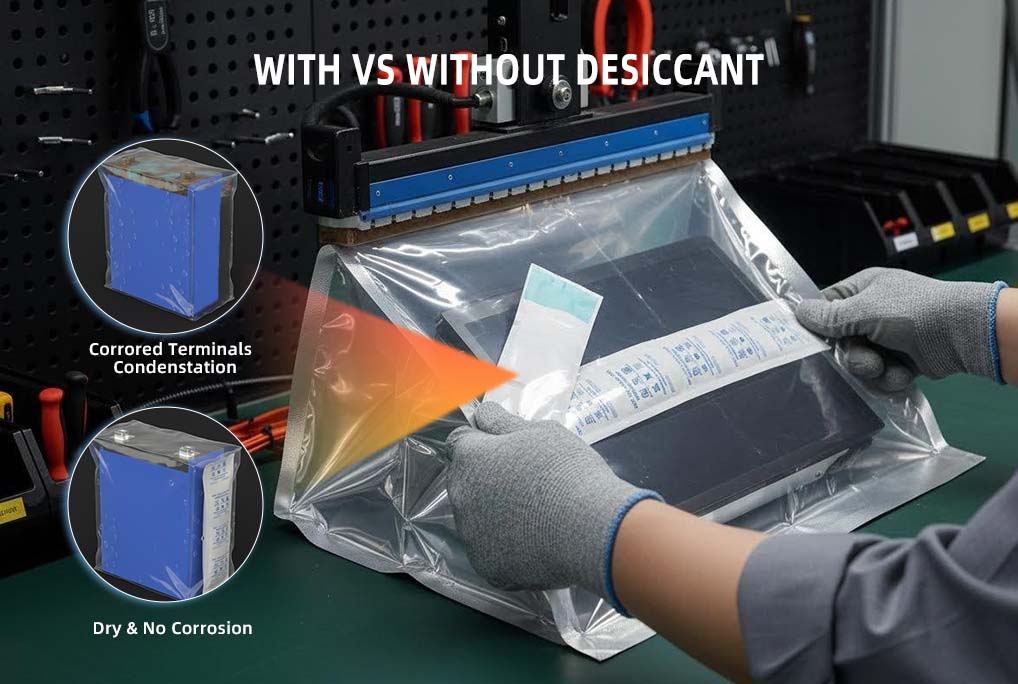
For small parts with little free space, consider how sealed electronics packaging combines the sachet with a suitable barrier and product layout. The same question applies to a shallow tray: how will the packet fit alongside the protected item without obstructing the seal or touching a sensitive surface?
Recommended Products from Onefine
- Silica Gel Desiccant Sachet for general-purpose retail packs. Request filled samples in the dimensions you need.
- Molecular sieve bags for evaluation where lower humidity is required. Check the finished dimensions again when changing the adsorbent or wrapper.
Need a Sachet for a Tight Package?
Send us the opening dimensions, usable pocket size, requested fill and a photo or drawing of the packed product.
- Small sachet formats for qualification trials
- Silica gel and molecular sieve options matched to the moisture target
- Help reviewing wrapper, dimensions and placement requirements before an order
Related Products
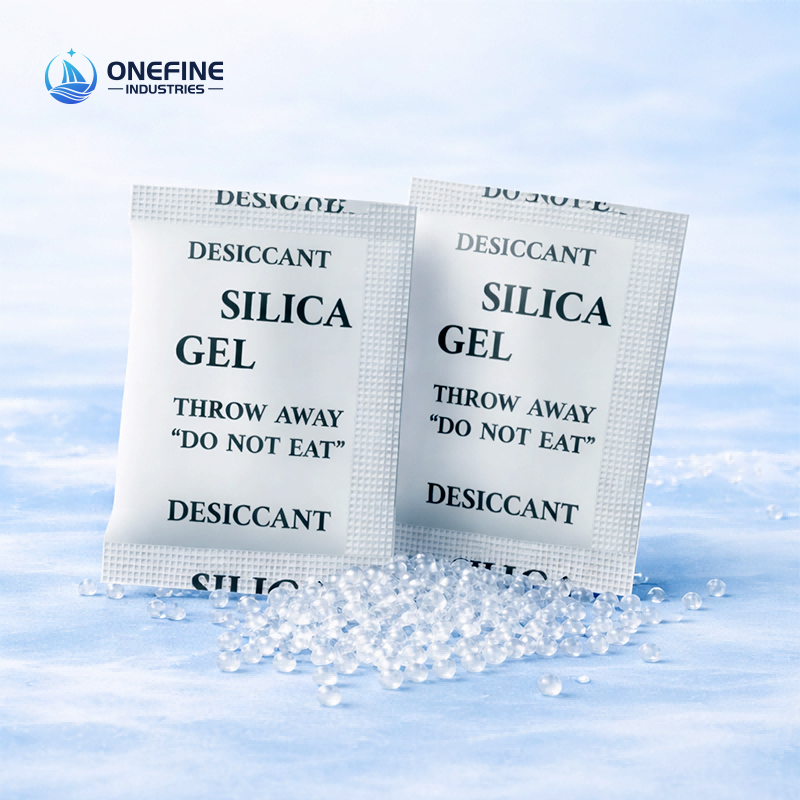
Silica Gel Desiccant Sachet
Silica gel desiccant is a high-performance, non-toxic adsorption material widely used to protect moisture-sensitive products from damage.
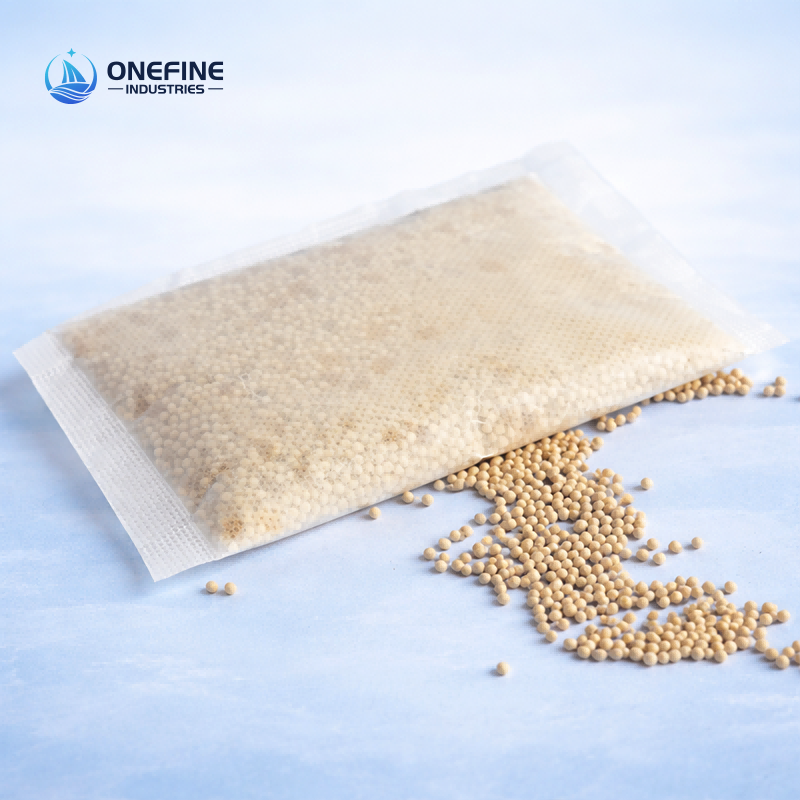
Molecular Sieve Desiccant Bags
Molecular sieve desiccant bags feature a microporous structure that selectively adsorbs molecules based on pore size, delivering deep drying performance for gases and liquids.
Related Applications
Related Reading
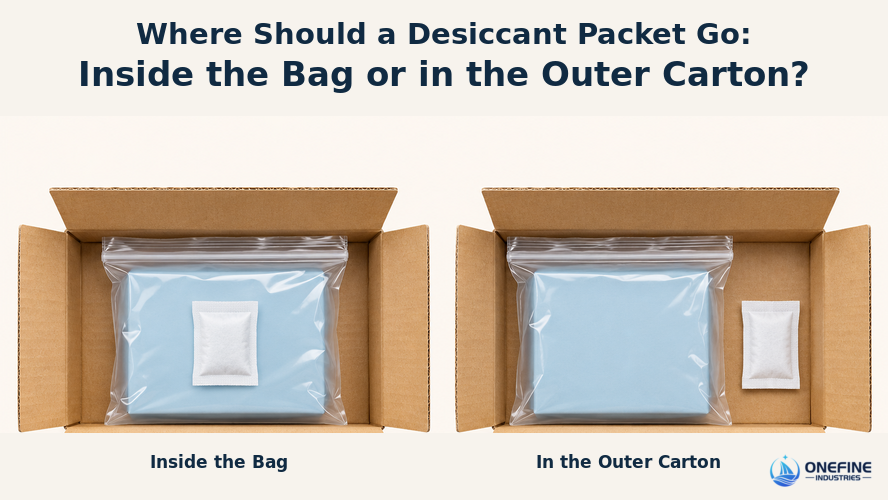
Where Should a Desiccant Packet Go: Inside the Bag or in the Outer Carton?
Place desiccant inside the enclosure that needs to stay dry. Learn where sachets belong in sealed unit bags, shared carton liners, and nested packaging.
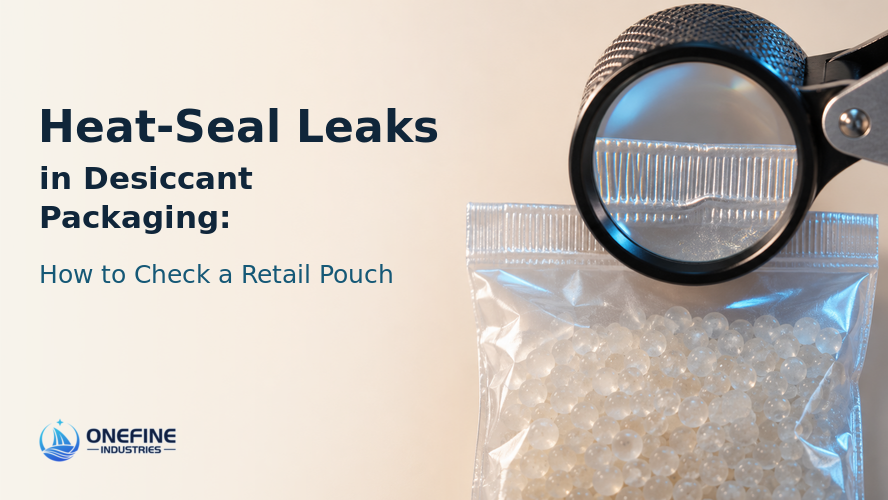
Heat-Seal Leaks in Desiccant Packaging: How to Check a Retail Pouch
Learn how to tell a weak seal, a leak channel and normal film transmission apart before increasing desiccant in a heat-sealed retail pouch.

How Much Desiccant Do You Actually Need?
Desiccant packaging follows a real industry standard (MIL-D-3464), not guesswork. Here's how the unit-based formula actually works, a worked example, and what the simplified version leaves out.